
Last updated November 15, 2026
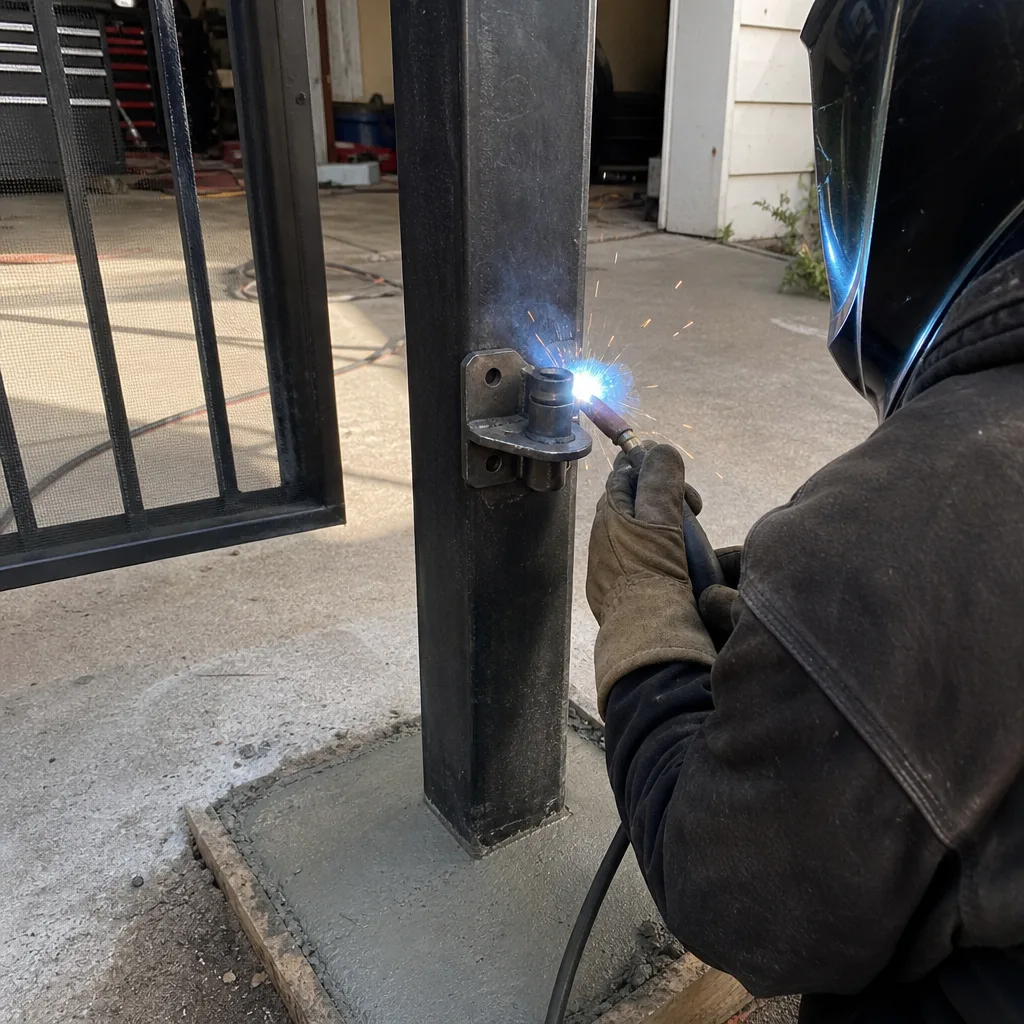
 Wrought iron
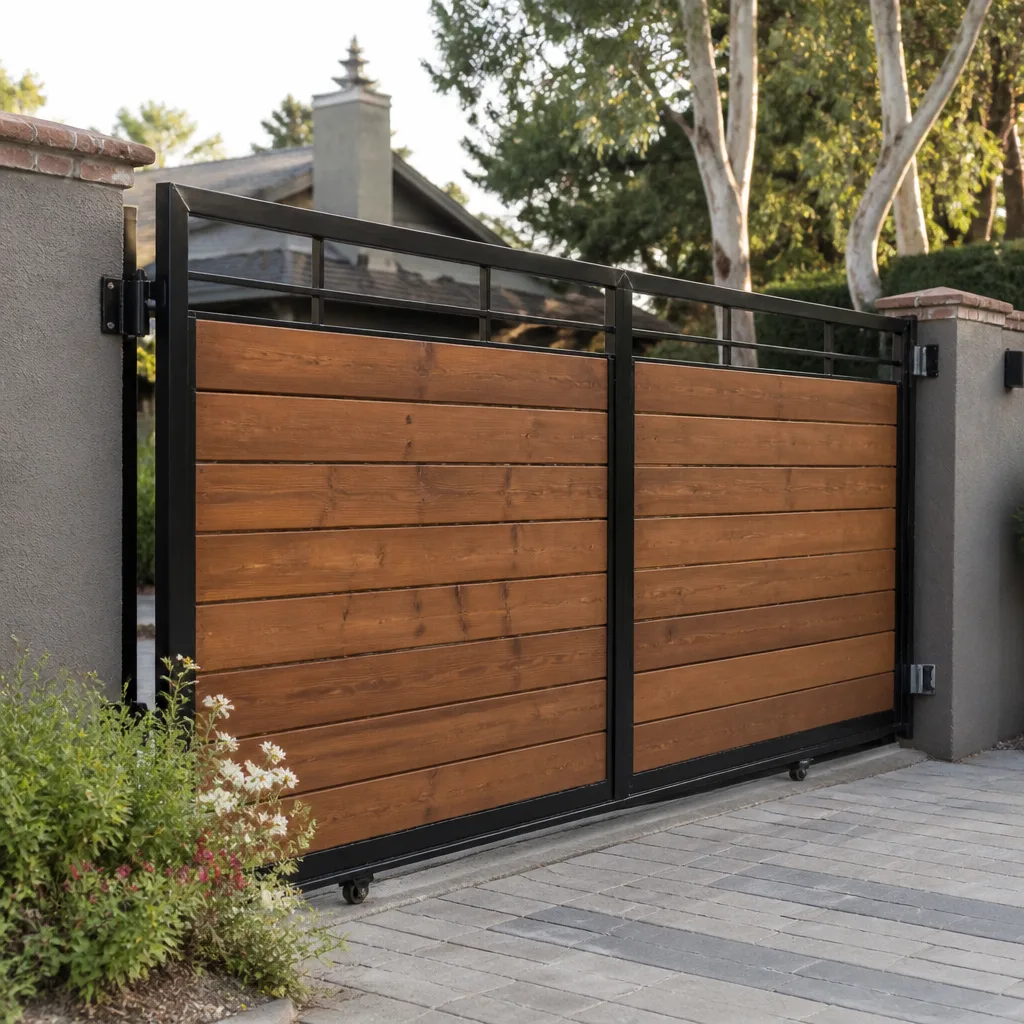 Wood & steel frame
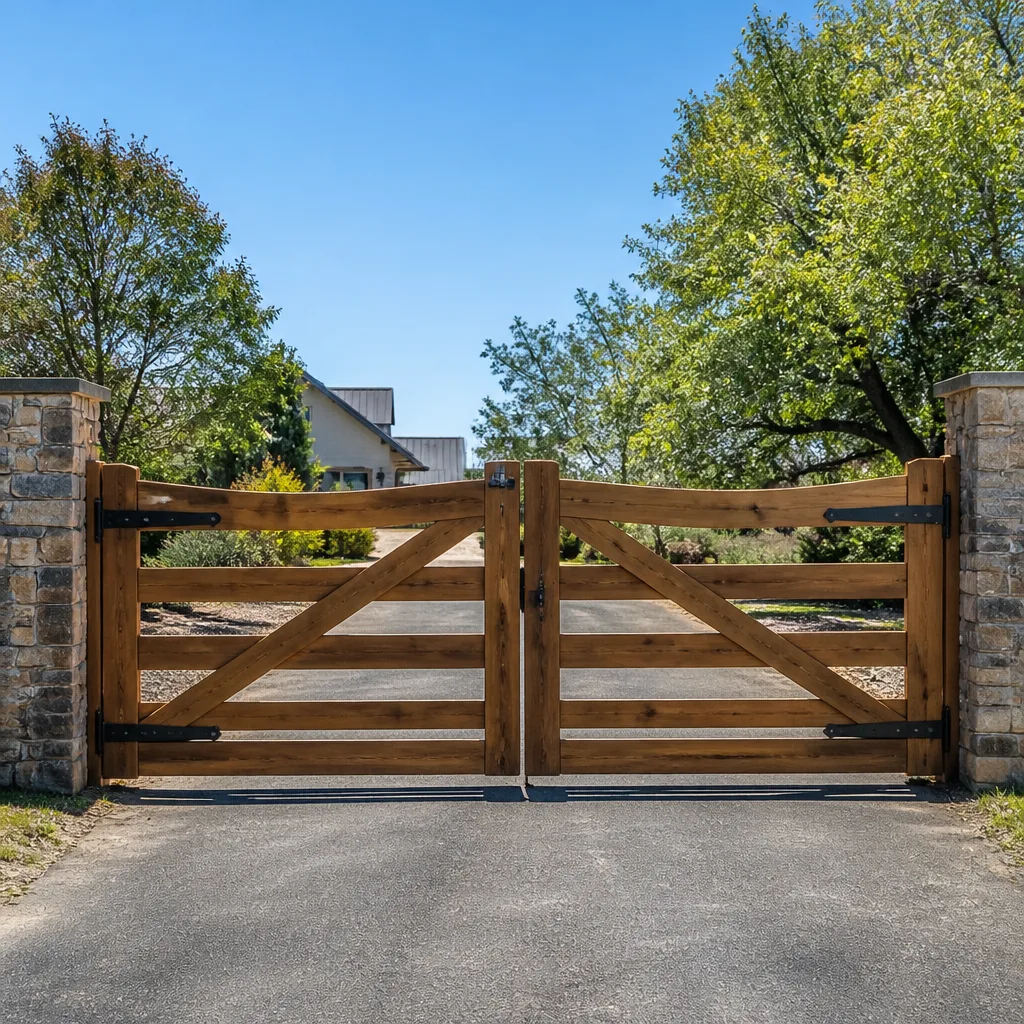 Farm & ranch
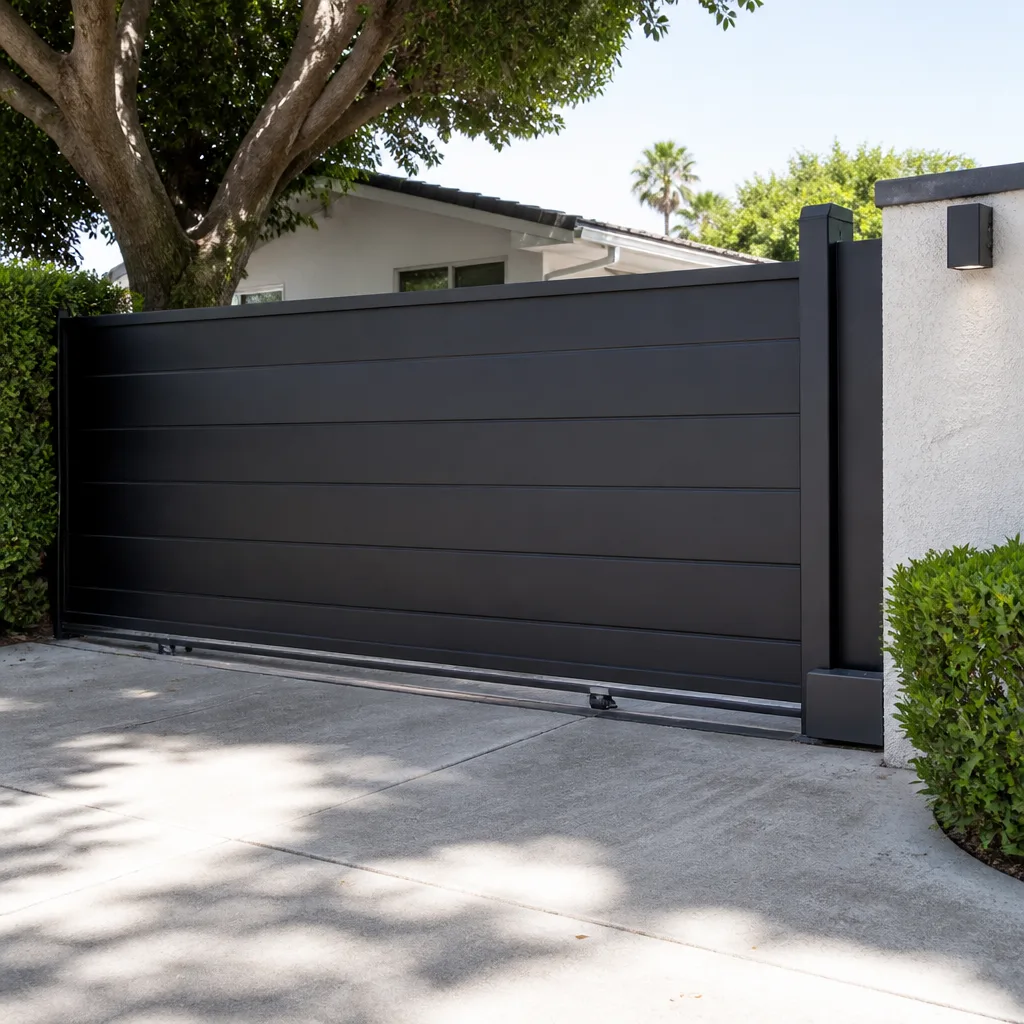 Sliding driveway gates
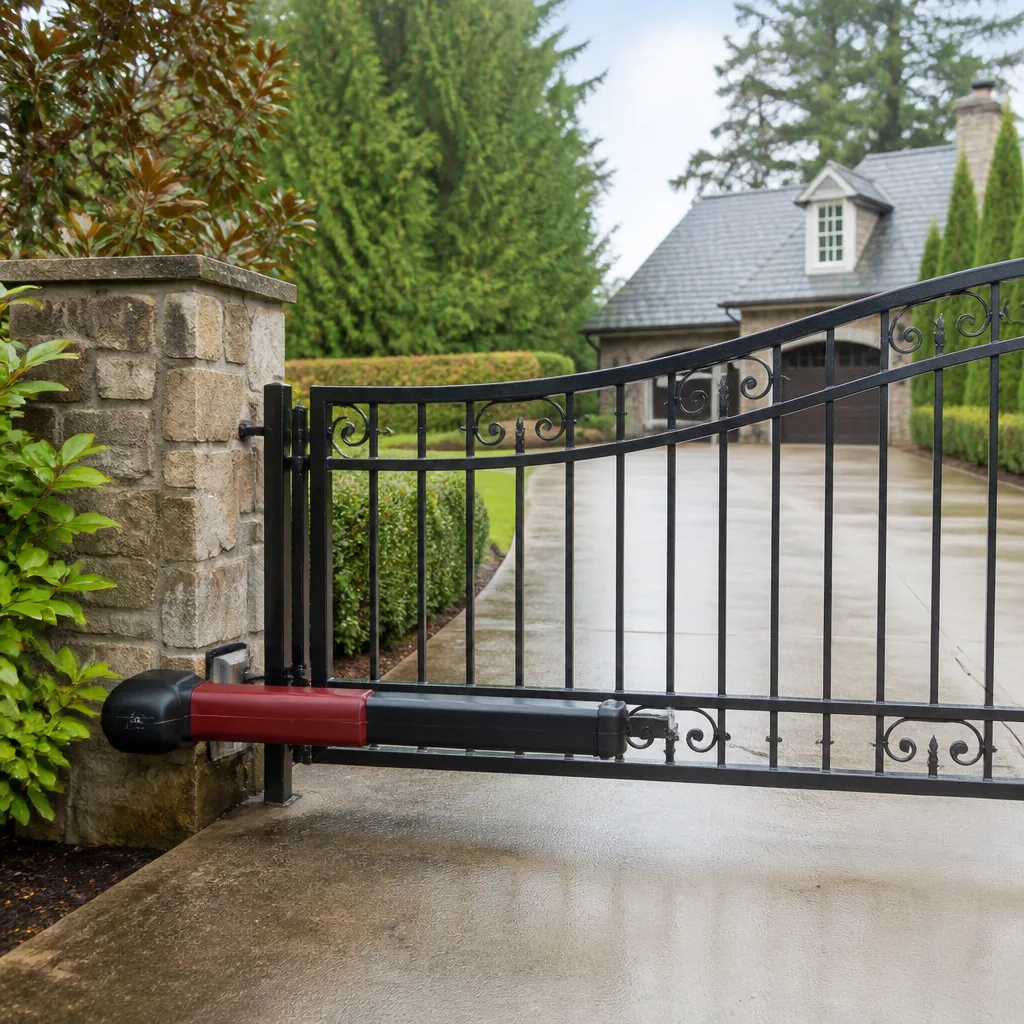 LiftMaster operators
Free on-site gate assessment - hinges, posts, and your LiftMaster or Nice gate operator checked before anything is quoted
The assessment is free and the quote is the invoice.
Get your free estimateGate Repair Cost Breakdown: The Santa Maria Homeowner’s Reference for 2026
The lowest quote you get for a gate repair in Santa Maria is often the one that ends up costing the most. That’s not a knock on cheap contractors. It’s what happens when a price is built around the symptom you can see (the gate that won’t latch, the arm that won’t move) instead of the cause underneath it, and the second visit costs more than a complete first one would have. This guide gives you real cost ranges for the five repairs Santa Maria homeowners call us about most, explains how labor and parts pricing actually work, and shows you when a repair-versus-replace conversation is honest and when it’s pressure.
Quick Answer
Most gate repairs in Santa Maria run roughly $150 to $900, with the wide spread driven by gate type, part availability, and how deep the fault goes. A hinge replacement or intercom fix usually sits at the low end, an operator replacement or circuit board swap lands in the middle, and a post reset on a heavy gate pushes toward the top. The written estimate you get before work starts is the final word on price, and it should always be free.
Styles & brands we work with
- Wrought iron
- Wood & steel frame
- Farm & ranch
- Sliding driveway gates
- LiftMaster operators
Table of Contents
- What the Five Most Common Santa Maria Gate Repairs Cost
- How Labor Pricing Works for Gate Specialists vs. Generalists
- Parts Markup: What’s Fair and What’s Inflated
- How Gate Type Moves the Cost Needle
- Why the Cheapest Quote Can Be the Most Expensive
- Repair or Replace: When the Conversation Is Legitimate
- How Santa Maria’s Climate Affects Gate Wear
- How to Read a Gate Repair Estimate Line by Line
What the Five Most Common Santa Maria Gate Repairs Cost
The five repairs that fill most of our schedule in Santa Maria are hinge replacement, operator replacement, post reset, intercom repair, and circuit board replacement, and they land in very different price bands. Here’s the breakdown homeowners ask for.
| Repair | Typical Estimated Cost | What Drives the Number |
|---|---|---|
| Hinge replacement (swing gate) | $150 – $400 | Number of hinges, gate weight, whether the post plate is sound |
| Operator replacement (automation) | $550 – $1,400+ | Brand, gate weight class, swing vs. slide, wiring changes |
| Post reset | $400 – $1,200 | Post depth, gate weight, soil, whether concrete is broken out |
| Intercom repair | $150 – $500 | Wiring condition, unit type, access hardware integration |
| Circuit board replacement | $250 – $650 | Operator brand and generation, board availability |
Treat these as estimates, not fixed prices. A hinge replacement on a light aluminum pedestrian gate is a very different job from the same repair on a heavy iron driveway gate, and the price reflects it. On the automated side, brand matters: a Mighty Mule or Ghost Controls operator in a residential setting typically prices differently than a commercial-grade FAAC or DoorKing unit.
The one number we’d flag: a quote well below these ranges usually means the diagnosis was shallow. When someone quotes $80 to “fix the gate” without opening the operator housing, ask what specifically they’re fixing. If the answer is vague, the low price is a placeholder.
How Labor Pricing Works for Gate Specialists vs. Generalists
Labor pricing is the part of a gate repair estimate most homeowners misread, because the hourly rate on a general contractor’s quote often looks lower than a gate specialist’s, and the total ends up higher. The rate isn’t the story. Diagnostic speed is.
A gate-only specialist has seen your brand before. When we open a LiftMaster or BFT operator, we know the common failure points and can usually trace a fault without trial-and-error part swapping. A general contractor or handyman working on a gate as a side service often has to learn your system on your time. That learning curve shows up as extra hours, and sometimes as a part replaced that wasn’t the problem.
Here’s how labor structures typically differ:
- Gate specialists: price per job based on the diagnosed repair, with diagnostic time built into the written estimate. The number you approve is the number you pay.
- General contractors: often price hourly plus materials, so a job that runs long costs more. The estimate may not capture the full scope.
- Handyman services: may handle the visible fix (a loose hinge, a stuck latch) but rarely touch control boards, loop detectors, or operator internals, so the underlying fault returns.
What separates a fair labor charge from an inflated one isn’t the rate. It’s whether the estimate explains what the technician will actually do. A line that says “repair gate: $350” tells you nothing. A line that says “replace two hinges, adjust operator limit settings, test safety reversal” tells you exactly what you’re paying for. Ask for that level of detail on every quote. We put it in writing before any work starts because it protects both sides.
For automated systems, labor also depends on whether the repair is mechanical or electrical. electric gate repair involving control boards and safety loops takes more diagnostic time than a mechanical hinge job, and the estimate should reflect the actual scope rather than a flat rate.
Parts Markup: What’s Fair and What’s Inflated
Parts markup on gate repairs is real and legitimate, but there’s a range that’s fair and a range that signals inflation. A reasonable contractor marks up components to cover sourcing, warranty handling, and the risk of carrying inventory they may not use immediately. What’s not reasonable is doubling a component price and burying it in a single lump-sum line.
What a fair markup looks like in practice:
- The part is listed separately. You see the component and its price as its own line, not folded into a vague labor total.
- The price is in the ballpark of retail. A board, motor, or hinge set should land near what you’d find from a supplier, plus a reasonable margin. Wildly above retail deserves a question.
- Warranty is stated. If the part fails, what happens? A contractor confident in their part sourcing will say so in writing.
- Brand-specific parts are named. A quote that says “operator board: $X” for a Viking system tells you more than “control part: $X.”
The clearest inflation signal is a lump-sum quote with no parts breakdown and no explanation of what’s being replaced. If a contractor won’t itemize components, ask why. The answer usually tells you what you need to know.
One other point: parts availability varies by brand. Entry-level residential operators like Mighty Mule and Ghost Controls often have parts readily available, while older commercial systems can take longer to source. That sourcing time isn’t markup, but it can affect scheduling, and a good estimate will tell you if a part needs to be ordered.
How Gate Type Moves the Cost Needle
Two gates with the same fault can produce very different repair bills, and the reason is almost always the gate itself. Slide versus swing, single versus dual leaf, and material all change how much labor and hardware a job requires.
Slide vs. swing. Slide gates run on a track or cantilever system and have different failure points (rollers, track alignment, operator chain or rack) than swing gates, which rely on hinges and an arm operator. A slide gate that’s jumped its track is a distinct repair from a swing gate with a sagging leaf, and the labor doesn’t compare directly.
Single vs. dual leaf. A dual-leaf swing gate has twice the hinge points and, on automated systems, either two operators or a synchronized setup. That roughly doubles the hardware and increases diagnostic time when the two leaves aren’t moving in sync.
Material. Wood, iron, and aluminum behave differently under load and over time. Wood gates can swell and shift seasonally, which affects hinge alignment and operator strain. Iron gates are heavy and put more demand on hinges, posts, and operators. Aluminum is lighter and generally easier on the hardware, but lighter gates can be more sensitive to wind and operator calibration.
In Santa Maria, the mix of gate types we see spans everything from light residential aluminum swing gates to heavy commercial slide gates at HOA entrances and business properties. The gate type is one of the first things a technician should assess, because it frames the entire estimate. If a quote is built without a clear look at the gate’s weight class and mounting, it’s a guess.
Why the Cheapest Quote Can Be the Most Expensive
A gate that won’t open has a symptom and a cause, and they’re rarely the same thing. The cheapest quote usually addresses the symptom. The complete repair addresses the cause. That gap is where the second repair call comes from.
Here’s how it typically plays out. A gate stops closing fully. The low quote replaces the hinge that looks worn. The gate closes for a while, then stops again, because the real problem was a misaligned post putting uneven load on the hinge in the first place. Now you’ve paid for the hinge and you still need the post reset, and the hinge job has to be redone after the post is fixed.
A thorough diagnosis follows a sequence:
- Observe the full cycle. Watch the gate open and close completely, not just the point where it fails.
- Check the mechanical first. Hinges, posts, tracks, rollers, and gate alignment before touching the operator.
- Test the electrical separately. On automated gates, isolate whether the operator is failing or the gate is binding and forcing the operator to fail.
- Review safety devices. Loop detectors, photo eyes, and safety edges can cause intermittent failures that look like operator problems.
- Explain the finding before quoting. A diagnosis you understand is a diagnosis you can trust.
This is where gate-only focus earns its keep. Because every job on our schedule is a gate job, our technicians build diagnostic speed on gate-specific faults. We’re not learning your system’s quirks on your driveway; we’ve seen them on the same brands before. That’s the difference between a quote for the symptom and a quote for the repair.
Repair or Replace: When the Conversation Is Legitimate
The repair-versus-replace conversation is legitimate when the cost of repair approaches the cost of a new system and the existing gate has reached the end of its practical life. It’s upsell pressure when the repair is straightforward and the replacement pitch arrives before anyone has diagnosed the actual fault.
Legitimate replacement conversations usually involve one or more of these:
- The operator is obsolete. Parts for the existing unit are no longer available, and every future repair becomes a scavenger hunt.
- Repeated failures in the same system. When the same operator or board keeps failing, the underlying cause may be a design or capacity mismatch rather than a single bad component.
- The gate itself is failing. A rusted-through frame or a post that can’t be reset reliably means repairing the operator is putting good money into a gate that won’t hold it.
- Safety hardware can’t be brought up to date. If the existing system can’t accommodate modern safety devices, replacement may be the responsible path.
What isn’t legitimate: a replacement recommendation before a proper diagnosis, or a pitch that ignores a repair that would have worked fine. If you’re told you need a new gate, ask what the repair option is and what it costs. A contractor with nothing to hide will tell you both numbers and explain the reasoning. We handle gate repair and full installation, so we’re not steering you toward replacement to make a sale. If the repair is the right call, that’s what we’ll quote.
How Santa Maria’s Climate Affects Gate Wear
Santa Maria’s climate is gentle on gates compared to harsher regions, but it’s not neutral. Mild winters and warm, dry summers create a specific wear pattern that shows up in repair estimates around the city.
The dry season matters more than most homeowners expect. Extended dry stretches can cause soil to shift and settle around gate posts, which over time affects post stability and hinge alignment. A post that was set correctly can develop a lean as the ground around it moves, and that lean translates into uneven load on hinges and operators. That’s one reason post resets show up on Santa Maria repair lists more often than you might guess.
Wood gates react to seasonal moisture changes, swelling in damper periods and shrinking in dry ones. That movement affects hinge alignment and, on automated gates, the operator’s limit settings. A gate that worked smoothly in spring can bind in late summer without anything actually breaking.
Dust and grit are also a factor. Moving parts, tracks, and rollers accumulate debris over time, and a gate that’s never cleaned or lubricated wears faster. That’s maintenance, not repair, but it’s the reason some gates need repairs sooner than others.
None of this means Santa Maria gates are in constant crisis. It means the local wear pattern leans toward post stability, alignment, and moving-part maintenance rather than the corrosion and freeze damage you’d see elsewhere. When you get an estimate in Santa Maria, ask whether the technician has accounted for post condition and alignment, not just the part that failed.
How to Read a Gate Repair Estimate Line by Line
A gate repair estimate should be readable by someone who isn’t a gate technician. If you can’t tell what you’re paying for, that’s a problem with the estimate, not with you.
Here’s what a complete, fair estimate includes:
- Diagnosis summary. A sentence or two explaining what’s actually wrong, in plain language.
- Parts itemized. Each component named, with its price, separately from labor.
- Labor described by task. “Replace operator and recalibrate limits” rather than “repair.”
- Brand and model references. Your operator brand should appear by name, because brand-specific repair is what a specialist does.
- Safety testing included. Reversal, obstruction detection, and loop or photo-eye checks listed as part of the job, not an add-on.
- Final price stated. A total, with confirmation that this is the price for the scope described.
Two questions to ask on any estimate: “Is this the total, or could it go up?” and “What happens if you find something else once you’re in there?” A fair answer confirms the price is set for the described scope and that any additional finding gets a new approval from you before work continues. That’s how we handle it: the price is quoted and agreed before any work starts, and nothing gets added without your sign-off.
If you’re comparing multiple estimates, compare the scope, not just the bottom line. The lowest total for a narrower scope isn’t a better deal if it leaves the root cause in place.
Common Mistakes to Avoid
- Accepting a quote without a diagnosis. If the contractor hasn’t opened the operator or examined the gate’s alignment, the quote is a guess. Ask what they found and how they found it.
- Choosing the lowest bid on a symptom-only repair. A quote that fixes what you can see without addressing the cause often leads to a second repair call. Compare scope, not just price.
- Ignoring the post because the hinge looks bad. A worn hinge is sometimes a symptom of a post that’s shifted. In Santa Maria’s dry-season soil movement, post condition should always be checked before replacing hardware.
- Letting a general contractor learn your brand on your time. Gate operators are brand-specific systems. A specialist who knows your LiftMaster or FAAC unit will usually diagnose faster and replace fewer wrong parts.
- Skipping the safety check after a repair. A gate that closes is not the same as a gate that’s safe. Reversal testing and safety device checks belong in every repair, not just installations.
- Treating a maintenance item as a repair. Dirty tracks and dry hinges cause binding that mimics operator failure. Cleaning and lubricating first can save you a diagnostic call.
- Not asking for the repair option when replacement is recommended. A legitimate replacement conversation includes the repair cost. If it doesn’t, ask for it.
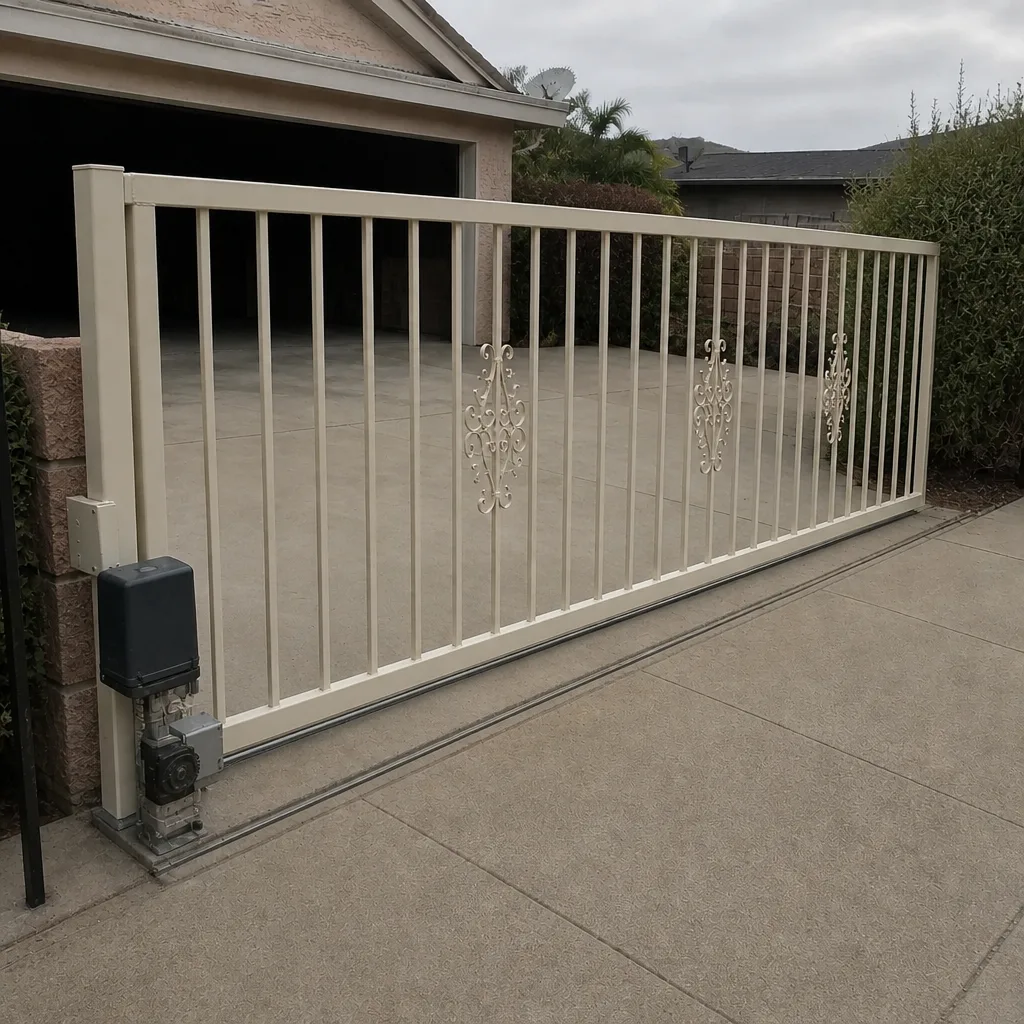
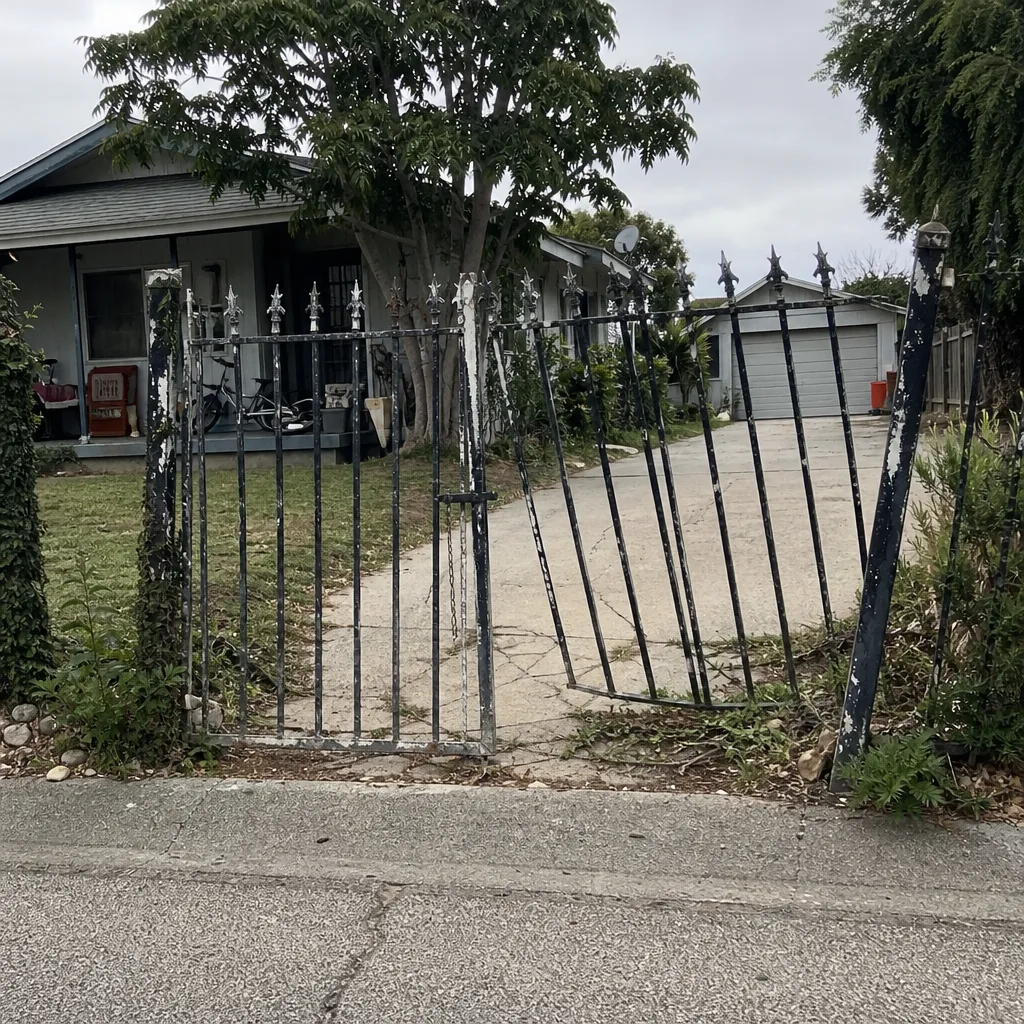
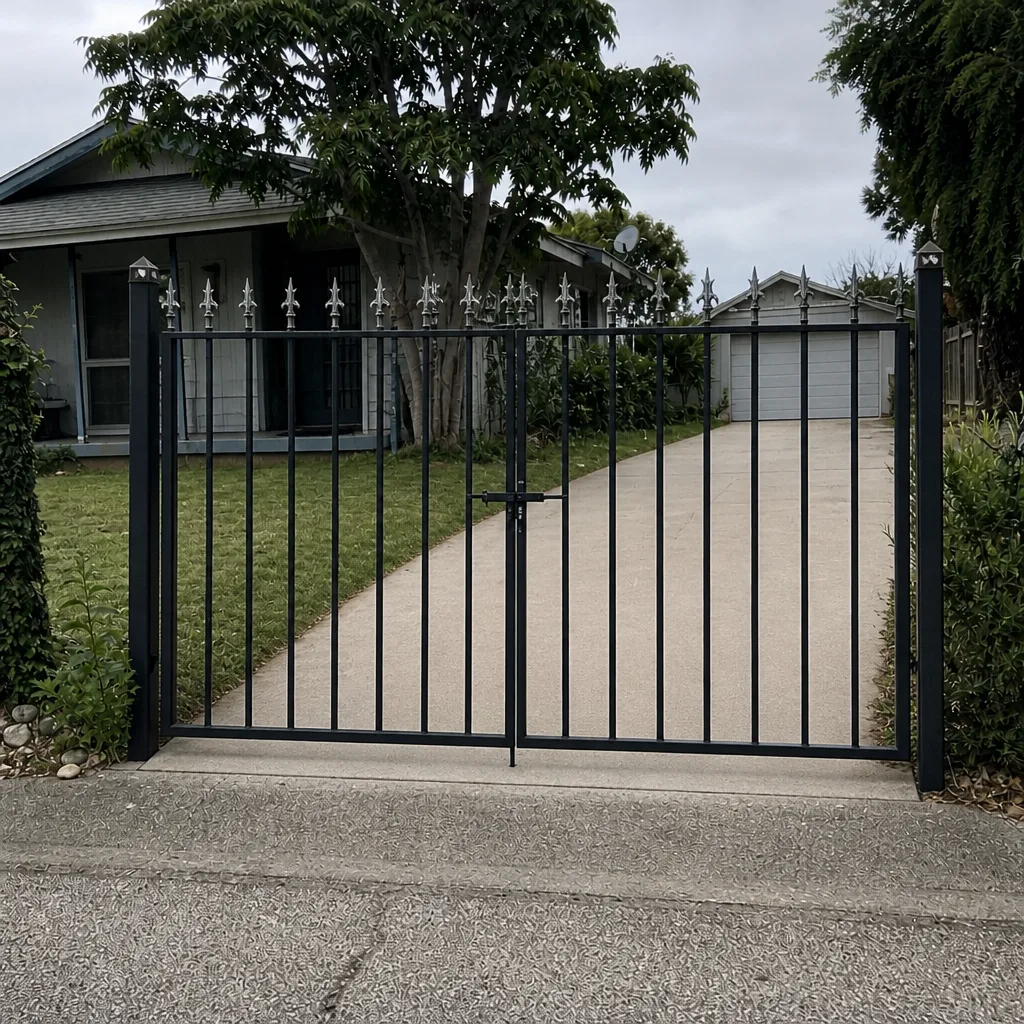
See the difference
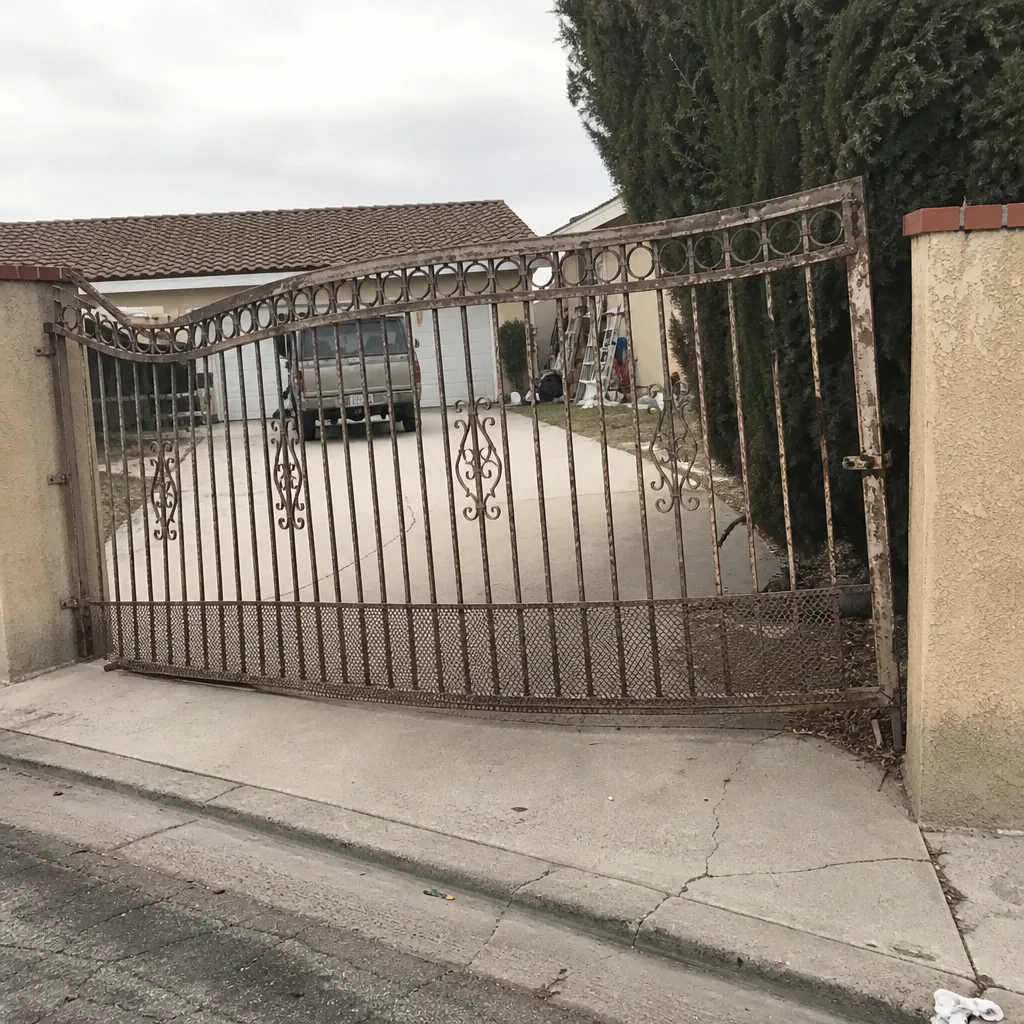 Before
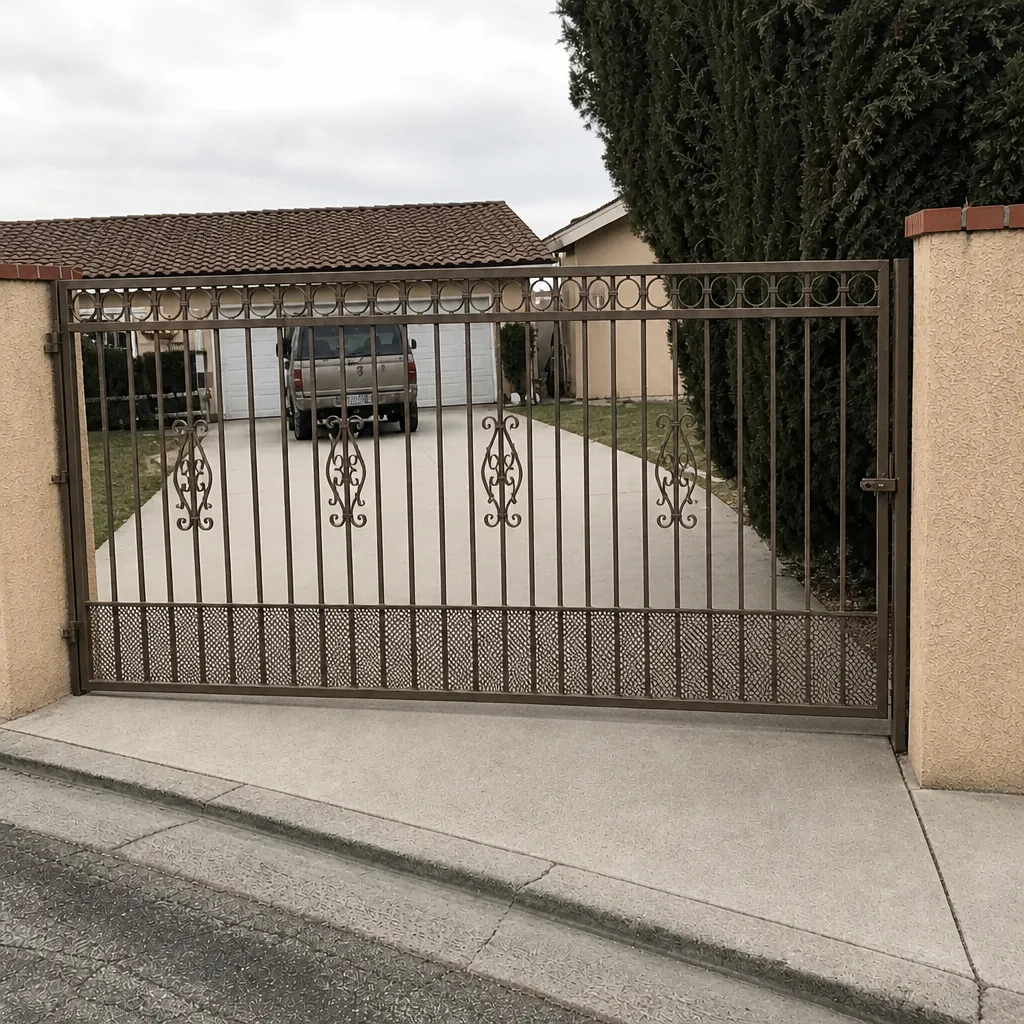 After
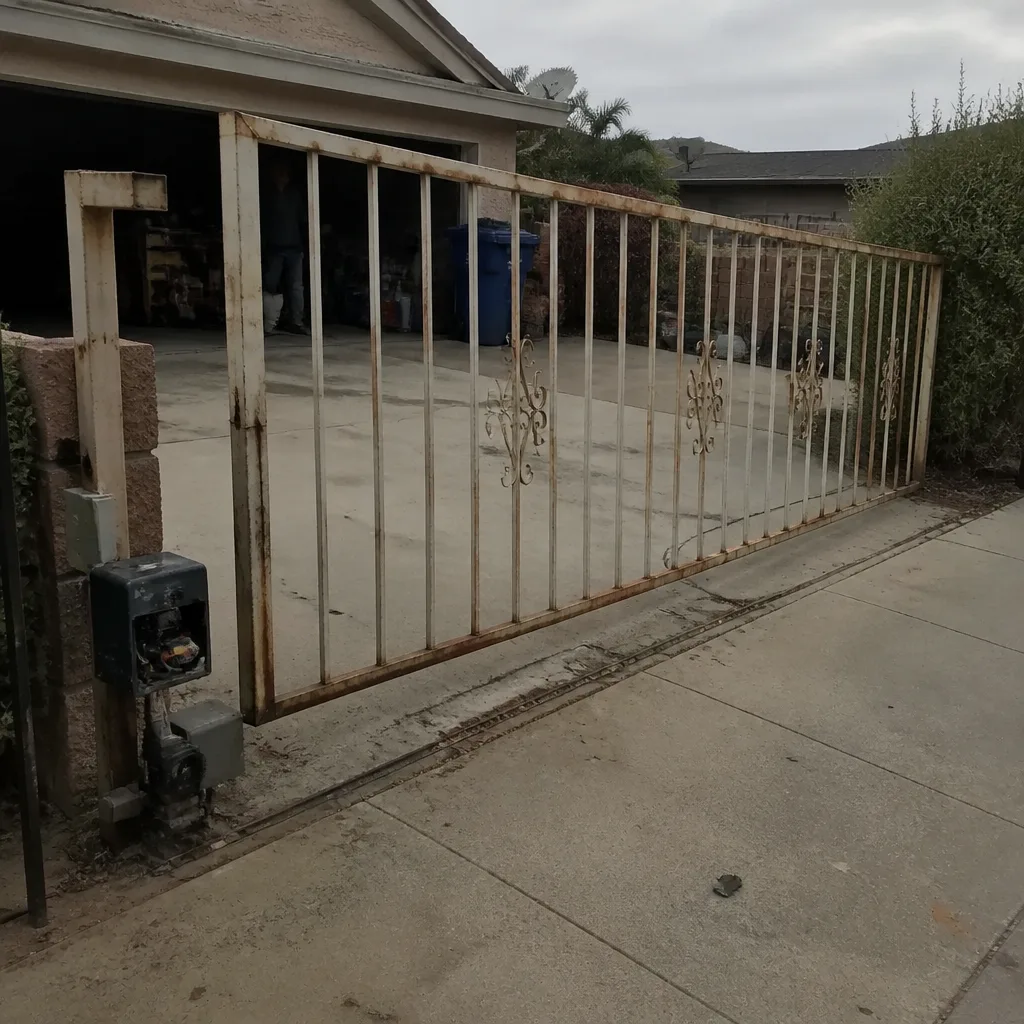 Before
 After
 Before
 After
When to Call a Professional
Some gate problems are worth a phone call the moment you notice them. A gate that moves on its own, a gate that fails to reverse when something is in its path, an operator that hums but doesn’t move the gate, sparks or burning smells from the control box, or a heavy gate that’s come off its track or is leaning on a compromised post. These involve the operator’s wiring and power or heavy panels that can crush, and they’re not jobs to troubleshoot on your own. Electrical faults in a gate operator can be dangerous, and a gate that fails to stop is a hazard to anyone in its path. A trained technician should assess these.
Less urgent but still worth scheduling: a hinge that’s loosened, an intercom that’s stopped connecting, a gate that’s binding in one direction, or a remote that’s stopped working when the batteries are fine. These rarely get better on their own, and small alignment problems tend to grow into post and hinge repairs over time.
Gate Repair Santa Maria offers free estimates in Santa Maria. Call (844) 834-0978. We answer 24/7. Fast dispatch from 7am to 7pm, Sunday through Friday.
Frequently Asked Questions
Most gate repairs in Santa Maria fall between roughly $150 and $900, depending on the repair. Hinge and intercom work sits at the low end, circuit board and operator replacement in the middle, and post resets on heavy gates toward the top. The written estimate you approve before work starts is the final price. Call (844) 834-0978 for an exact quote. Estimates are free.
Many gate repairs can be handled the same day, especially mechanical issues like hinges and alignment where the diagnosis is clear and the part is on hand. Operator and circuit board replacements sometimes depend on part availability for your specific brand. Call (844) 834-0978 and we’ll tell you what’s realistic for your gate.
We service nine gate operator brands: LiftMaster, FAAC, BFT, Linear, Viking, Ghost Controls, DoorKing, Elite, and Mighty Mule. That covers entry-level residential systems through commercial-grade access control. Brand-specific diagnosis means we’re not guessing at your system’s failure points. Call (844) 834-0978 to confirm your model.
A much lower quote usually reflects a narrower diagnosis rather than a better deal. A price built around the visible symptom often leaves the root cause in place, and the follow-up repair costs more than a complete first one. Compare what each estimate actually covers, not just the total. Call (844) 834-0978 and we’ll walk you through what a complete repair includes for your gate.
Repair usually makes sense when parts are available and the gate structure is sound. Replacement becomes the honest recommendation when the operator is obsolete and parts can’t be sourced, when the gate frame or post can’t reliably hold a repair, or when the system can’t accommodate current safety devices. Ask for both numbers before deciding. Call (844) 834-0978 for a free estimate that includes the repair option.
Yes, we handle the full electrical side of automated gate work, including operator wiring, control boards, loop detectors, safety edges, and intercom wiring. That’s part of what separates electric gate repair from general gate work. Installation and electrical upgrades are measured and scheduled rather than same-day. Call (844) 834-0978 for a free on-site estimate.
The Bottom Line
Gate repair pricing in Santa Maria isn’t random. It follows the repair type, the gate’s weight and material, the brand of operator, and how deep the diagnosis goes. The cheapest quote is often priced for what you can see, not what’s actually wrong, and the second repair call closes that gap at a higher total. Get a written estimate that itemizes parts and describes the labor task by task, confirm the price is set before work starts, and ask for the repair option whenever replacement is suggested. That’s how you avoid overpaying for the wrong repair.
Gate Repair Santa Maria works on gate repair, electric gate repair, and full gate installation across Santa Maria, from residential swing gates to commercial access systems. Our technicians have up to 9 years of experience and are certified to service nine major gate operator brands. If your gate is binding, failing to close, or showing operator faults, call (844) 834-0978 for a free estimate. We answer 24/7. Fast dispatch from 7am to 7pm, Sunday through Friday. You can also start with an overview of our Gate Repair Santa Maria services, or explore gate repair in nearby Santa Maria neighborhoods and surrounding areas we cover.
Written by the team at Gate Repair Santa Maria.