
Last updated November 15, 2026
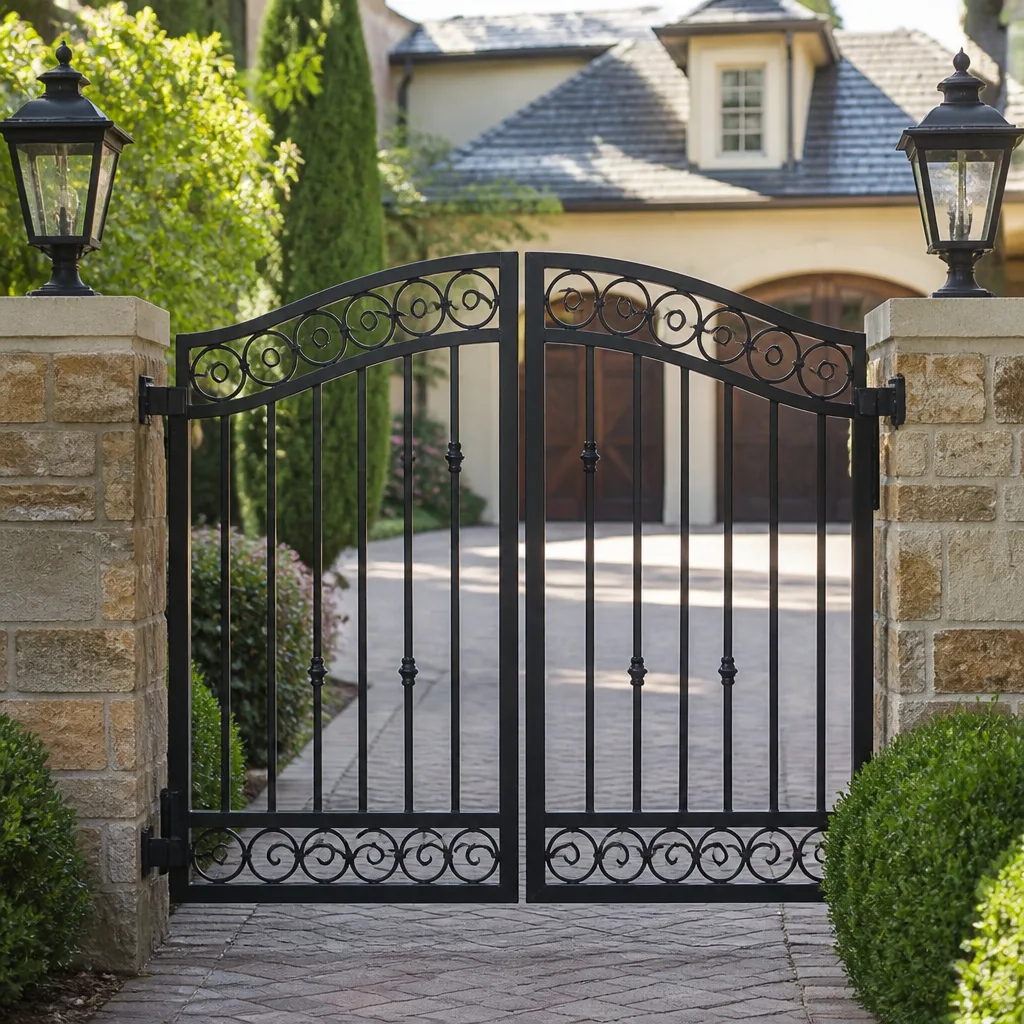 Wrought iron
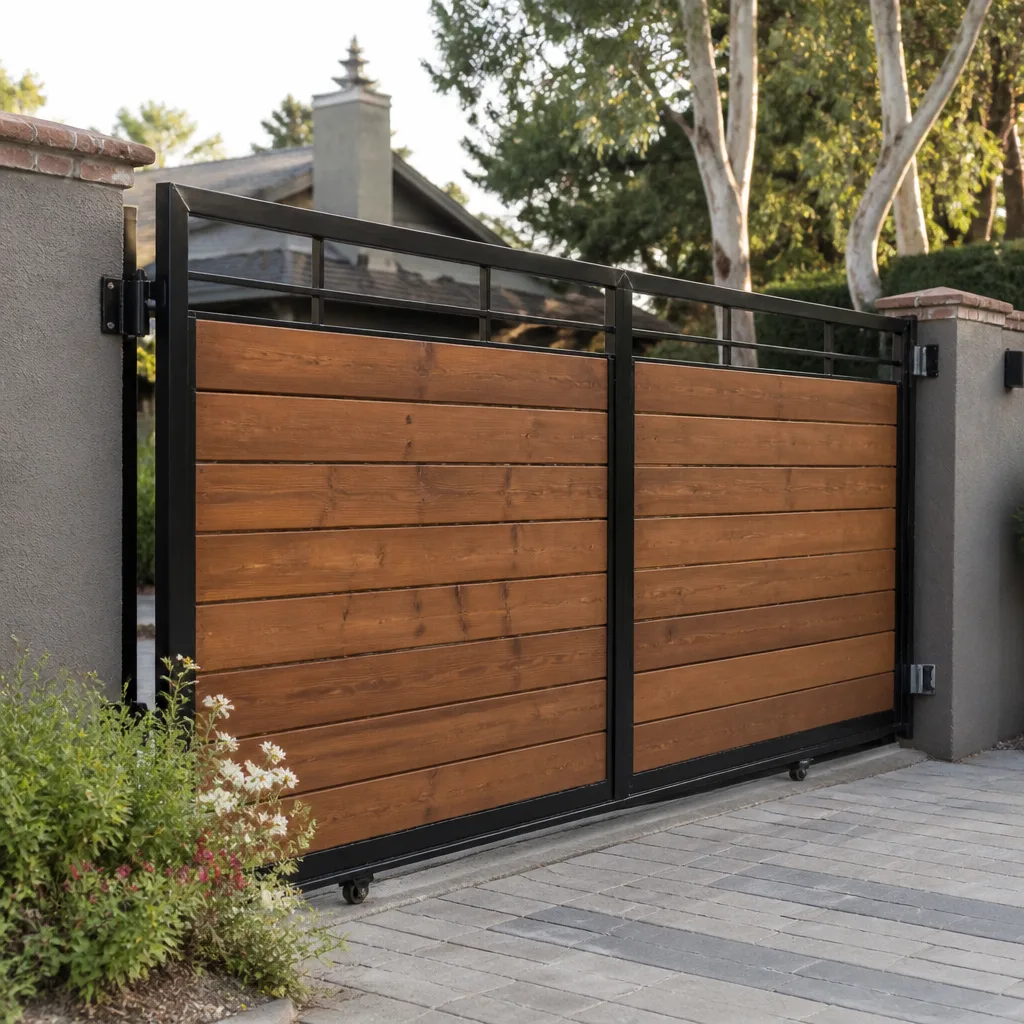 Wood & steel frame
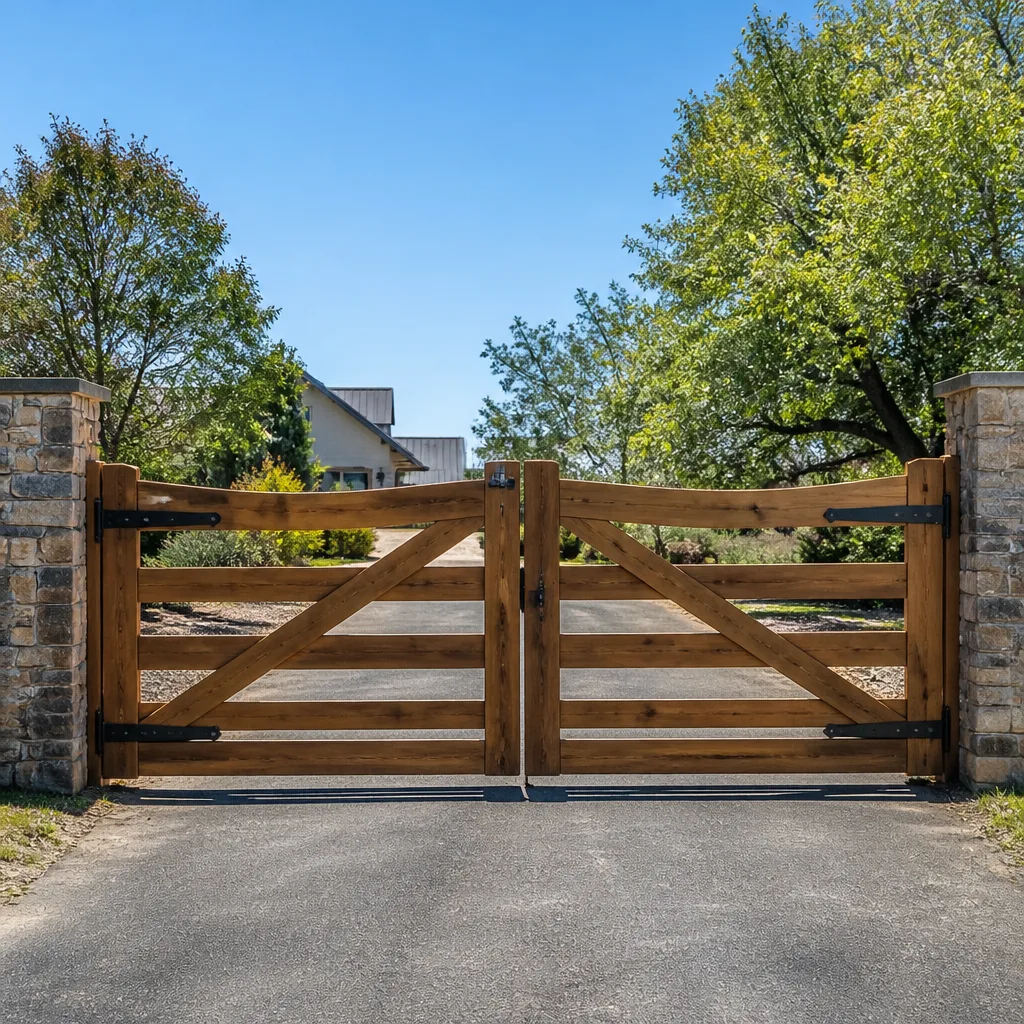 Farm & ranch
 Sliding driveway gates
 LiftMaster operators
Free on-site gate assessment - hinges, posts, and your LiftMaster or Nice gate operator checked before anything is quoted
The assessment is free and the quote is the invoice.
Get your free estimateGate Repair Permits, Codes & Inspections in Santa Maria, CA: What You Need to Know
If a contractor tells you “we never pull permits for gate work” without first asking about your specific repair scope, that’s not efficiency – that’s a liability transfer to you as the property owner. Most gate repairs in Santa Maria genuinely don’t need a permit, and that’s why the permit question gets skipped so casually. But the exceptions are real: structural posts, new operators, height changes, and replacement where the footprint shifts can all pull your project into the city’s review process. This guide draws a clear line between the paperwork-free repairs and the jobs that require a trip to the building department, plus how HOA rules layer on top and what to do if a previous owner left behind unpermitted work.
Quick Answer
In most cases, repairing an existing gate in Santa Maria – rehanging hinges, replacing a worn motor, swapping a control board, fixing a track or latch – does not require a building permit. You likely need a permit when you’re installing a new gate, replacing structural posts or footings, changing the gate’s height or location, running new electrical for an automated operator, or converting a manual gate to an automatic one. When a permit applies, an inspection is usually required before final sign-off, and skipping it can complicate a future home sale.
Styles & brands we work with
- Wrought iron
- Wood & steel frame
- Farm & ranch
- Sliding driveway gates
- LiftMaster operators
Key Takeaways
- Routine gate repair is generally permit-free; structural or electrical changes usually are not.
- New automated gate installs typically trigger both a building permit and an electrical permit.
- HOA rules in Santa Maria neighborhoods stack on top of city code – the stricter one governs.
- Unpermitted prior gate work should be disclosed and addressed before listing a home for sale.
- A gate specialist who knows the permit triggers saves you a rejected inspection and a reopen fee.
Table of Contents
- Which Gate Repairs Need a Permit in Santa Maria, and Which Don’t
- Height, Setback, and Siting Rules That Affect Gate Replacement
- Electrical Permits for Automated and Electric Gates
- How HOA CC&Rs Layer on Top of Santa Maria City Code
- What an Inspection of an Automated Gate Looks Like
- Dealing with Unpermitted Gate Work Before You Sell
- Why Gate Specialists Handle Permits Better Than Generalists
- A Step-by-Step Permit Process for Santa Maria Gate Work
Which Gate Repairs Need a Permit in Santa Maria, and Which Don’t
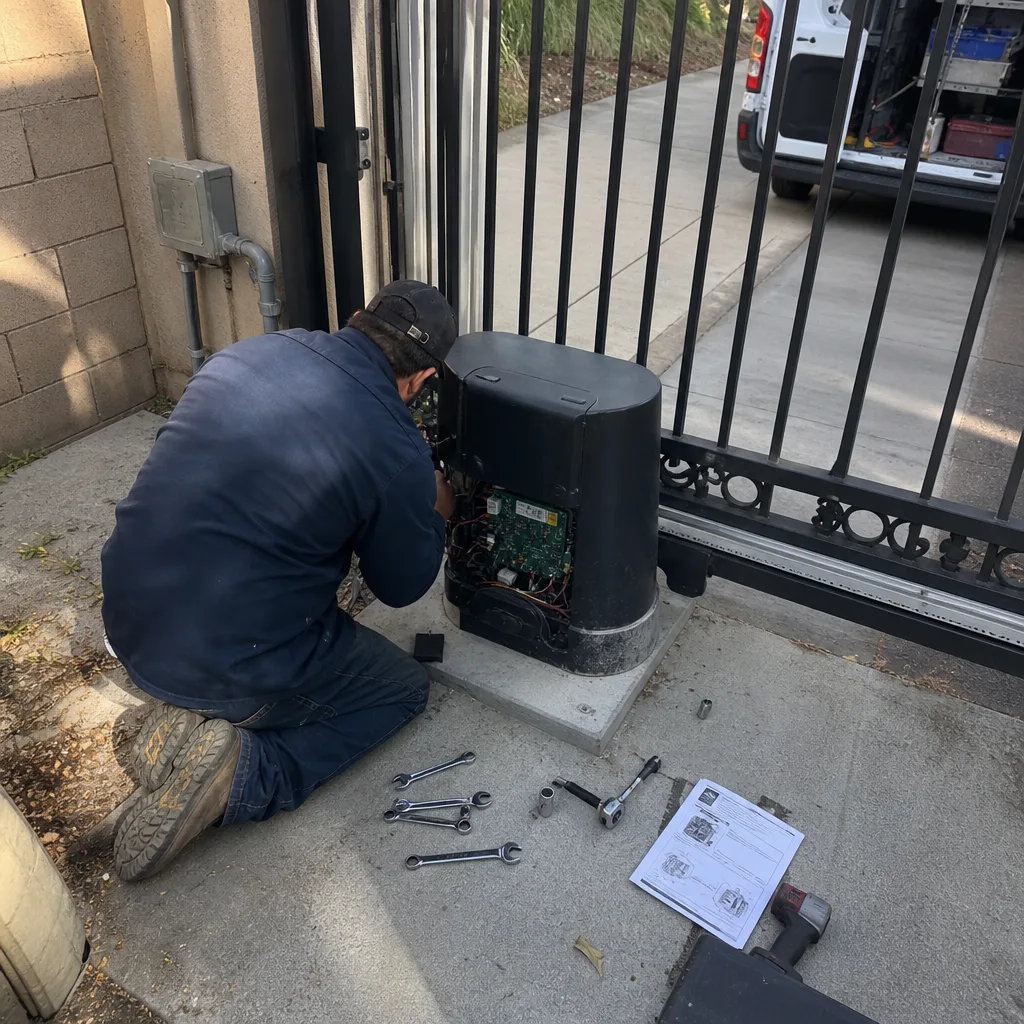
Most gate repairs fall on the no-permit side of the line. If you’re replacing a worn operator on an existing post, swapping a control board, repairing a hinge or roller, straightening a sagging gate leaf, or fixing a latch, the work is maintenance and repair and typically doesn’t require a trip to the city. This is the same category as replacing a broken gate wheel. When homeowners call us for gate repair, the first thing our technicians confirm is whether the scope matches an existing permitted structure or changes it.
Permits start to matter when the job shifts from fixing what’s there to altering it. The following repairs generally require a permit through the City of Santa Maria’s building department:
- Structural post or footing replacement – the post is part of the load path for the gate leaf, and a new footing is structural work.
- Changing the gate’s height or width – a taller or wider gate changes the structural profile and often the operator sizing.
- New operator installation on a gate that never had one – converting manual to automatic introduces electrical and safety-device requirements.
- Relocating the gate – moving a gate changes setbacks and often requires review against the property line.
- A full gate replacement – pulling and replacing the entire assembly is construction, not repair.
Each of these touches either the California Building Code’s structural provisions or the electrical code, and Santa Maria Municipal Code ties into those at the local level. If you’re unsure which side of the line your job sits on, ask. A short conversation with a gate specialist or a call to the city’s building counter resolves it faster than a rejected inspection.
Height, Setback, and Siting Rules That Affect Gate Replacement
Even when your goal is to repair, height and setback rules govern the replacement gate you put back in the same opening. In Santa Maria, fences and gates near the street or at a corner lot often face different height limits than interior property-line fences. If a gate is in the front setback or corner visibility triangle, the city may cap height at a lower number than what stands there now. A taller replacement gate, even one installed to fix a broken original, can fail review if the height exceeds what the lot allows.
Setbacks matter too. Gates set at the property line are typically fine, but a gate pushed forward or moved back during a repair does change siting. When our team evaluates electric gate repair, we check whether the gate sits inside a required setback and whether the replacement will land in the same spot.
Site conditions in Santa Maria affect how a gate post is anchored and inspected. The area’s seasonal wind and dry summers put lateral loads on gate posts, especially on wide swing gates and solid slide panels. A gate that’s anchored to the proper footing depth – set per the structural plans approved for the job – stands up. A gate post that was dug shallow is the one that leans within a season, which is exactly what an inspector looks for.
Before you schedule a replacement, do these three things:
- Ask the city’s building department for the zoning on your parcel and any overlay that affects fence and gate height.
- Measure the existing gate’s height and location relative to the property line and the nearest street corner.
- Confirm the replacement matches or stays under the existing dimensions unless you’re budgeting for a plan review.
Electrical Permits for Automated and Electric Gates
An automated gate is an electrical installation, not just a mechanical one. Running power from a house panel to a gate operator, adding a low-voltage loop detector, installing an intercom at a pedestal, or wiring safety edges requires an electrical permit in most California jurisdictions, and Santa Maria is no exception. A manual gate swap usually skips this step. A power run or new operator does not.
This is where it pays to call a specialist. The brands we service – Ghost Controls, Mighty Mule, DoorKing, and the rest of the nine operator lines we’re factory-trained on – each handle the wiring interface differently. A DoorKing commercial operator has a different power and safety-device footprint than a residential Ghost Controls unit. That difference matters at plan check, where the building department will want to see the operator’s listed power requirements, the disconnect, and the low-voltage safety loop path.
What to expect on the electrical side:
- A dedicated circuit sized for the operator, typically run from the main panel or a subpanel.
- Photoelectric safety sensors or a loop detector so the gate reverses if something’s in the path.
- An accessible disconnect for the operator, per electrical code requirements.
- Heavy-gauge wire sized correctly for the distance from panel to gate – short runs and long runs need different wire.
Don’t let anyone convince you that a low-voltage operator doesn’t need an electrical permit. The line voltage side does. If you’re adding automation to an existing manual gate, ask your technician for a clear scope of what’s covered before you sign anything.
How HOA CC&Rs Layer on Top of Santa Maria City Code
City code sets a ceiling and a floor; your HOA’s CC&Rs sit inside that envelope. If the city allows a 6-foot gate and your HOA caps it at 4 feet in the front yard, the HOA wins – because you agreed to it when you bought the home. If the city says 6 and the HOA says 7, the city wins, because the HOA can’t grant permissions the city doesn’t. Where the two conflict, the stricter rule typically applies.
What this means in practice:
- Architectural review – most Santa Maria HOA communities require an architectural request form before you replace or materially alter a gate. Approval usually comes back in weeks, not days, so plan ahead.
- Color and material – even a same-size replacement gate can be denied if it doesn’t match the community’s approved color or material list.
- Setback from the street – many HOAs add their own front setback requirement that pulls gates back further than the city does.
- Automation and noise – some CC&Rs restrict overnight operation of slide gate operators in residential enclaves.
Pull your CC&Rs before you order a replacement gate or Gate Repair Santa Maria schedules a site visit. If your scope is genuine repair – restoring what’s already there and matching the existing color and size – architectural review is often unnecessary. If the repair quietly becomes a replacement, that changes.
What an Inspection of an Automated Gate Looks Like
The inspection for an automated gate in Santa Maria focuses on three things: structural adequacy, safe operation, and code compliance. An inspector will walk through the following, roughly in this order:
- Structural check – post depth, footing, anchoring, and gate alignment across the full opening. A gate that rubs or drags on the ground is a red flag.
- Electrical – confirm the disconnect, the circuit, and the wiring from panel to operator are complete and safely terminated. The inspector looks for the permit’s electrical corrections on the record before continuing.
- Safety devices – test the reversing mechanism, photoelectric sensor, and loop detector to confirm the gate stops and reverses when an obstruction is in the path.
- Operator sizing and limits – the operator has to match the gate’s weight and dimensions. Mismatched units fail review, which is why residential Mighty Mule jobs on oversized gates come up short.
- Signage and warnings – automated gates typically need warning signage and, on commercial entrances, pedestrian-use provisions.
In our experience, most inspection failures on Santa Maria gate installs aren’t structural – they’re safety-device failures. Sensors mounted out of alignment, loop detectors wired wrong, or reversing height set incorrectly below what the code requires. That’s why we test every safety device twice before we schedule the inspection.
Once you pass, you get the signed-off permit on record with the city. That record matters later when you sell the property.
Dealing with Unpermitted Gate Work Before You Sell
If you’re selling a Santa Maria home and a previous owner installed a gate or operator without permits, this is the moment to handle it – before a buyer’s inspection report drags it into the open. An unpermitted electrical power run, a gate added without a structural record, or an operator installed with no safety-device documentation all surface when a title search crosses a city permit database.
What to do:
- Pull the permit history – the city’s building department can tell you what’s on record for the address. That’s your starting point.
- Get a licensed contractor’s assessment – someone who understands gate work should confirm what’s there, whether it’s safe, and what a retroactive permit would require.
- Choose the path – either apply for the permit now to legalize the work, or remove the nonpermitted structure before listing. Most sellers choose the first path if the gate is in good working order.
- Disclose in writing – even if you legalize the work, disclose what you did and when. That disclosure protects you through escrow.
Your realtor and title company can guide you on how this appears in the transfer disclosure statement, but the gate-side work is on you (or the buyer, if price is negotiated). Treat it like any other improvement – if it wasn’t done with permits, address it.
Why Gate Specialists Handle Permits Better Than Generalists
Gate repair, electric gate repair, and gate installation are the only work we do. That focus isn’t marketing – it changes what we bring to a permit question. A gate specialist knows which repairs trip the permit threshold on gates specifically, which operator models match which structural profile, and which safety devices an inspector will test. A general handyman or garage door service doing gate work “on the side” is guessing at all three.
The brands we’re factory-trained on – LiftMaster, FAAC, BFT, Linear, Viking, Ghost Controls, DoorKing, Elite, and Mighty Mule – each carry different permit documentation with them. DoorKing and FAAC commercial operators ship with access-control documentation a plan checker wants to see. Ghost Controls and Mighty Mule residential units ship with simpler specs, which is usually fine for a residential permit but gets an inspector’s attention if the application is a shared HOA driveway. Knowing the difference saves a rejected submittal.
Our technicians have up to 9 years of experience across residential and commercial gate systems. They diagnose brand-specific issues instead of applying generic fixes, which is what keeps a repair inside the no-permit lane and keeps an install on schedule. You can see more about what we service across Santa Maria on our city page.
A Step-by-Step Permit Process for Santa Maria Gate Work
If your project falls on the permit-required side, here’s how the process runs from start to final inspection:
- Confirm scope with a gate specialist. A written scope means you know exactly which permits to pull and which you can skip.
- Check HOA rules first. If your community requires architectural review, submit that before you submit to the city – HOA denials undo an approved permit faster than anything.
- Prepare plans. For a new gate, an operator install, or a structural change, the city typically wants a site plan showing the gate location, height, and setbacks, plus the operator’s spec sheet for automated gates.
- Submit to the City of Santa Maria building department. Electrical scope is usually bundled into the same permit packet or submitted as a separate electrical permit.
- Pay fees and wait for plan review. Residential permits move faster than commercial. Plan review timelines shift with department workload, so ask what the current turnaround is.
- Schedule the inspection. Most inspections happen after the gate is installed and the operator is energized with all safety devices in place.
- Pass and record. Get the signed-off permit and keep a copy with your property records.
Commercial properties and HOA-shared entrances sometimes need an additional sign-off from the city on pedestrian access and fire access. If your property is a multi-unit or a commercial site, mention that at intake so nothing is held back at final inspection.
See the difference
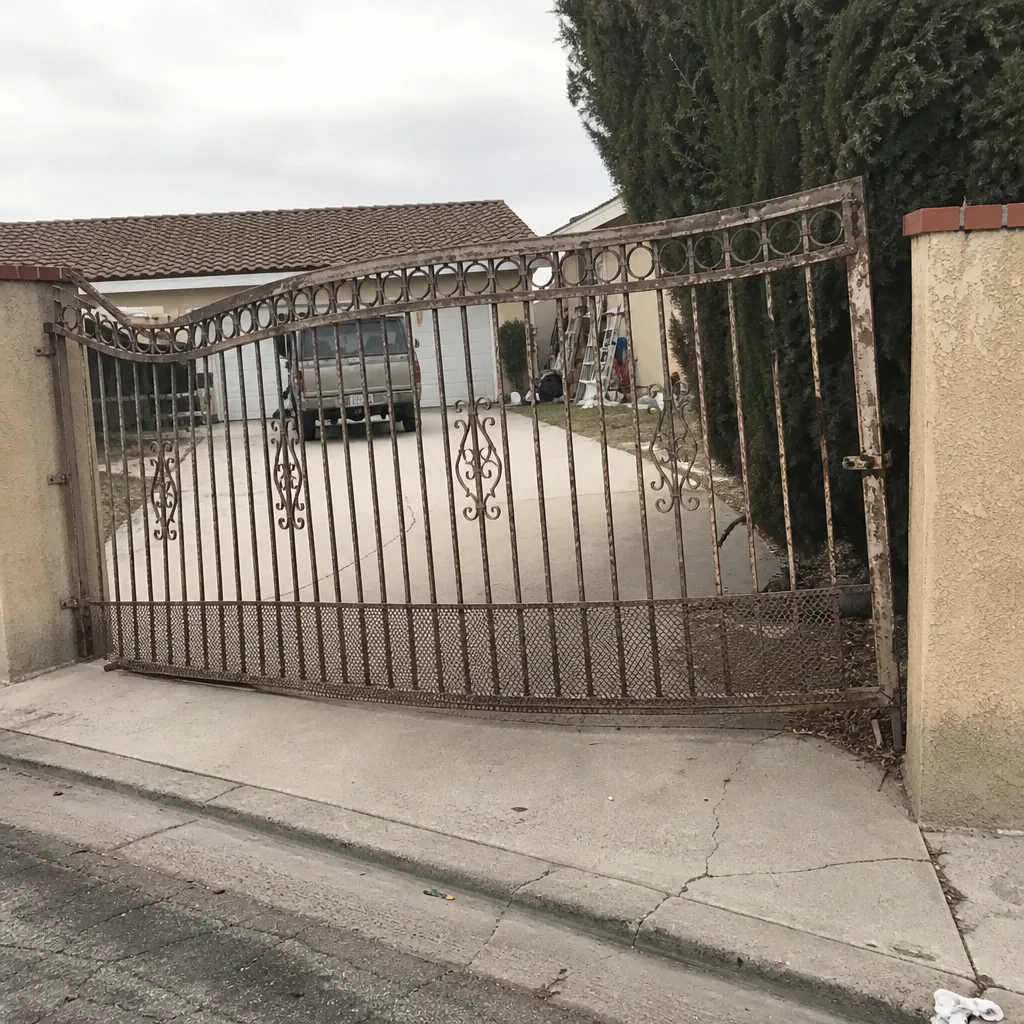 Before
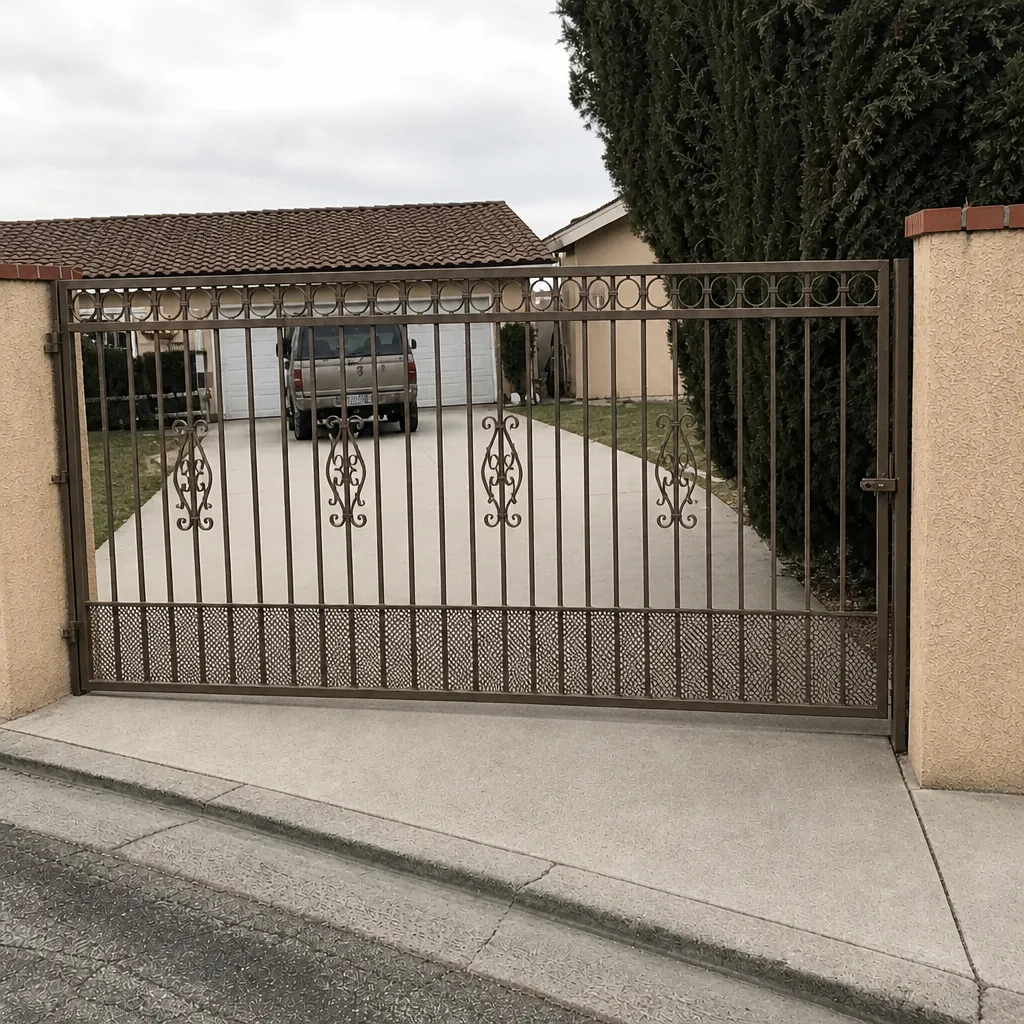 After
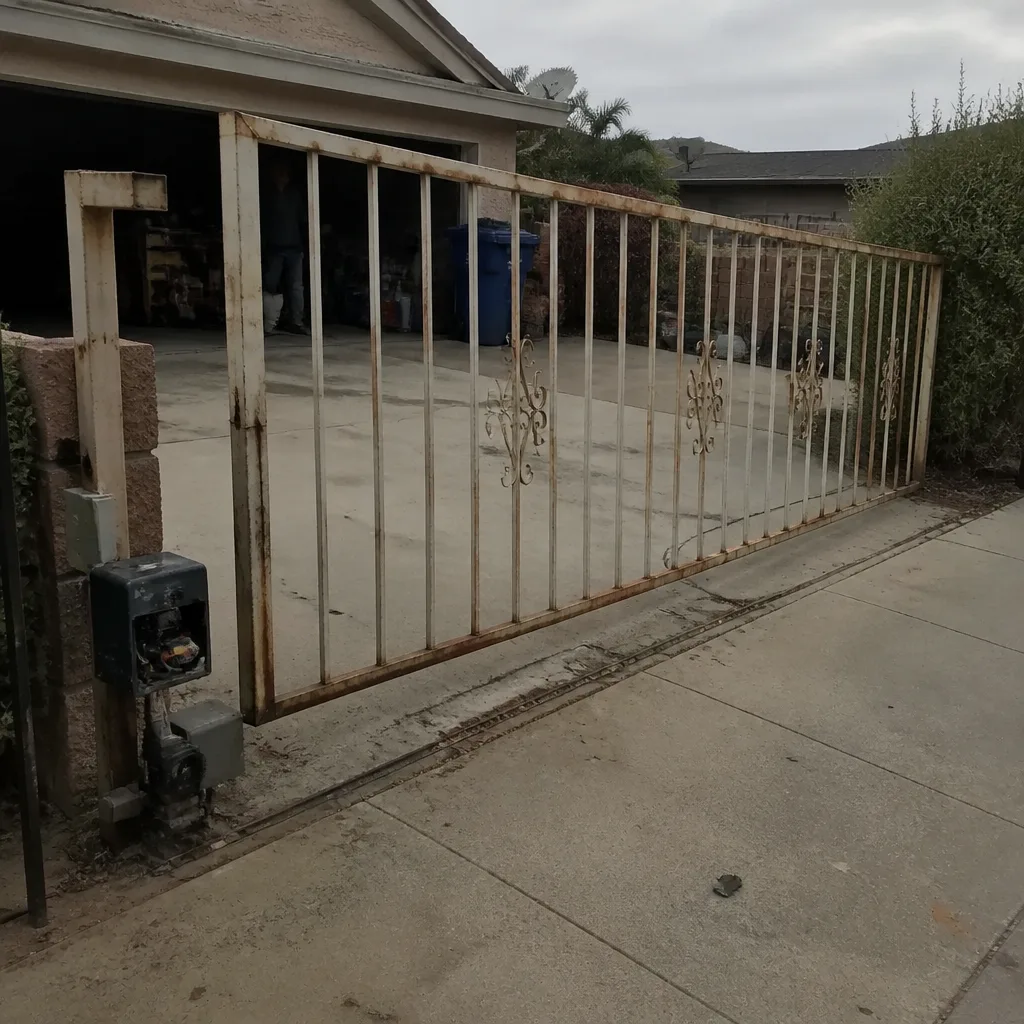 Before
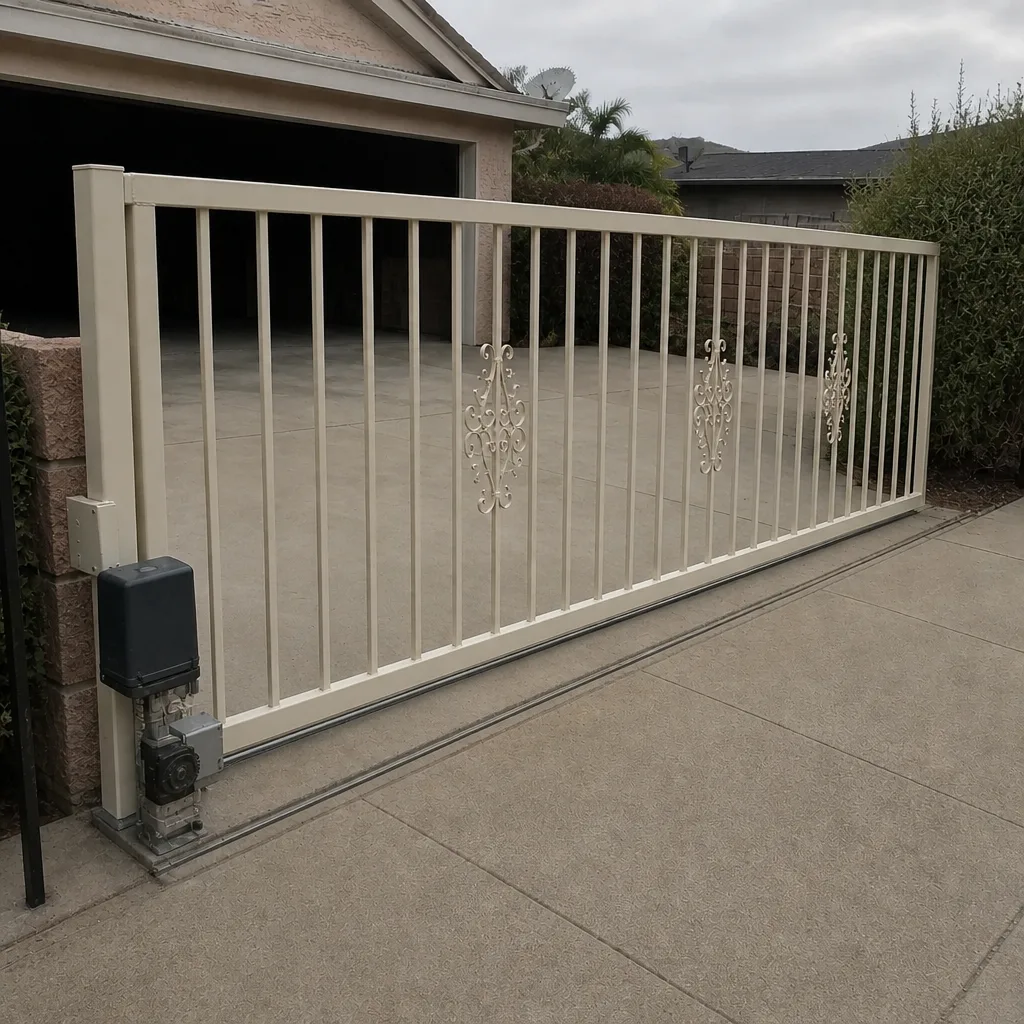 After
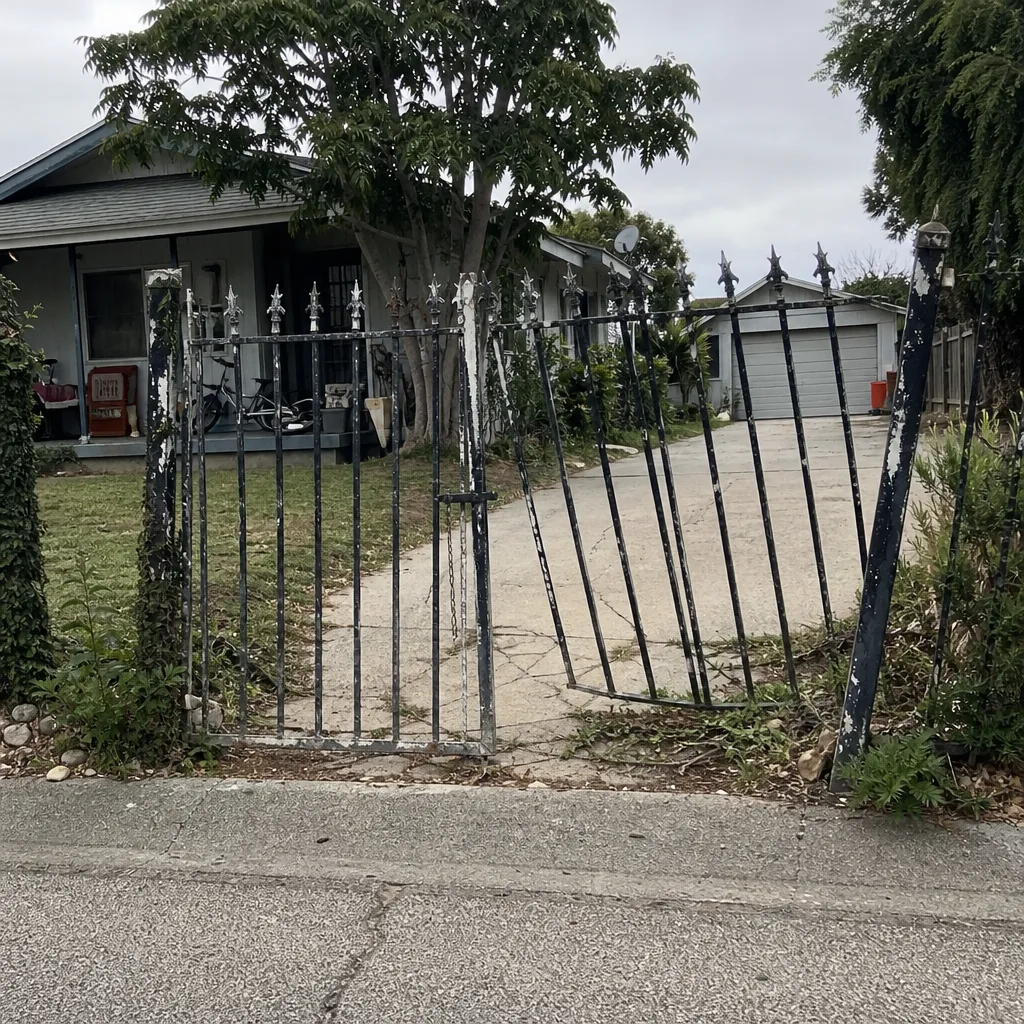 Before
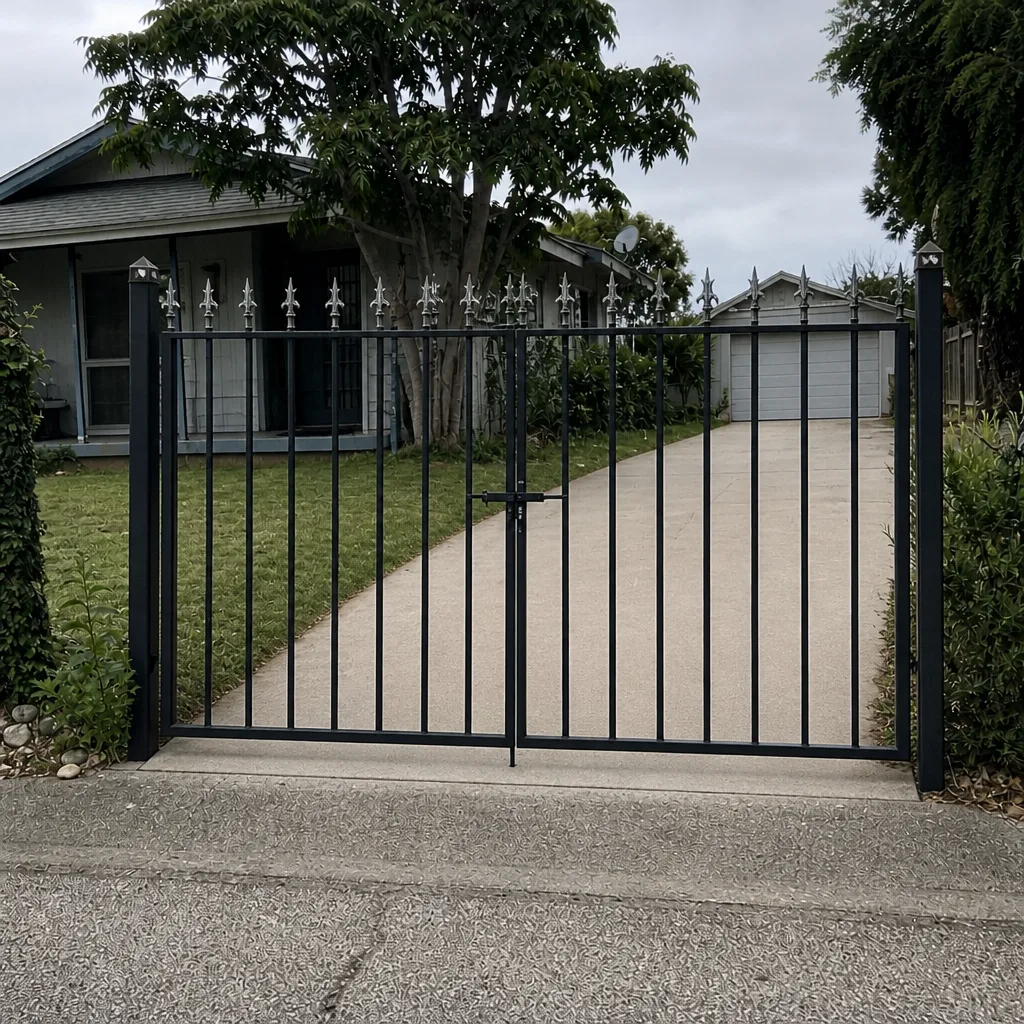 After
Common Mistakes to Avoid
- Assuming repair never needs a permit. A repair that quietly becomes a replacement – new posts, wider opening, taller leaf – crosses the line even if you called it repair on the estimate.
- Skipping HOA architectural review. Homeowners who get city approval but forget their HOA get stuck with an installed gate they may need to change at their own cost.
- Running electrical for an operator without a permit. A low-voltage operator still has a line-voltage feed, and unpermitted power runs come up during a home inspection or title search.
- Letting a handyman install a commercial operator. DoorKing or FAAC systems at an HOA entrance carry documentation a generalist won’t have on hand at inspection.
- Replacing a gate to a taller size “matching the neighbor.” Neighbor height is not a permit basis. Height limits run with the parcel and its zoning.
- Not disclosing prior unpermitted work. Failure to disclose an unpermitted gate on a transfer disclosure is a seller-side risk, even if everything works fine.
- Ignoring safety-device testing before the inspection. Sensors, loops, and reversing mechanisms fail inspections more often than structure does.
When to Call a Professional
Call a specialist when the scope is unclear, when your gate is between manual and automatic, when a post or footing is involved, or when the repair may turn into a replacement. Call us before you order parts, before you file with the city, and before your HOA architectural request goes in. Gate Repair Santa Maria offers free estimates in Santa Maria – call (844) 834-0978. We answer 24/7. Fast dispatch from 7am to 7pm, Sunday through Friday. We’ll walk through the permit question with you, tell you what scope needs paperwork and what doesn’t, and give you an honest read on whether your repair is a repair or a rebuild. If your gate needs a new operator or a fresh install, we handle that too, and the estimate is written and agreed before any work starts.
Frequently Asked Questions
No, most routine gate repairs in Santa Maria don’t require a permit – rehanging hinges, replacing a motor, repairing a track, or swapping a control board is maintenance. You do need a permit when the work changes a structural post or footing, alters the gate’s height or width, runs new electrical for an operator, or replaces the entire gate assembly. Call (844) 834-0978 for an exact scope review – estimates are free.
Yes, in most cases. The line-voltage feed from your panel to the operator requires an electrical permit, even when the operator itself runs low-voltage. Safety devices like loop detectors and photoelectric sensors are part of the electrical scope. A gate specialist who’s factory-trained on the operator brand – DoorKing, Ghost Controls, FAAC, and others – can scope the electrical work correctly before you submit.
Residential permits typically move faster than commercial ones, and turnaround depends on the building department’s current workload at the time you apply. Ask the city for the current plan-review timeline when you submit. If your project includes an HOA architectural request, add that time before you file with the city – HOA review often takes longer than plan check.
You have two paths: legalize the work by applying for the permit retroactively, or remove the nonpermitted structure before listing. Most sellers choose legalization if the gate works and passes safety-device testing. Either way, disclose in writing on the transfer disclosure statement. Call (844) 834-0978 and we’ll inspect the installation and tell you exactly what’s on record and what isn’t.
The stricter rule applies in practice. HOAs can’t grant permissions the city doesn’t, so a lower city height limit wins over a higher HOA allowance. But a lower HOA limit wins over a more permissive city rule, because you agreed to the CC&Rs when you bought the home. Pull your CC&Rs first, then check the city’s zoning on your parcel.
No – if a permit was pulled, the inspection is part of the process and skipping it leaves the permit open and unclosed on the city’s record. An open permit can stall a sale. Safety-device testing, structural anchoring, and electrical termination are all checked at inspection, and passing keeps the record clean.
The Bottom Line
Most gate repairs in Santa Maria are paperwork-free, and that’s fine. What matters is knowing which repairs cross into permit territory and treating those the way the city expects. Structural post replacement, new operators, height and location changes, and full replacements all need review; routine maintenance on an existing permitted gate usually doesn’t. HOA rules sit on top of city code, and where they conflict, the stricter one wins. If a previous owner left unpermitted work behind, handle it before you list the property. When the scope is unclear, a gate specialist who knows the brand, the code, and the inspection checklist is the fastest way to the right answer.
Call (844) 834-0978 for a free estimate. We answer 24/7. Fast dispatch from 7am to 7pm, Sunday through Friday. The price is quoted and agreed before any work starts.
Written by the team at Gate Repair Santa Maria.