
Last updated November 15, 2026
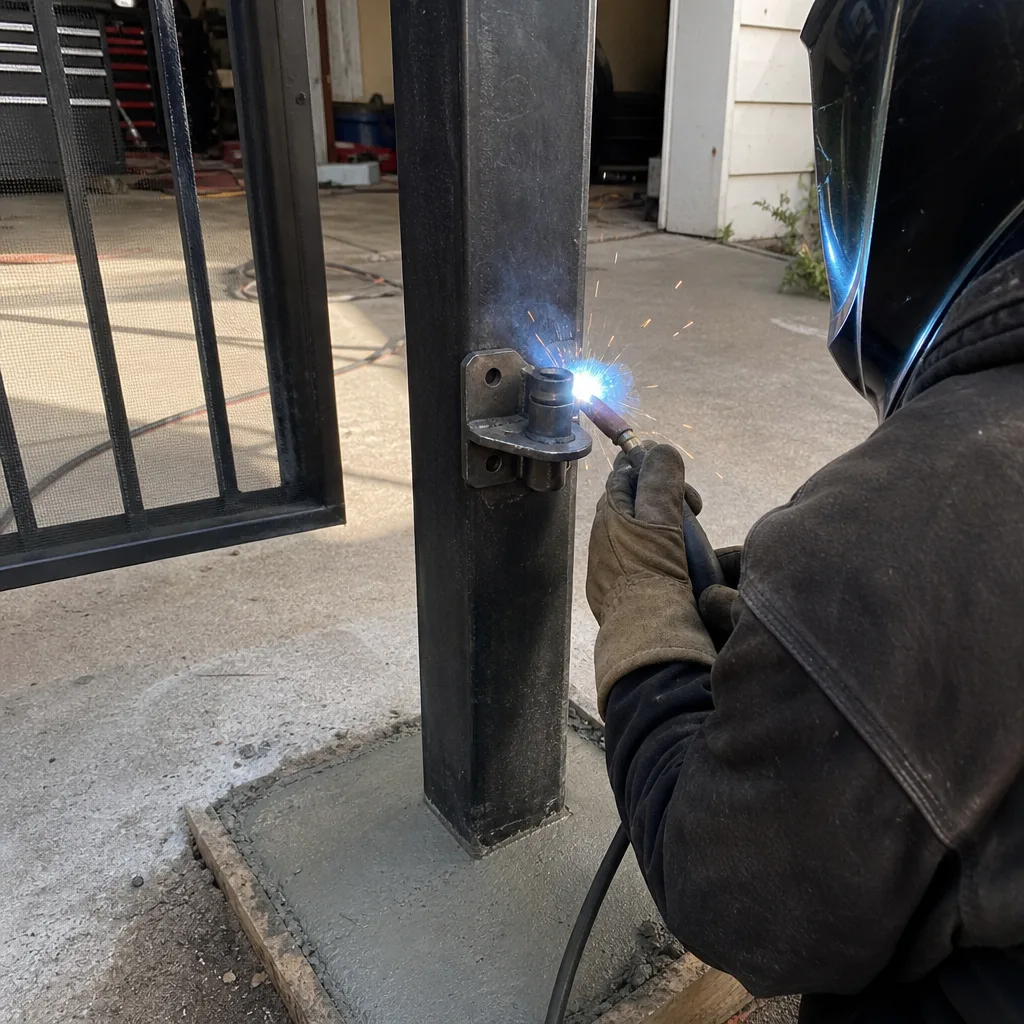
 Wrought iron
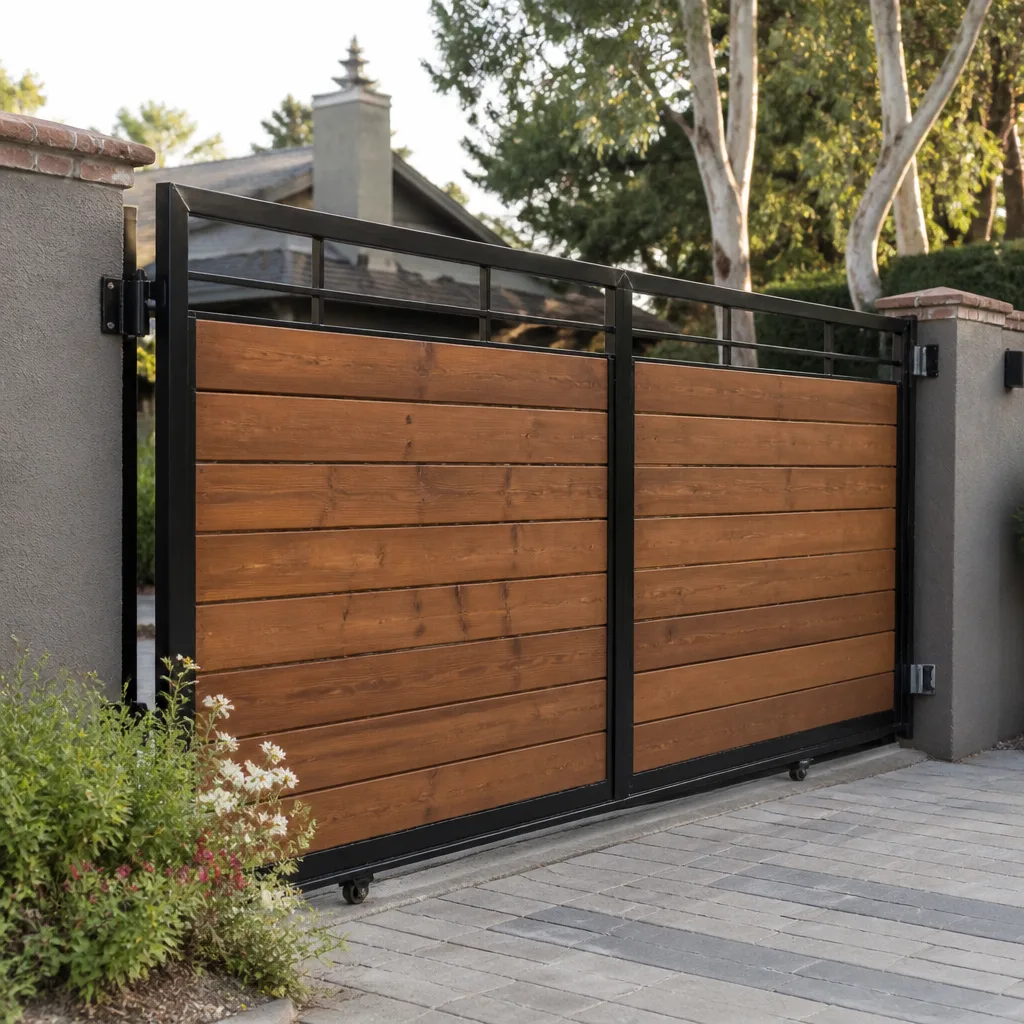 Wood & steel frame
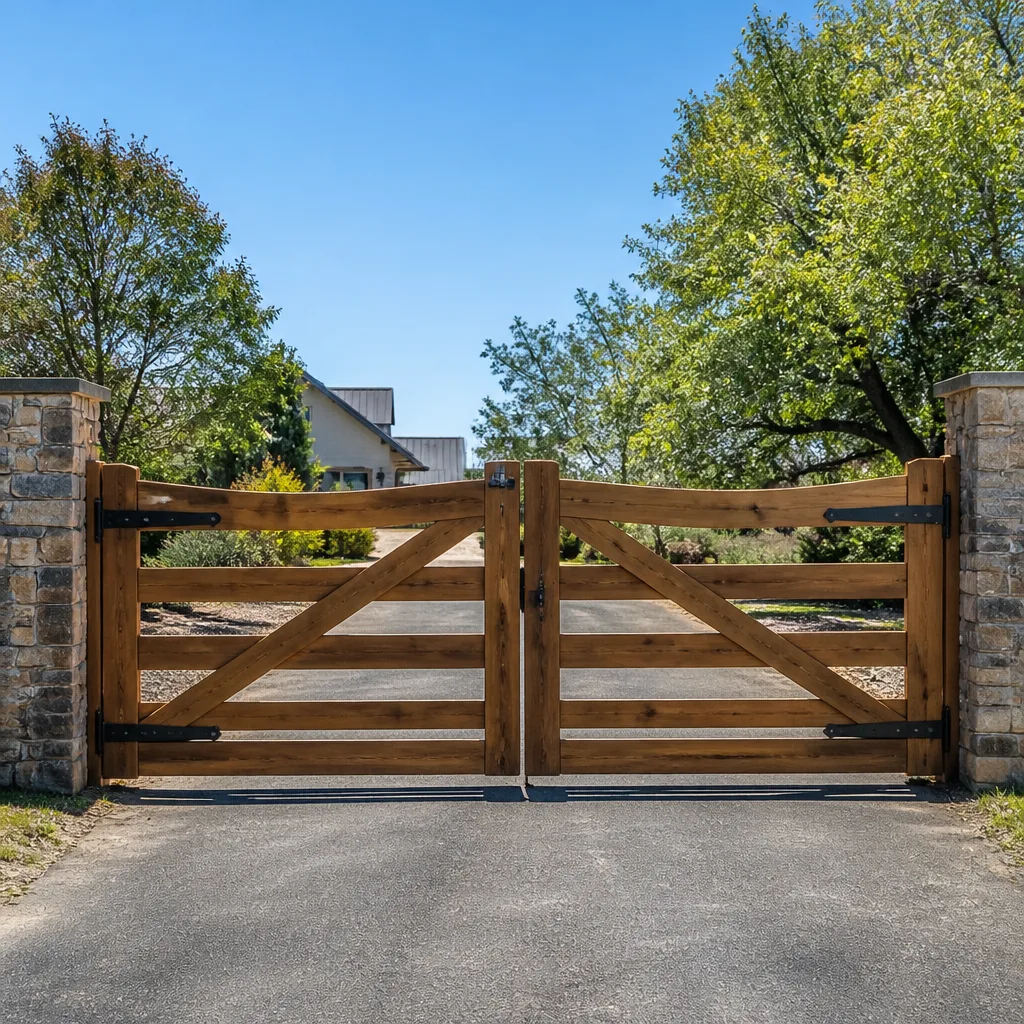 Farm & ranch
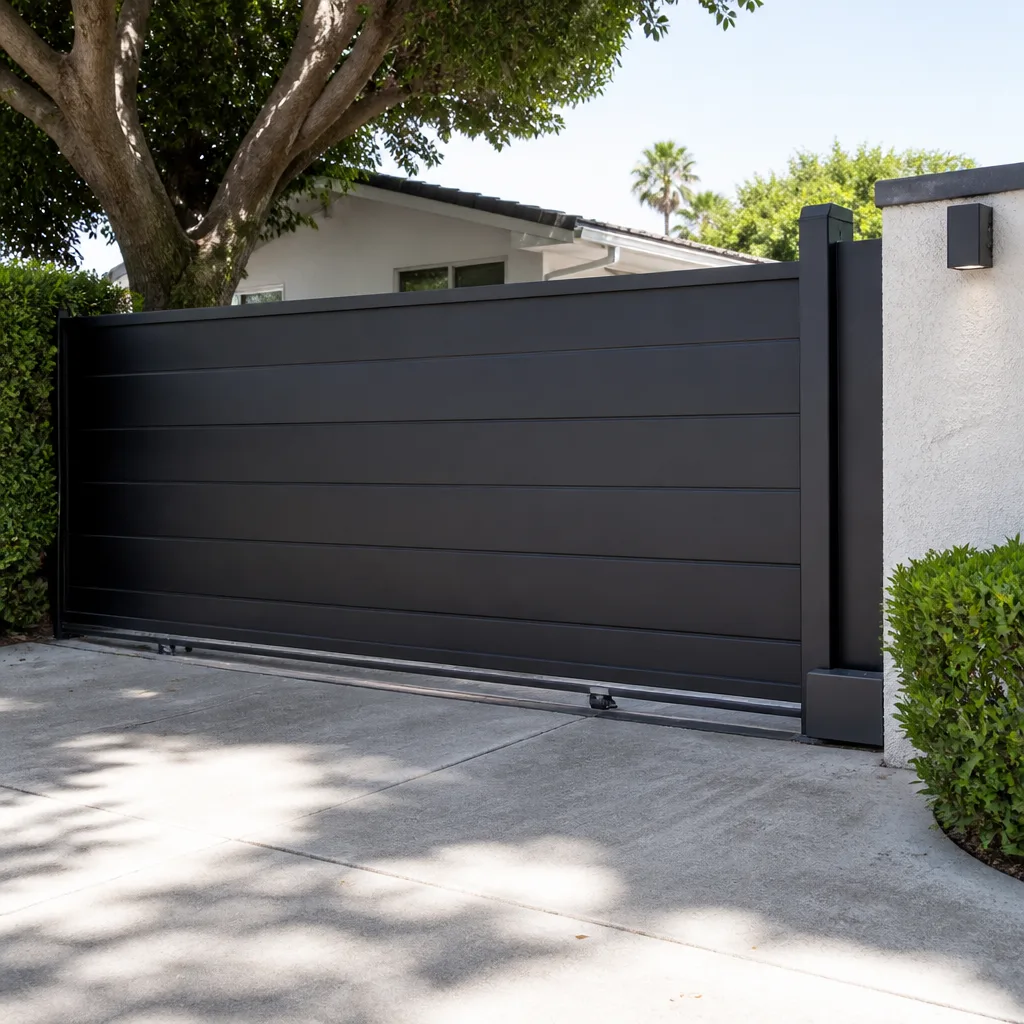 Sliding driveway gates
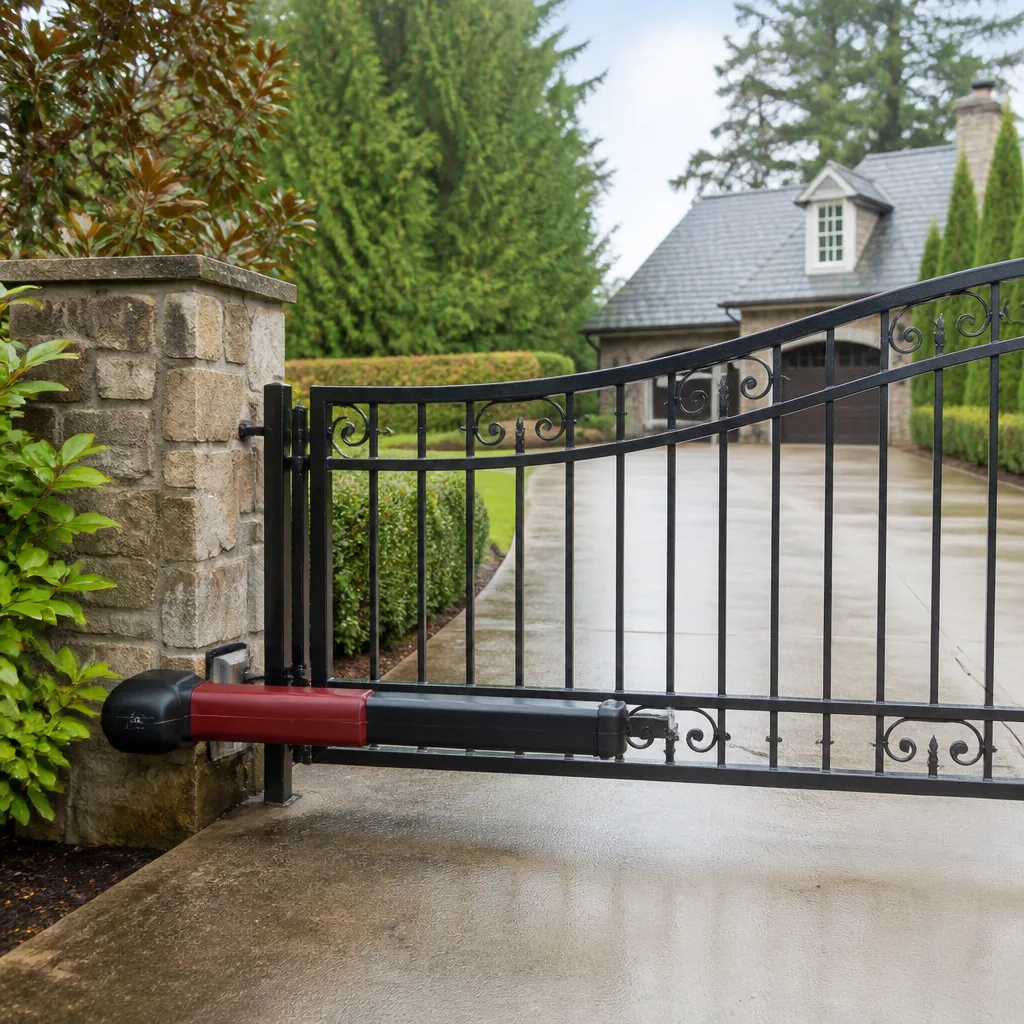 LiftMaster operators
Free on-site gate assessment - hinges, posts, and your LiftMaster or Nice gate operator checked before anything is quoted
The assessment is free and the quote is the invoice.
Get your free estimateGate Repair Warning Signs: A Santa Maria Homeowner’s Reference Guide
Most gates don’t fail without warning. They fail after weeks or months of small complaints nobody wrote down: a two-second pause before the gate moves, a grinding note that wasn’t there last spring, a remote that works from the driveway but not from the porch. Those aren’t personality quirks. They’re readings from a machine telling you which part is going bad. This guide translates each symptom into the component problem behind it, so a Santa Maria homeowner can tell the difference between “watch it” and “call today.”
Quick Answer
The main warning signs of a failing gate are hesitation before movement, new grinding or clicking sounds, jerky or uneven travel, a gate that reverses for no reason, sagging at the hinge side, and safety devices that no longer stop the gate. Intermittent problems are usually more urgent than constant ones, because they point to a component failing under load rather than a stopped motor. Anyone in Santa Maria seeing any of these should stop cycling the gate and get it inspected before the failure becomes a repair plus a replacement.
Styles & brands we work with
- Wrought iron
- Wood & steel frame
- Farm & ranch
- Sliding driveway gates
- LiftMaster operators
Table of Contents
- The Symptom-to-Cause Index
- What Each Gate Sound Is Telling You
- Visual Warning Signs on Hinges, Posts, and Welds
- Why Intermittent Failures Are More Urgent Than Constant Ones
- How to Document Gate Symptoms Before You Call
- Warning Signs Specific to Solar and Battery-Backup Gates
- Seasonal and Environmental Triggers in Santa Maria
- Common Mistakes to Avoid
- When to Call a Professional
- Frequently Asked Questions
The Symptom-to-Cause Index
This is the section to bookmark. Each symptom below maps to the components most likely responsible. It won’t replace a diagnostic visit, but it turns “the gate is acting weird” into something a technician can work with before anyone drives out.
- Pause of one to three seconds before the gate moves: the operator is fighting resistance it shouldn’t meet – a binding hinge, debris on the drive rack, or a motor pulling more current than it should. On a slide gate, check the track first.
- Grinding during travel: the drive rack or the operator gear is worn or misaligned. Continued running chews the rack teeth and turns a small fix into a rack replacement.
- Clicking but no movement: the control board is sending a signal the motor isn’t answering, or a safety device is interrupting the cycle. Common on DoorKing and Linear boards.
- Low humming then a stop: the motor is receiving power but the gate won’t move – binding mechanics, a failed capacitor on some units, or a load the motor can no longer pull.
- Gate reverses mid-travel: a safety loop, photo eye, or edge sensor is triggering falsely, or the control board is misreading it. This is a safety-critical fault, not a nuisance.
- Remote works close up but not from the house: receiver or antenna issue, weak battery in the transmitter, or interference. Rarely a motor problem.
- Gate drifts or sags at one end: hinge wear, post settling, or a weld starting to crack at the frame joint.
- Operator runs but the gate barely moves: slipping clutch, worn gear, or chain tension on units that use one.
Notice how few of those point at the motor itself. In our experience, most gate failures in Santa Maria start at the mechanical parts and the safety devices, and the operator is the last thing to go. That’s good news for the owner: a binding hinge or a misaligned rack is a faster, more contained repair than a motor or control board.
What Each Gate Sound Is Telling You
A gate has a small vocabulary of sounds, and each one comes from a specific place. Learning them is the fastest way to catch a problem while it’s still cheap.
Grinding
Grinding is metal on metal under load. On a slide gate it’s usually the drive rack and the operator pinion gear not meshing cleanly, often because the rack has debris packed into it or the operator has shifted slightly out of alignment. On a swing gate, grinding tends to come from a hinge or a bearing that has lost lubrication or worn past tolerance. Either way, the gate is damaging itself every time it cycles. Every extra week of grinding costs more at the repair.
Clicking
Clicking is usually electrical, not mechanical. A control board relay trying to fire the motor and failing, a safety device cycling, or a limit switch that’s out of adjustment will all produce a click with no corresponding movement. If you hear a click and then a pause and then normal travel, the board is likely correcting itself for now. That “for now” has a shelf life.
Humming
A steady hum with no movement means power is reaching the motor and the motor can’t turn the load. The gate is binding, the operator is overloaded, or the motor has a starting fault. Stop cycling it. A motor held in a stalled condition heats up fast, and motors that overheat can fail permanently.
Rhythmic clunking
Consistent clunking once per revolution points at a specific mechanical defect: a bent rack tooth, a deformed wheel, or a loose chain on a chain-drive operator. Note roughly where along the travel the clunk happens – it narrows down the source immediately.
New squealing or squeaking
Squealing is friction. Hinges, rollers, and pivot points dry out, and dry pivots wear. Lubrication on the right schedule prevents this entirely.
If you can, record 10 to 15 seconds of audio the next time the gate cycles. A short clip is one of the most useful things you can hand a technician when scheduling a gate repair visit, because the pitch and rhythm of the sound often tells us which component is failing before anyone arrives.
Visual Warning Signs on Hinges, Posts, and Welds
Sounds tell you what’s happening inside the operator. The structure tells you what’s happening to the gate itself. Walk the gate once a month and look at these spots.
Hinges
- Rust weeping at the pivot: not just surface color – orange staining running down from the hinge indicates active corrosion inside the pin. Left alone, the hinge seizes and the operator starts fighting it.
- Play when you push the gate by hand: with the operator off, a swinging gate should have almost no vertical lift at the hinge end. Any up-and-down movement means the hinge has worn and the gate is riding on the frame instead of the pivot.
- Uneven gaps at the hinge side: if the gap between gate and post widens or narrows over months, something is bending or settling.
Posts
- Tilt: check with a level, not by eye. A post that’s leaning a degree or two can make a swing gate bind or a slide gate rub the track. In Santa Maria’s soil conditions, this is more common than owners expect, and it usually shows up after ground moisture changes.
- Cracks at the base: concrete footings can crack as the ground moves. A hairline crack is normal; a widening one at the gate post is not.
- Loose anchor bolts: grab the post and try to wiggle it. Any movement means the anchoring is compromised.
Welds and Frame Joints
- Hairline cracks at the corners: stress concentrates at frame corners. A crack that’s visible today can propagate across a joint in a few months of daily cycling.
- Rust bleeding at joints: rust stains at a weld mean moisture has gotten into the joint. That’s where the frame will fail next.
- Frame flex: with the gate stopped, push gently on the far end. More than a small amount of flex means the frame is fatigued and a welded joint is at risk.
Structural problems compound. A sagging gate loads the operator unfairly, the operator works harder, and one failure becomes three. That’s why electric gate repair always includes a structural check – the motor repair is wasted if the frame is going to bend the next month.
Why Intermittent Failures Are More Urgent Than Constant Ones
Here’s the part most homeowners get backwards. A gate that consistently fails to open is at least predictable. A gate that fails one time in ten is the more serious problem.
The reason is what “intermittent” actually means in mechanical and electrical terms: the component still works most of the time, but it fails under a condition that only occurs sometimes. That condition is usually load, temperature, moisture, or a marginal electrical connection. Those failures are the ones that progress. A cracked board solder joint, a safety loop buried in the driveway with a failing splice, a motor that’s begun to drag under a loaded swing – all of them start intermittent and all of them end as total failure.
Intermittent failures also have a way of failing at the worst moment. The gate works all week, then sticks open when you leave for something important. The gate closes fine all day, then reverses at night.
How to explain it to a technician
Don’t just say “it sometimes acts up.” Use this structure:
- Frequency: how often it happens, roughly – one in twenty cycles, several times a day, only in the morning.
- Conditions: time of day, weather, temperature, whether the gate is loaded (cars waiting) or empty, whether the gate is opening or closing.
- Sequence: what the gate does right before, during, and after the fault.
- Any correlation you’ve noticed: a particular remote, a particular angle, a particular day.
That information changes the diagnosis completely. A gate that reverses on cold mornings is often a low-battery or capacitor issue; a gate that reverses when a car is waiting is often a safety device. Two different repairs, two different costs.
How to Document Gate Symptoms Before You Call
You can shorten the appointment and reduce callbacks by capturing good information before anyone drives out. This is the practical part of gate diagnostics, and it’s worth the ten minutes it takes.
What to photograph
- The operator label: photograph the manufacturer and model plate on the operator housing. If you see a Linear, Viking, Ghost Controls, or DoorKing badge, that’s a brand we work on regularly, and having it photographed means the right parts get loaded for the visit.
- The full gate from the outside: one wide shot showing the gate, posts, and ground track or swing arc.
- Each hinge or roller up close: with a light on the pivot area so rust and wear are visible.
- Frame corners and weld joints: any joint with rust bleed or a visible crack.
- The safety devices: photo eyes, safety edges, and loop detector covers, if you have them.
- The control board inside the enclosure: a clear overhead shot of the board itself, plus the wiring terminals. Don’t move anything to get it.
What to write down
- Model and brand of the operator (from the label you photographed).
- Whether the gate is swing or slide, and how wide and heavy it is (approximate is fine).
- Whether it’s hardwired or running on a battery with a solar panel.
- Any recent work on the property – landscaping, fencing, concrete, driveway work – because a surprisingly large number of gate faults start with a shovel.
What not to do while documenting
Don’t reach into the operator enclosure with the gate connected. Don’t force a gate that has stopped – swinging a jammed gate can crush fingers, drop a panel, or pull a slide gate off its track. If the gate is stuck open, leave it open. If it’s stuck closed, use another entrance and get it looked at. And don’t try to test the safety devices by putting yourself in the path. Those devices are there to stop heavy metal, and you are not the test.
Photographs and a written description of the symptoms are often good enough to move straight to a diagnostic visit with the right parts, instead of a scouting trip and a return appointment. If you’ve got a bag of photos and a symptom list, call Gate Repair Santa Maria and we can usually save you a step.
Warning Signs Specific to Solar and Battery-Backup Gates
Solar and battery gates fail differently from hardwired units, and the signs are easy to misdiagnose as motor trouble. If your gate runs on a battery with a panel, watch these.
- Slower travel as the day goes on: the battery is losing the capacity to hold charge, and the operator slows down to protect itself. This is the most common early sign.
- Gate stops partway and waits, then continues: the operator is protecting against low voltage mid-cycle.
- Works all day, fails overnight or after several cycles: the panel isn’t keeping up with the load, or the battery has aged. A battery at the end of its service life will hold a surface charge and fail under the first real current draw.
- Remote range shrinks in cold weather: battery voltage drops with temperature, on the gate side or the remote side.
- Solar panel film build-up: dust, pollen, and bird droppings that seem minor on a glass panel can cut a real percentage of charging, and after a few months of neglect the battery never fully recovers.
- Fault codes on the board: most solar-capable operators log a battery or charging fault before they lock out entirely. If the board has an LED indicator, note what it’s doing before you call.
One thing that matters for Santa Maria specifically: this is a sunny, dry climate most of the year, and solar gates here often get noticed later than in wetter places because the panel works so well in summer. That means when the symptoms appear, the battery is often further along than the owner realizes. If the gate takes longer to complete a cycle than it did a year ago, treat that as a battery check coming up, not a coincidence.
Seasonal and Environmental Triggers in Santa Maria
Santa Maria’s climate is mild, and that’s exactly why gate problems here can hide. There’s rarely a dramatic freeze or storm to force the issue. The failing parts fail slowly.
- Summer dust and pollen: the drive rack on a slide gate collects grit that grinds between the rack and the pinion gear. A rinse and a check every few weeks prevents most rack wear. On swing gates, dust works into the hinge pivots and turns into a grinding paste.
- Fall leaf drop and wind-blown debris: leaves and twigs in the track are one of the most common causes of a slide gate reversing without warning. The safety edge or current sensor reads the obstruction and reverses the gate – which is what it’s supposed to do, but it’ll do it every cycle until the track is cleared.
- Winter moisture: harmless in small doses and cumulative over months in the wrong place – inside hinge pins, in the base of a gate post, in a control board enclosure that’s lost its seal. A missing enclosure cover lets in rain and insects, and a bug on a control board is a real short.
- Spring growth: vines, weeds, and grass growing up against a safety photo eye will trip the beam and stop the gate. When a customer tells us a gate started failing “for no reason” in spring, we look at the photo eye first.
- Ground movement: wet winters followed by dry summers shift soil, and gate posts that were true three years ago can lean by a degree. That’s enough to bind a slide gate against its track or to load a swing gate hinge unevenly.
If you want one seasonal habit to keep: walk the gate once a month, clear the track or sweep the swing arc, and listen. That’s most of gate maintenance, and it takes less than five minutes.
Worth saying plainly – Santa Maria sits in a climate where the gate stays in daily use all year, and years of unbroken daily cycles add up. If you’ve got a gate that’s been working for a decade without anyone opening the operator housing, get a professional to look at it. Annual inspection on a heavy gate, especially a commercial one on a property in or around the Santa Maria area, is cheaper than a motor replacement.
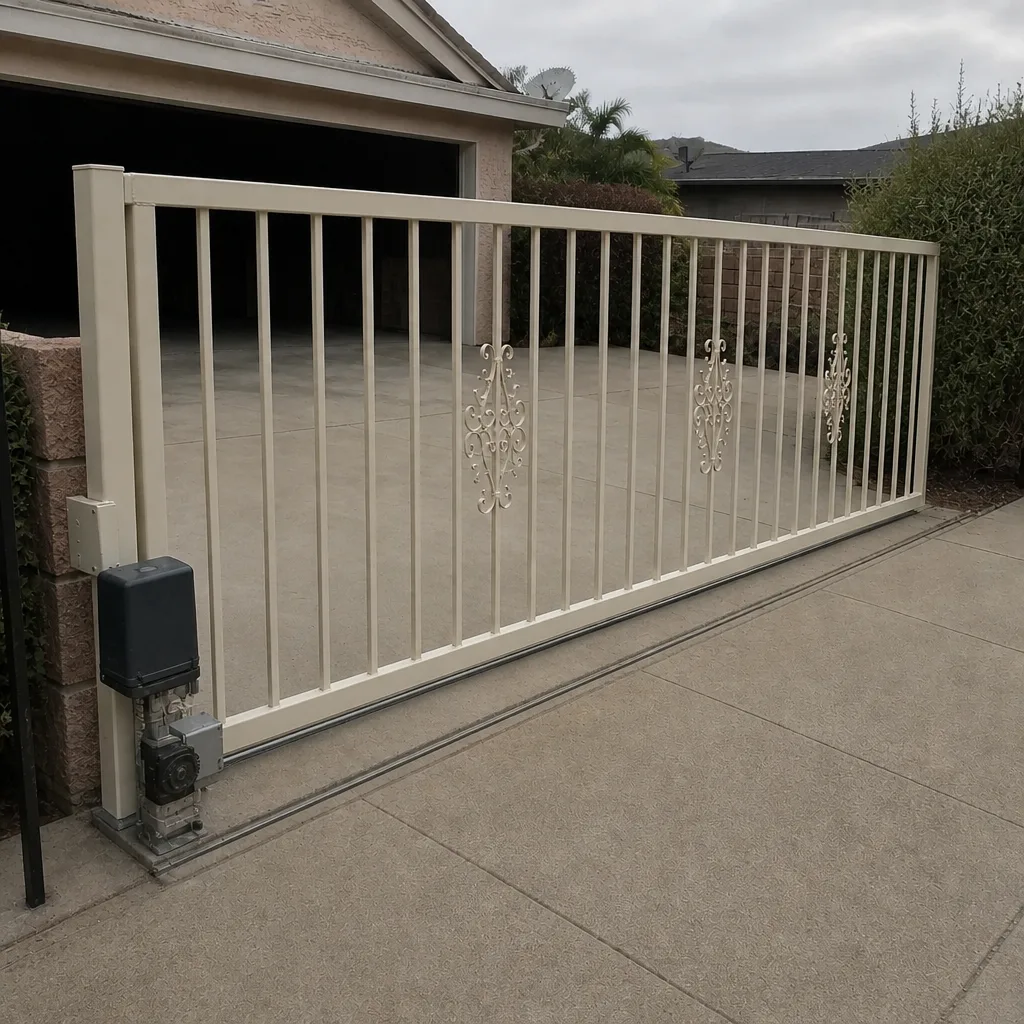
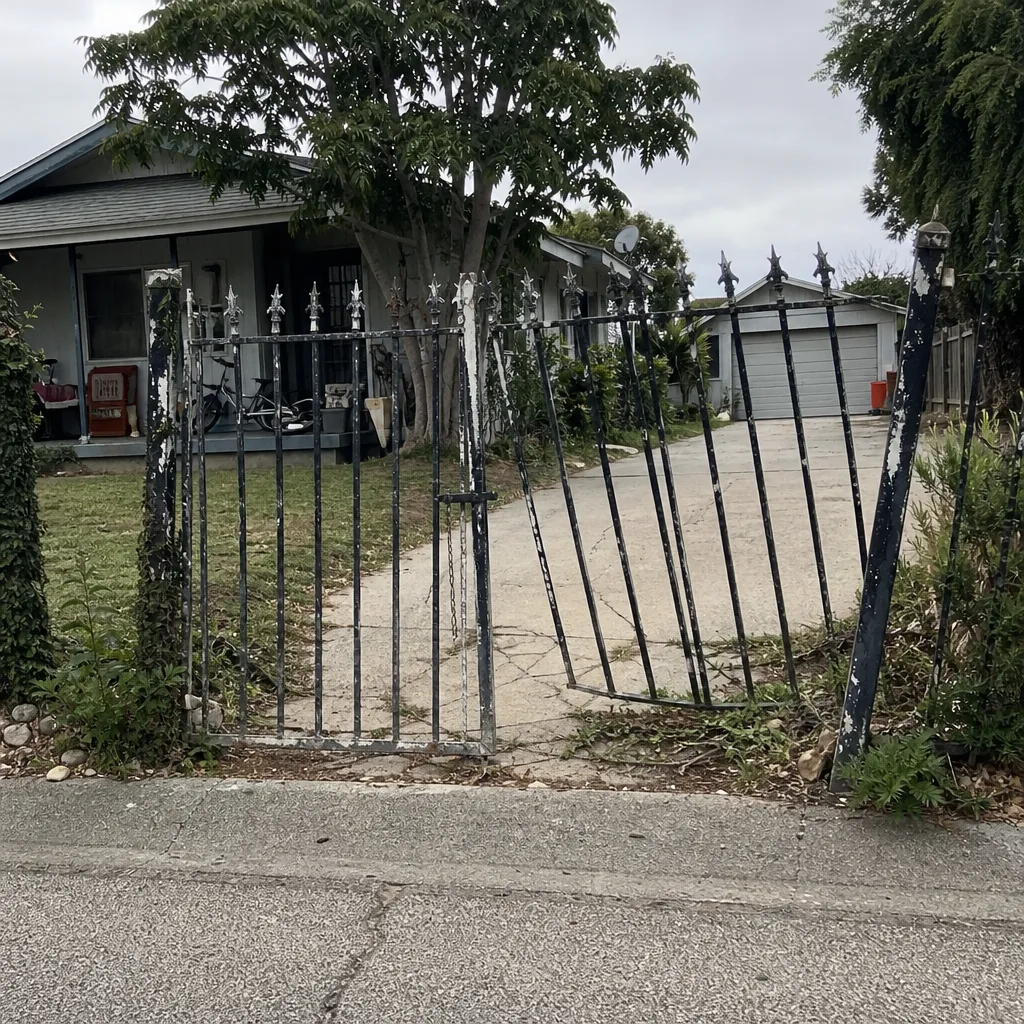
See the difference
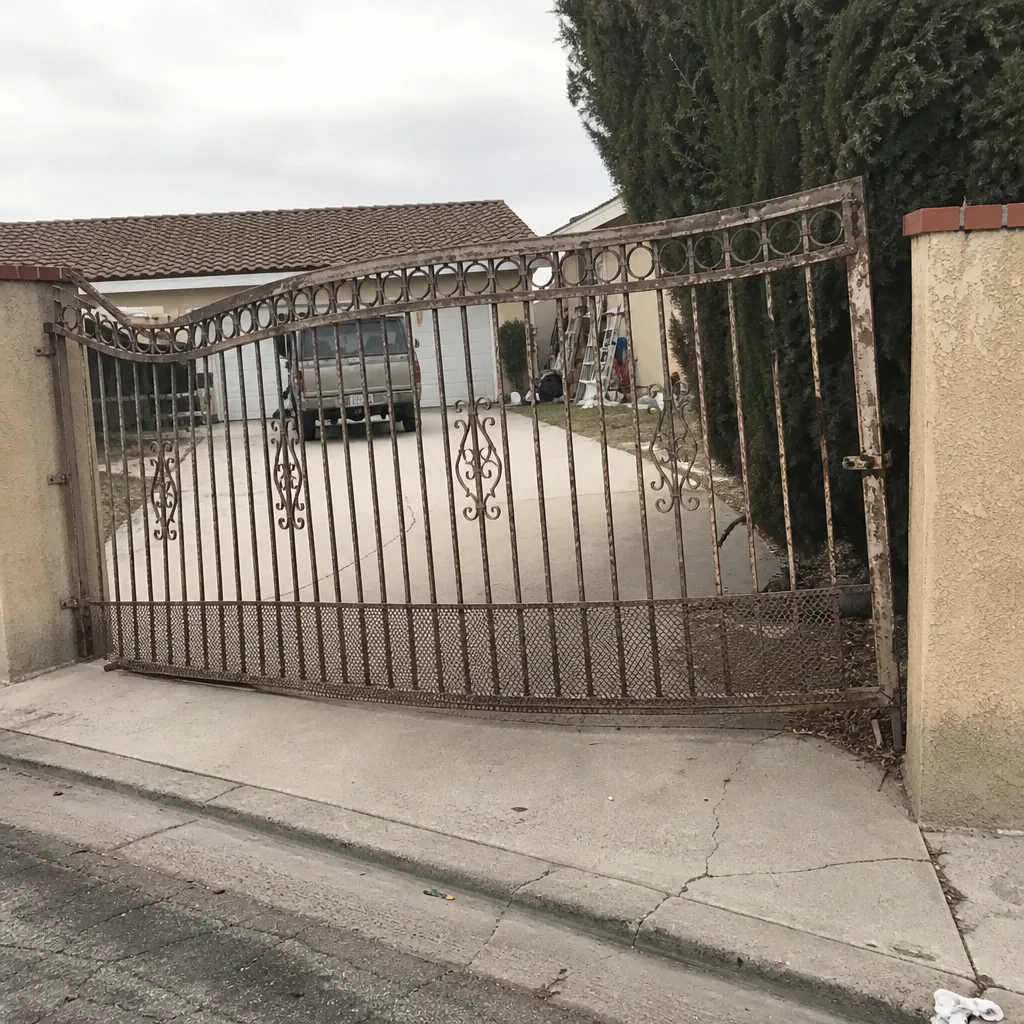 Before
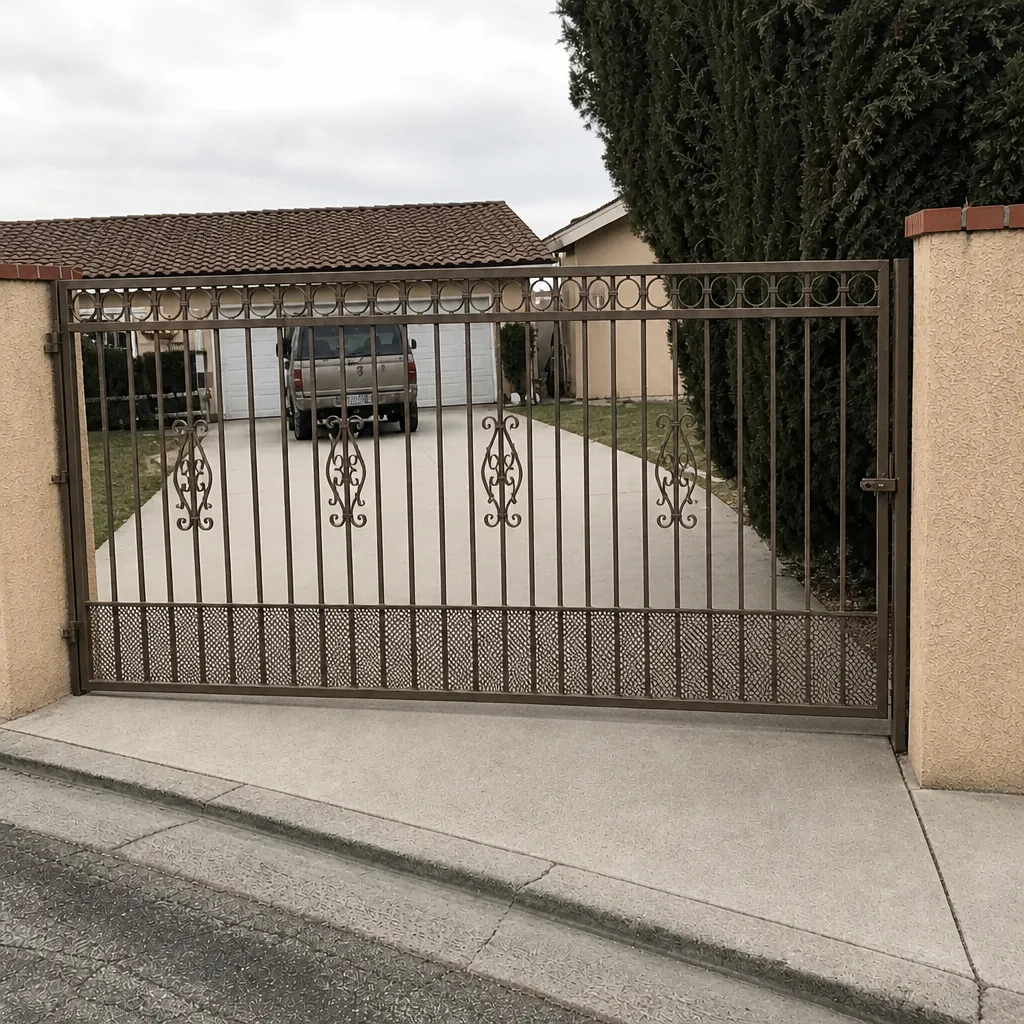 After
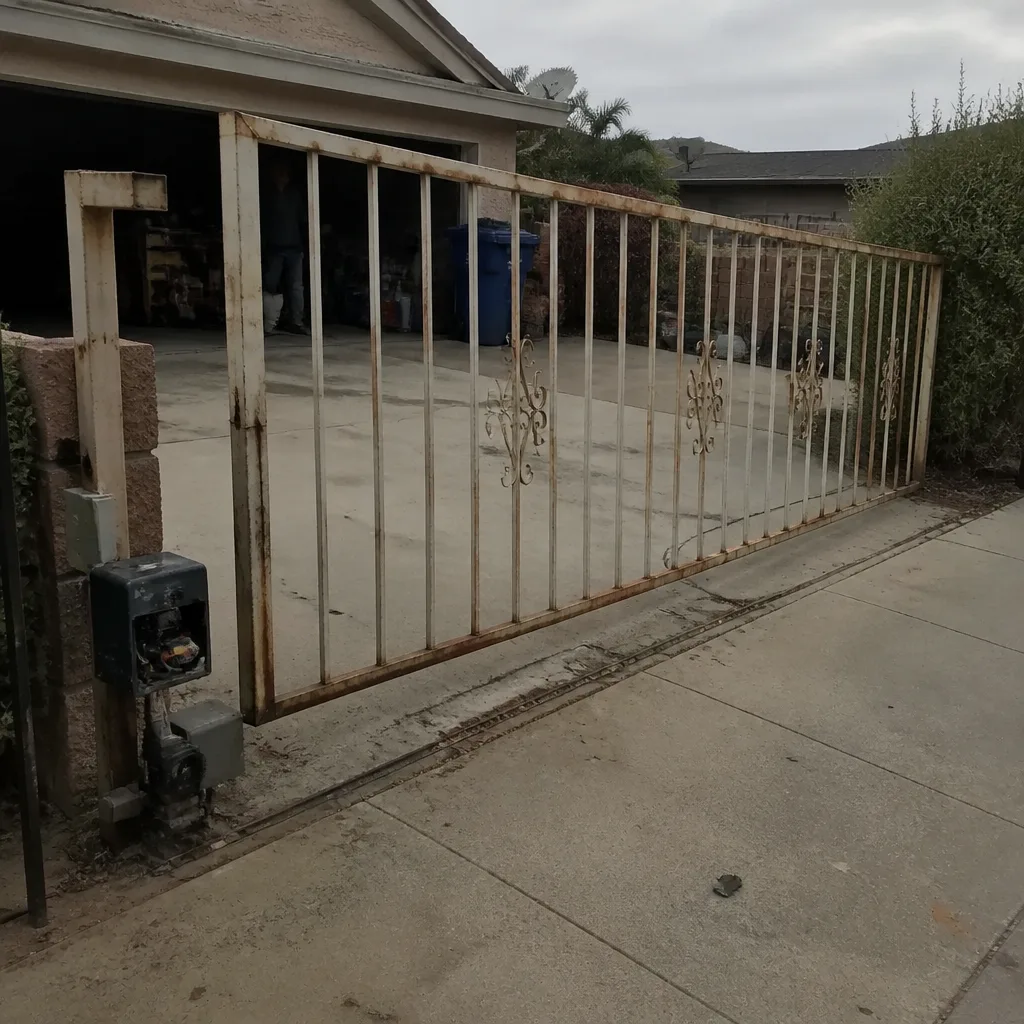 Before
 After
 Before
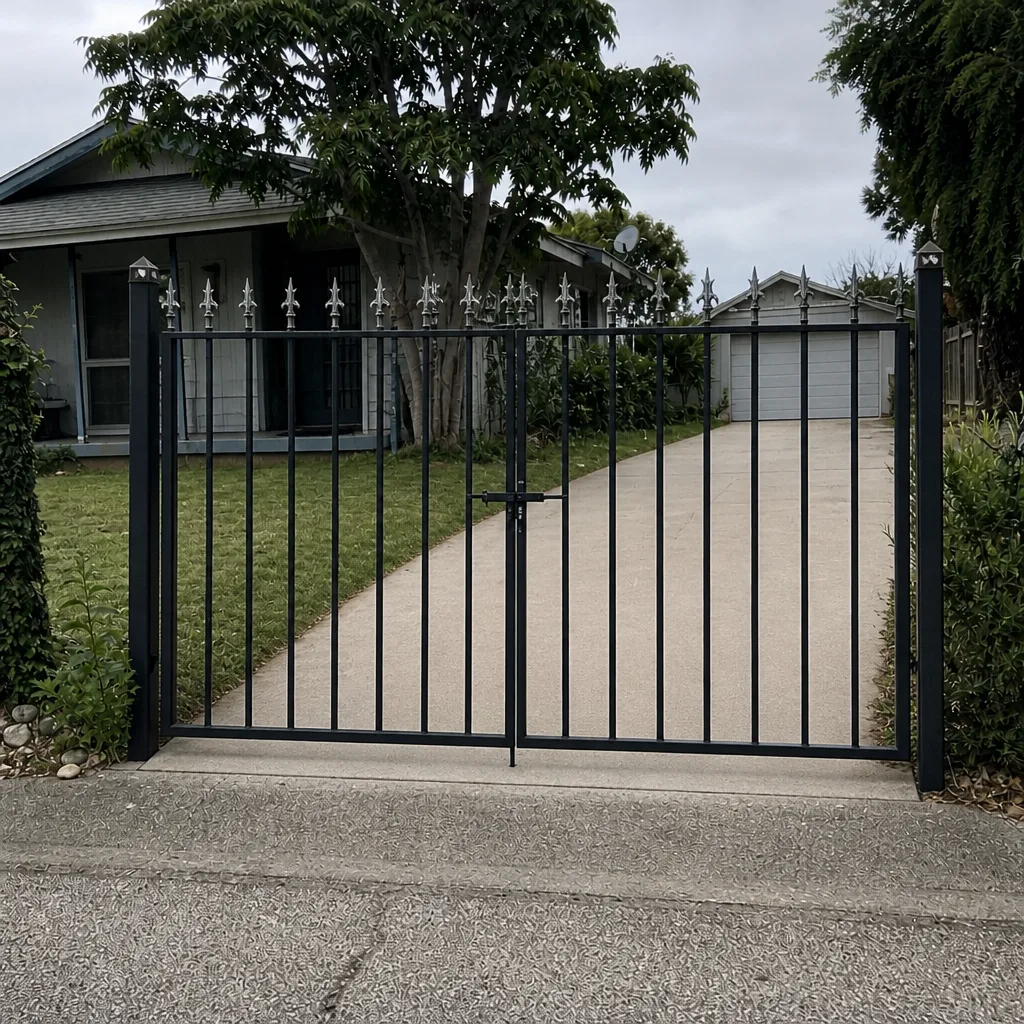 After
Common Mistakes to Avoid
- Treating a reversing gate as a personality quirk. Every reverse is the gate telling you a safety device fired. If it’s reversing on its own, the safety system isn’t doing its job, and the next thing it misses might be a car or a child. Get it checked before letting the gate run unattended.
- Lubricating everything with whatever’s in the garage. WD-40 on a hinge pivot flushes out the grease that was doing the work, and the hinge wears faster after the spray than before it. Use the lubricant the operator and gate hardware call for, or leave it to the technician.
- Chasing the remote instead of the operator. A remote that works at the gate and not at the house is a signal problem, not a motor problem. Replacing the remote won’t fix a receiver or antenna issue, and it’s a common waste of money.
- Forcing a stuck gate. Pushing or pulling a jammed slide gate can pull it off its track and drop a heavy panel. It can also burn out an operator that would otherwise have been repairable. If the gate isn’t moving under power, stop.
- Ignoring a sagging gate because “it still opens.” A sagging gate is loading the hinge and the operator every cycle. It still opens for a while, then one day it doesn’t. Trim and address the sag before the operator takes the strain.
- Letting a “minor” crack in a weld go unwatched. Hairline cracks in a frame corner propagate. The repair in month one is a re-weld; the repair in month eight is a new gate frame.
- Assuming a solar gate needs a new operator because it’s slow. Nine times out of ten it’s the battery, the charging circuit, or the panel. The operator keeps getting replaced on these gates because homeowners never see the battery as the culprit.
When to Call a Professional
Call a professional the moment any of these appear: the gate reverses without an obstruction, a safety edge or photo eye stops triggering, the operator hums without moving, the gate has begun to sag visibly at one end, a weld or joint shows a crack, or a gate has come off its track. Also call if you can’t identify the operator brand – the wrong part guess on a DoorKing or Linear board will cost more than the diagnostic visit. Equally, call if a problem is intermittent but has been going on for more than two or three weeks, because intermittent failures are the ones that progress fastest under load.
Gate Repair Santa Maria offers free estimates in Santa Maria – call (844) 834-0978. Our technicians have up to 9 years of experience, and we’re certified to service nine gate operator brands including Linear, Viking, DoorKing, and Ghost Controls, on both residential and commercial systems. We answer 24/7. Fast dispatch from 7am to 7pm.
Frequently Asked Questions
A delay before the gate starts moving is usually the first measurable sign. The operator is meant to respond in a fraction of a second; a two-second pause means it’s working against resistance – typically a binding hinge, debris on the track, or a motor drawing more current than it should. Catch it there and it’s a cleanup and lubrication job. Ignore it and it becomes a motor or a control board.
Yes, and it should be treated as a safety issue, not a convenience one. A reversing gate means a safety device is firing – sometimes correctly (an obstruction), often falsely (a misaligned photo eye, a damaged loop, a control board fault). If it’s firing falsely, the safety system can also fail to fire when it should, which is the scenario you don’t want. Call (844) 834-0978 for an exact quote – estimates are free.
Intermittent failures point at a component that’s failing under load, temperature, or moisture, rather than being fully broken. That’s often more serious than a part that’s stopped outright, because it means something is on the way out rather than already gone. The repair is usually faster if you catch it while it’s still intermittent – we can watch it happen.
We’re certified to service nine gate operator brands, covering the main residential and commercial names. If your operator carries a Linear, Viking, Ghost Controls, DoorKing, LiftMaster, FAAC, BFT, Elite, or Mighty Mule label, we’ve worked that platform and we know its common failure modes. Photograph the operator label before you call so we can confirm and bring the right parts.
Once a year for a residential gate in daily use, and more often for a heavy gate on a commercial property or an HOA. Santa Maria’s dry, dusty summer and mild winter don’t produce dramatic gate failures, which is exactly why slow wear hides. An annual inspection catches hinge wear, rack debris, wiring issues, and battery problems before they turn into a repair plus a replacement.
Yes – gate installation, electric gate repair, and the electrical side of the gate – wiring, control boards, safety loops, safety edges, and access hardware – are all part of what we do. New installation and operator replacement are measured, ordered, and scheduled, so the first step is a free on-site estimate and a written price before any work starts. Call (844) 834-0978 and we’ll schedule the measure.
The Bottom Line
Gates don’t fail without warning. They fail after months of small, ignored signals: a pause, a grind, a click, a lean. The symptom-to-cause index is the heart of this guide because translating sound and motion into a specific component is what shortens the repair and protects the gate. Intermittent problems deserve more attention than constant ones. Structural signs on hinges, posts, and welds are the ones to catch early, and solar and battery gates have their own distinct warning signs. Walk the gate once a month, photograph what you see, and call when a symptom persists for more than two or three weeks. The earlier the call, the smaller the repair.
If you’re seeing any of the warning signs in this guide on a gate in Santa Maria, don’t wait for the gate to stop working before you find out what’s wrong. Call (844) 834-0978 for a free estimate. We answer 24/7. Fast dispatch from 7am to 7pm, Sunday through Friday.
Written by the team at Gate Repair Santa Maria.