
Last updated November 15, 2026
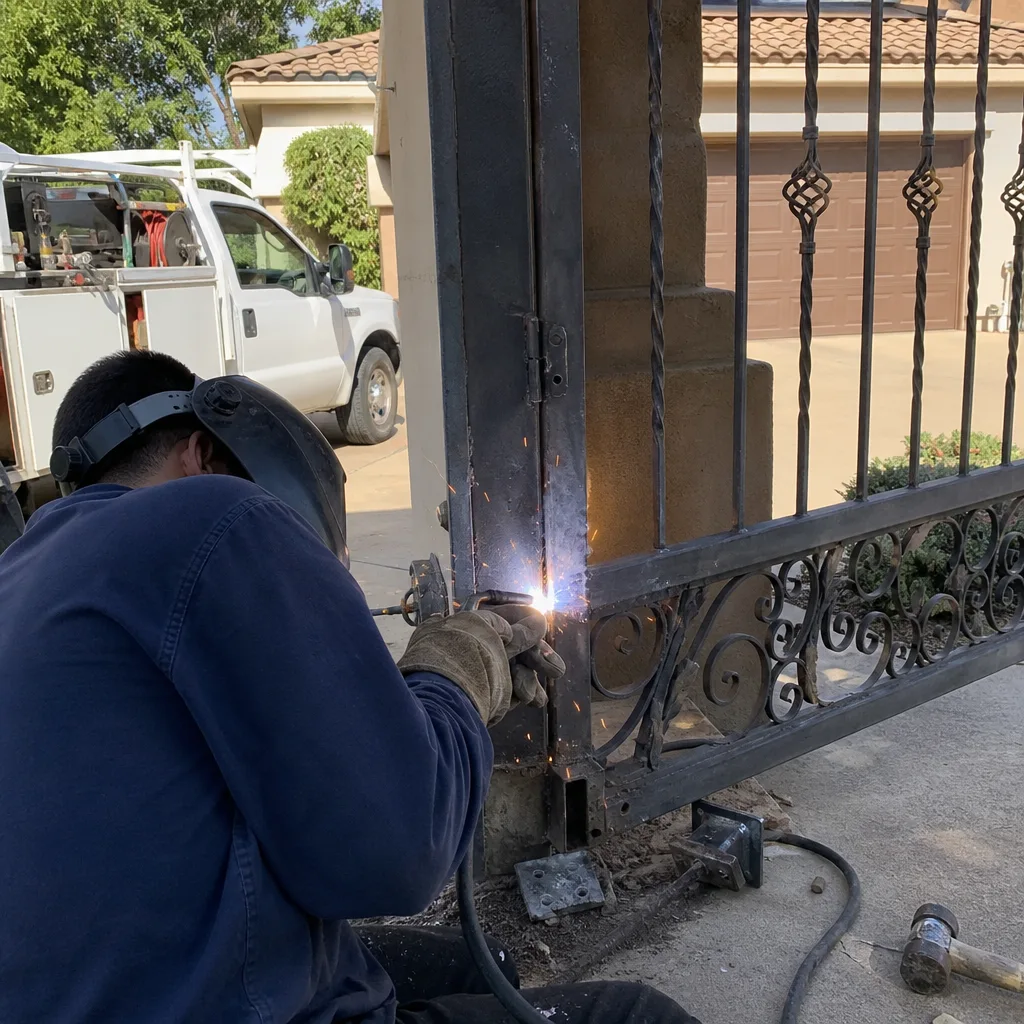
 Wrought iron
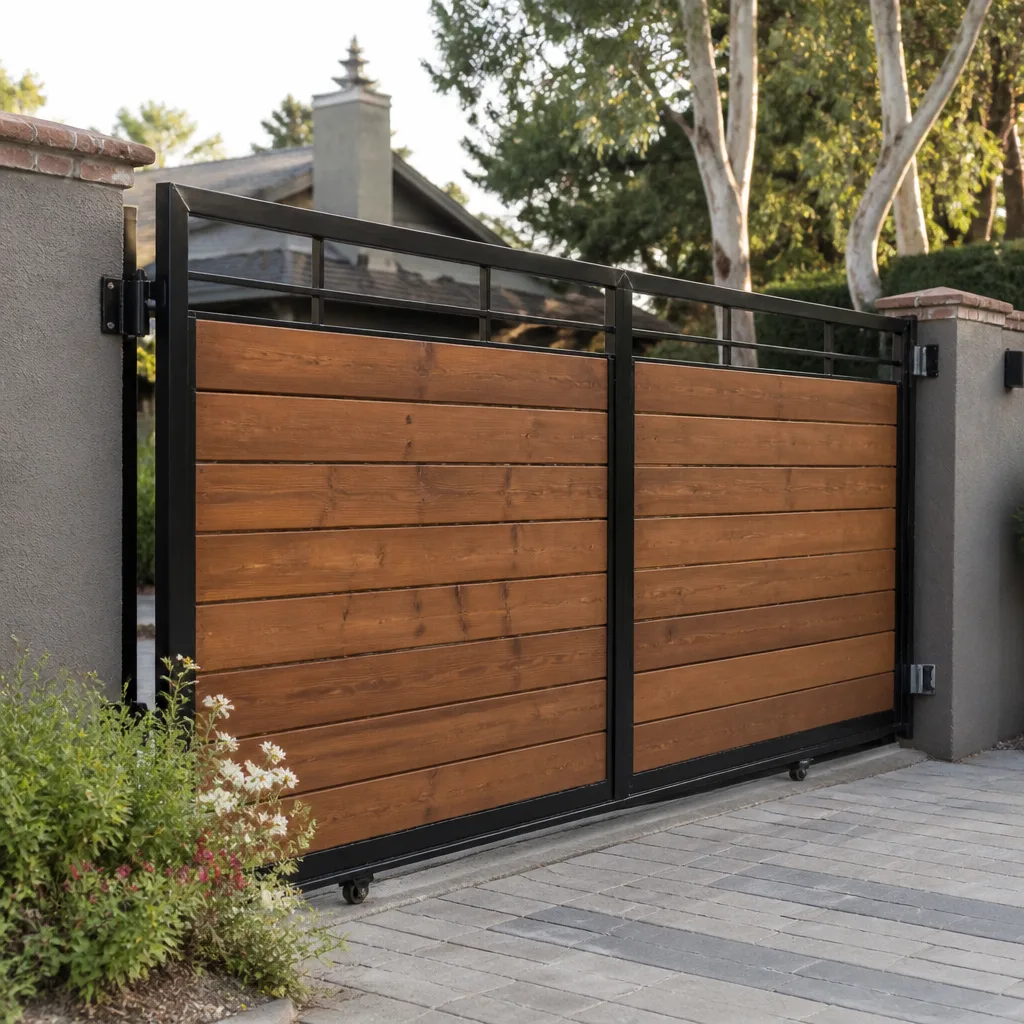 Wood & steel frame
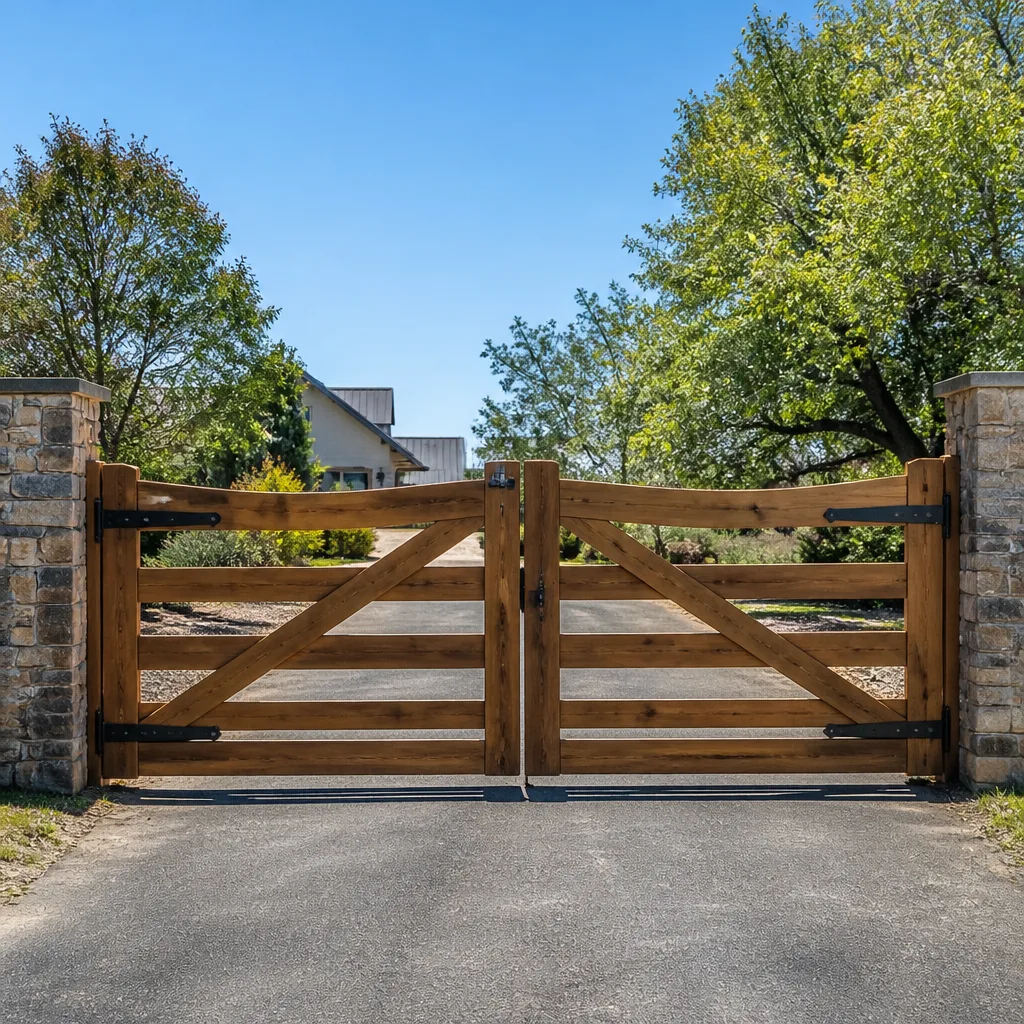 Farm & ranch
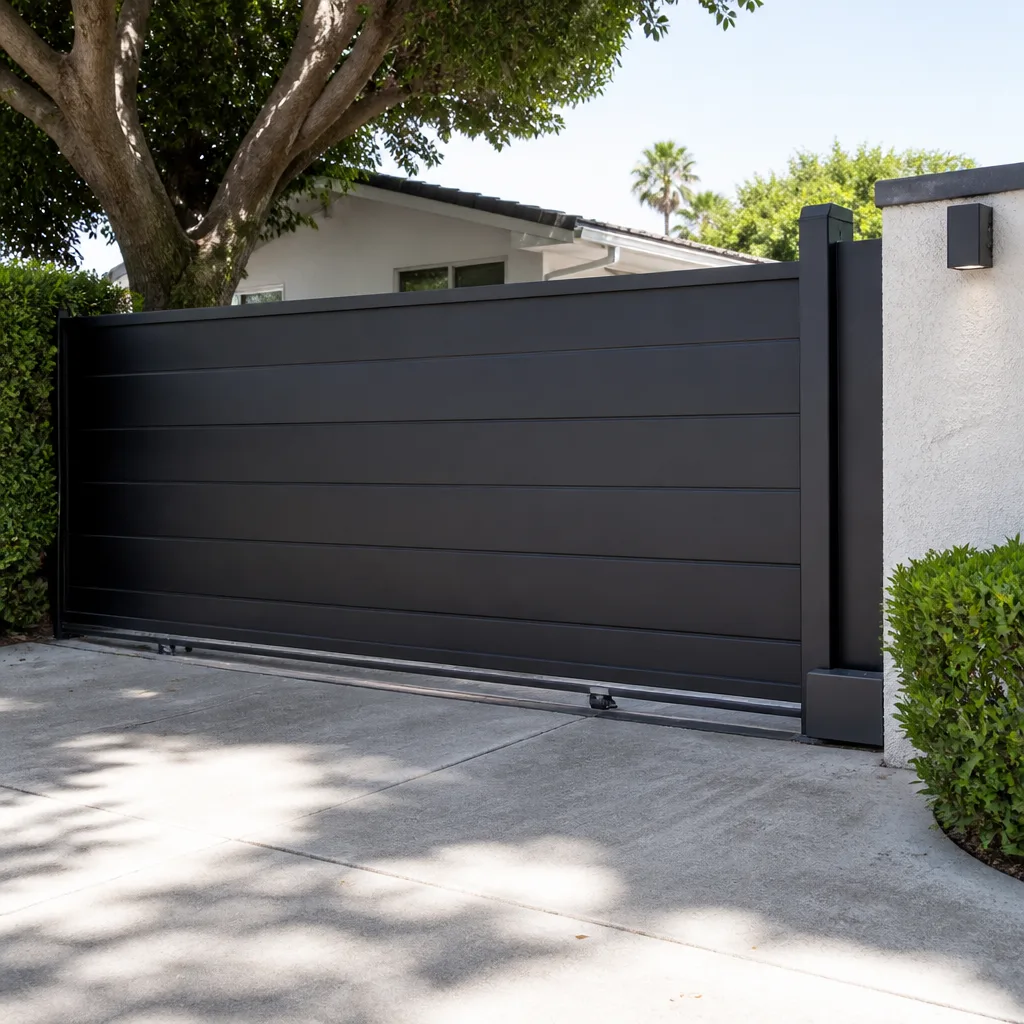 Sliding driveway gates
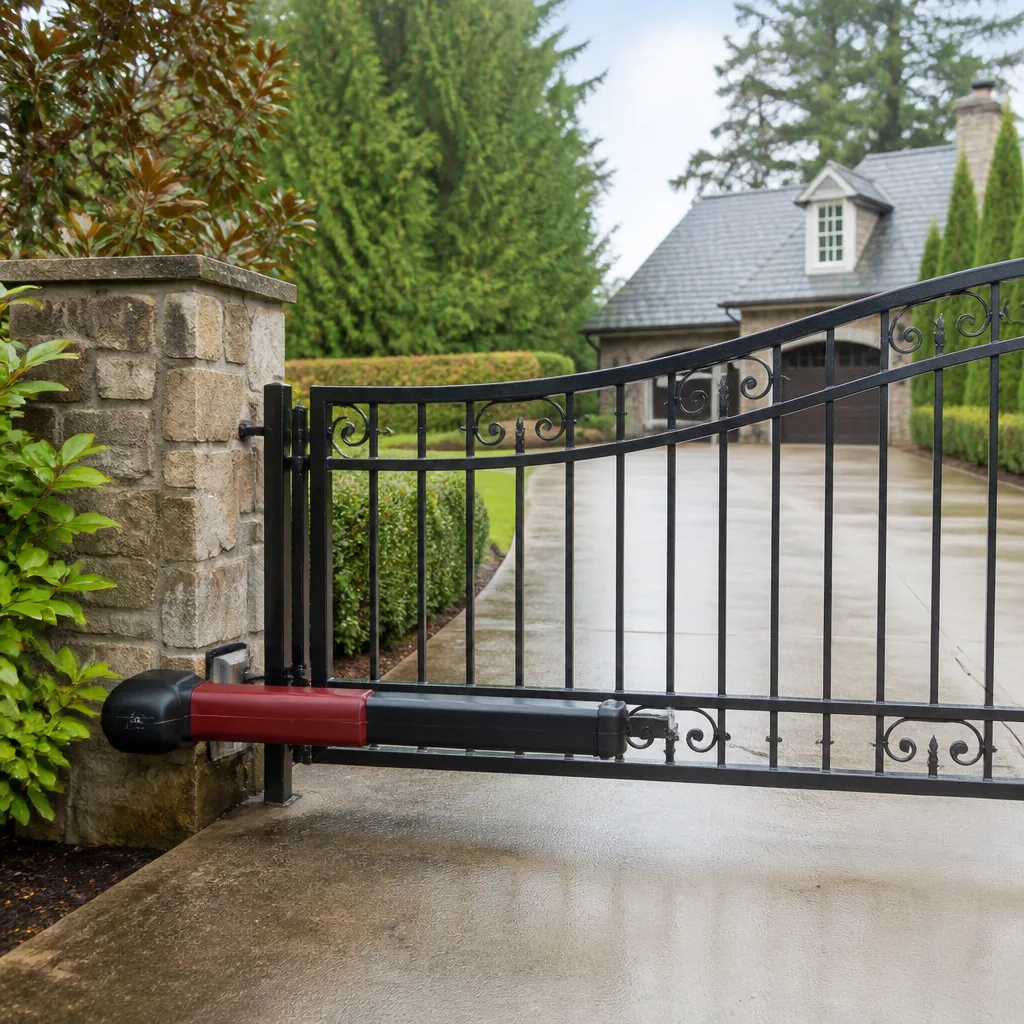 LiftMaster operators
Free on-site gate assessment - hinges, posts, and your LiftMaster or Nice gate operator checked before anything is quoted
The assessment is free and the quote is the invoice.
Get your free estimateSeasonal Gate Repair Care for Santa Maria: Year-Round Homeowner’s Guide
Most gate maintenance advice assumes four hard seasons: a frozen winter, a wet spring, a hot summer, a leaf-drop fall. Santa Maria doesn’t work that way. What this city gets instead are overlapping climate phases – a stubborn marine layer that settles in from May through August, a dry windy stretch that pushes grit into every moving part, and a winter rain window that starts around October – and each one attacks a different part of your gate. Follow a generic four-season checklist and you’ll service the wrong components at the wrong time. This guide maps the real phases of the Santa Maria year to the actual tasks your gate needs, so you spend your effort where the wear is happening.
Quick Answer
Seasonal gate maintenance in Santa Maria should follow three climate phases, not four calendar seasons: the marine-layer months (May through August), when damp air works on unpainted steel, zinc hardware, hinges and welds; the dry wind period, when particulate infiltration grinds down motor housings, tracks and drive systems; and the winter rain window beginning in October, when drainage, seals, control boards and battery backups need attention. Aligning tasks to those phases catches wear before it becomes a repair, and keeps automated gates from failing at the worst possible moment.
Styles & brands we work with
- Wrought iron
- Wood & steel frame
- Farm & ranch
- Sliding driveway gates
- LiftMaster operators
Table of Contents
- Why Santa Maria Gates Age Differently
- The Marine-Layer Months: May Through August
- The Dry Wind Window: Particulate Infiltration and Drive Wear
- The Winter Rain Window: What to Prioritize in October
- Temperature Swings, Seals, Control Boards and Battery Backup
- Your Santa Maria Season-by-Season Task Map
- Electric and Automated Gates: Extra Seasonal Attention
- Brand-Specific Seasonal Notes
Why Santa Maria Gates Age Differently
Santa Maria sits in a valley that catches the marine layer most inland California towns never see. That damp, salty-feeling air rolls in through the warmer months and then sits. For a gate, the result is a long, slow corrosion window that most homeowners don’t notice until a hinge has seized or a weld joint has cracked. The mistake is treating this like a mild climate that needs less care. It needs different care, timed to when each stress is actually happening.
Here’s the practical problem: a gate is a mechanical system with a dozen or more points where metal meets metal, and each of those points responds to the environment differently. Steel reacts to moisture. Zinc-plated hardware reacts to moisture plus time. Motor housings and drive systems react to airborne grit. Control boards and battery backups react to temperature swings and humidity. A generic checklist that says “lubricate in spring, inspect in fall” misses every one of those windows.
What we’ve seen across Santa Maria is that gates fail in predictable ways when maintenance is out of phase with the climate. A gate that gets lubricated in April but not during the marine-layer months will have dry, corroding pivot points right when the damp is worst. A gate that gets its motor cleaned in summer but not after the dry windy stretch will have grit packed into the drive by the time rain arrives. The fix isn’t more maintenance – it’s the right maintenance at the right time.
This guide breaks the Santa Maria year into three climate phases and assigns specific tasks to each. That’s a more effective approach than the standard four-season template because it matches the actual stresses your gate faces here.
The Marine-Layer Months: May Through August
The marine-layer season is the single biggest driver of gate wear in Santa Maria, and it’s the one most homeowners underestimate. From May through August, damp air settles over the area and stays put for long stretches. For unpainted steel and zinc hardware, that’s a sustained corrosion window – not a quick wet spell that dries by afternoon, but weeks of persistent moisture that never fully evaporates from tight joints and crevices.
What this does, specifically:
- Unpainted steel develops surface oxidation that spreads under a coat of paint if the paint has any breach – a scratch, a chip, a spot where a weld didn’t get full coverage. Once moisture gets under the paint, it works along the steel and lifts the coating from behind.
- Zinc-plated hardware – hinges, bolts, brackets, latches – holds up better than bare steel but still reacts to sustained damp. The zinc coating sacrifices itself to protect the steel underneath, which means it wears away faster in a marine-layer climate than it would inland.
- Weld joints are where moisture collects and stays. A weld is a rough surface with tiny pockets that trap water. Over a season of damp air, those pockets become the starting point for corrosion that can eventually compromise the joint.
- Pivot points and bushings dry out and then take on moisture, which is worse than either alone. The result is stiffness, squealing, and accelerated wear on the bushing itself.
The tasks for this window are simple but they have to happen on schedule, not “when you get to it”:
- Inspect and touch up paint in early May, before the damp settles in. Any chip or scratch on steel is a corrosion entry point. Clean it, prime it, and repaint it before the marine layer does its work.
- Lubricate hinges, pivots, latches and rollers at the start of the season and again in mid-July. Use a lubricant that resists washing out; a light oil will migrate away in damp conditions. The goal is a barrier that stays where you put it.
- Check zinc hardware for coating wear – hinges, brackets, bolts. If the plating is visibly worn to bare metal, plan to replace those parts before the next damp season rather than after a failure.
- Look closely at welds, especially on swing gate frames and slide gate carriages. Any rust staining at a weld is a signal to clean and treat it before it spreads.
Homeowners in Santa Maria often ask why their gate hardware fails faster here than at a relative’s house inland. The marine layer is the answer. If you do one thing this guide suggests, make it the May touch-up and lubrication pass – it’s the highest-value task of the Santa Maria year.
The Dry Wind Window: Particulate Infiltration and Drive Wear
Between the marine-layer months and the winter rain window, Santa Maria gets a dry, windy stretch. This is the phase that most maintenance guides ignore entirely, and it’s the one that quietly destroys automated gate operators. Dry wind carries fine dust and grit, and that grit settles into every opening it can find – motor housings, drive gears, slide gate tracks, roller assemblies, and the gap between a swing gate’s hinge and its post.
Particulate infiltration is a slow problem with a fast failure at the end. Fine grit acts like sandpaper inside a motor housing or a gearbox, wearing down surfaces that are supposed to be smooth. It packs into slide gate tracks and roller assemblies until the gate is fighting its own mechanism. It collects in hinge gaps and turns a smooth pivot into a grinding one. None of this announces itself – the gate just gets a little harder to move, a little noisier, until one day the operator trips or the gate stops mid-travel.
What to do during the dry wind window:
- Clean slide gate tracks and roller assemblies on a regular schedule through this period. A dry brush and a wipe-down removes the grit before it grinds. Don’t lubricate a dirty track – clean it first, then apply a light, dry-film lubricant that won’t attract more dust.
- Wipe down motor housings and drive systems where accessible. Check that housing covers and gaskets are intact; a missing cover or a cracked gasket is an open door for grit.
- Blow out or vacuum hinge gaps and pivot points before lubricating. Lubricating on top of grit just makes grinding paste.
- Check the operator’s vents and cooling openings. Many automated gate operators rely on airflow to stay cool during heavy use. If those openings are packed with dust, the operator runs hotter than it should and components wear faster.
For electric gate operators, this window is the time to listen. A gate that sounds different – a new rattle, a louder hum, a hesitation at the start of travel – is telling you grit has gotten somewhere it shouldn’t be. Addressing it now is a cleaning and lubrication job. Ignoring it until the operator fails is a motor or control board repair. We handle both, but the cleaning is the better outcome.
The Winter Rain Window: What to Prioritize in October
Santa Maria’s wet season typically begins around October, and the tasks you do in the weeks before it starts are what keep your gate functioning through the rain. Water is the enemy of every gate system in different ways: it rusts steel, it swells wood, it shorts control boards, it undermines posts, and it finds every gap in a seal. October is the month to close those gaps.
Prioritize these tasks before the first real rain:
- Check drainage around gate posts and footings. Water pooling at the base of a post is the most common cause of post movement. If the ground around a post stays wet, the footing can shift, and a shifted footing throws the whole gate out of alignment. Clear any obstruction, redirect downspouts, and make sure water flows away from the post base.
- Inspect gate seals and weatherstripping. On automated gates, seals protect the operator housing and control enclosure. Cracked or missing seals let water in. Replace them before the rain arrives, not after.
- Test the battery backup. Automated gate operators often run on battery backup or have a battery in the control system. A battery that’s been through a hot, dry summer and a damp fall may not hold a charge when the power goes out during a winter storm. Test it in October; replace it if it won’t hold.
- Inspect control board enclosures and wiring connections. Water intrusion into a control enclosure is one of the most common causes of electric gate failure in the wet season. Check that enclosure covers are seated, gaskets are intact, and cable entry points are sealed. This is a job for a trained technician if anything looks compromised – control boards and wiring carry real electrical risk.
- Check grounding and lightning protection if your operator has it. Winter storms bring lightning, and a properly grounded system survives what an ungrounded one doesn’t.
If your gate sits in a low spot or near a slope, the drainage check matters more than any other task on this list. A gate that’s mechanically perfect will still fail if its footing is being undermined, and footing repairs are far more involved than clearing a drain.
Temperature Swings, Seals, Control Boards and Battery Backup
Santa Maria doesn’t get extreme heat or hard freezes, but it does get meaningful day-to-night temperature swings, and those swings stress specific components. Seals, gaskets, control board components and battery backup units all react to temperature cycling – expanding in the warmth of the day, contracting at night, over and over. The cumulative effect is that materials age faster than their rated life suggests.
Here’s what temperature cycling does, component by component:
- Gate seals and gaskets harden and crack over repeated cycles. A seal that’s been through a few years of temperature swings loses its flexibility and stops sealing properly, which lets moisture and grit in.
- Control board components are subject to thermal stress at solder joints. Repeated expansion and contraction can eventually cause a joint to crack, which produces intermittent faults – the gate works one day and doesn’t the next, with no obvious pattern. Intermittent faults are notoriously hard to diagnose, and a brand-specific technician has a real advantage here.
- Battery backup units age faster in temperature-cycling environments. A battery that’s rated for a certain number of years may not last that long if it’s been cycling warm and cool every day. That’s why the October battery test matters – you want to know before a storm, not during one.
- Operator housing seals absorb the cycle and can develop small gaps at seams. Those gaps are where moisture and grit get in.
What to do: inspect seals and gaskets at the start of each phase. Test the battery backup in October and again after the wet season. If your gate develops intermittent faults – working, then not, then working – get it looked at before the pattern turns into a full failure. Intermittent behavior on an automated gate is often a control board joint or a connection that’s working loose, and both are better caught early.
Your Santa Maria Season-by-Season Task Map
Here’s the full task map, organized by the actual Santa Maria climate rather than a generic four-season template. Use this as your checklist and adjust the timing if the weather runs early or late.
Marine-Layer Season (May through August)
- Touch up paint on steel in early May, before the damp settles.
- Lubricate hinges, pivots, latches and rollers at the start of the season.
- Inspect zinc hardware for coating wear; plan replacements.
- Inspect weld joints for rust staining and treat any you find.
- Repeat lubrication in mid-July.
Dry Wind Window
- Clean slide gate tracks and roller assemblies regularly.
- Wipe down motor housings and check housing covers and gaskets.
- Blow out hinge gaps and pivot points before lubricating.
- Check operator vents and cooling openings for packed dust.
- Listen for changes in gate sound and address them early.
Pre-Rain Window (October)
- Check drainage around gate posts and footings.
- Inspect and replace cracked or missing seals.
- Test the battery backup and replace if it won’t hold.
- Inspect control board enclosures and wiring connections.
- Check grounding and lightning protection if present.
Wet Season (through winter)
- Watch for water pooling near post bases after storms.
- Test the gate after heavy rain; address any new faults promptly.
- Keep tracks and hinge gaps clean of wet debris.
- Re-test the battery backup after the season ends.
If you’d rather have a technician walk the gate and set this schedule for you, that’s exactly the kind of on-site visit we do. We can also handle any of the repairs a seasonal check turns up, from a brand-specific operator issue to a full electric gate repair.
Electric and Automated Gates: Extra Seasonal Attention
An automated gate has everything a manual gate has, plus an operator, a control board, safety devices and often a battery backup. That means every seasonal stress in this guide hits an automated gate harder, and the marine-layer and dry-wind phases matter most for the parts a manual gate doesn’t have.
During the marine-layer months, moisture is the threat to the operator. Damp air gets into control enclosures through gaps in seals and settles on circuit boards. It affects the operator’s internals and its access hardware – keypads, intercom wiring, loop detectors – which are often the first things to fail when the damp sets in.
During the dry wind window, grit is the threat. It gets into motor housings, drive gears and safety loops. A loop detector that gets grit-packed or moisture-compromised starts producing false triggers or no triggers at all, and that’s a safety issue, not just an inconvenience.
During the pre-rain window, water intrusion is the threat. Control enclosures, wiring connections, battery compartments and safety device housings all need sealing before the rain starts. If your gate has intercom wiring or access hardware, check those entry points too.
We specialize in electric gate repair – motors, control boards, safety loops and access hardware – because automated gates fail in ways a general gate repair doesn’t cover. If your gate is behaving erratically, it’s worth coming to someone who works on the electronics every day.
Brand-Specific Seasonal Notes
Different operator brands handle Santa Maria’s climate phases differently, and knowing your brand helps you anticipate what to watch. We work on nine major operator brands, covering residential and commercial systems, and here’s how a few of the common ones tend to behave through the year.
Viking operators are common on residential swing and slide gates in Santa Maria, and the seasonal weak points tend to be in the control housing seals and the battery backup. Watch those in the marine-layer and pre-rain windows.
Ghost Controls is a common entry-level residential brand here. These operators are reliable but benefit from the dry-wind cleaning routine – grit infiltration into the drive shows up as a slower, noisier gate. Keep the housing clean and covered.
DoorKing is a commercial-grade system, common on HOA and commercial gates in Santa Maria. The seasonal attention there is on the control board enclosure and the access hardware, plus the safety loops. Commercial gates that run all day also run hotter, so the dust on the vents matters more.
Elite operators are mid-range residential and commercial systems. The seasonal tasks for Elite are the standard ones – seal inspections, battery tests, housing cleaning – but the intermittent-fault pattern on a temperature-cycling control board is worth watching for.
Seasonal care on any of these increases the odds that your automated gate stays functional year-round, and reduces the chance that a slow wear problem becomes a failure at an inconvenient moment.
Common Mistakes to Avoid
- Following a generic four-season schedule. Santa Maria’s climate phases don’t line up with the standard spring-summer-fall-winter checklist, so a generic schedule services the wrong components at the wrong time. Build your schedule around the marine layer, the dry wind window and the pre-rain window instead.
- Skipping the May paint touch-up. This is the highest-value task of the Santa Maria year and the easiest to forget, because it happens just as the weather turns pleasant. Skip it and the marine layer does its work on every exposed chip and scratch.
- Lubricating over grit. Lubricating a dirty hinge, pivot or track just makes grinding paste. Clean first, then lubricate – especially during the dry wind window, when grit infiltration is at its worst.
- Waiting for the rain to test the battery backup. Test it in October. A battery that’s failed and hasn’t been noticed is no backup at all when you need it during a storm.
- Ignoring intermittent faults. A gate that works, then doesn’t, then works, is telling you something is loose or cracked – often a control board joint or a connection. Addressing it early is a small repair; waiting for a full failure is a bigger one.
- Treating drainage as an afterthought. Water pooling at a post base is the leading cause of gate misalignment in Santa Maria’s wet season. Clearing a drain is simple; fixing a shifted footing is not.
- Working on control boards or operator wiring yourself. The operator, control board and access hardware involve genuine electrical risk. Leave that work to a trained technician. Our technicians have up to 9 years of experience and focus only on gates.
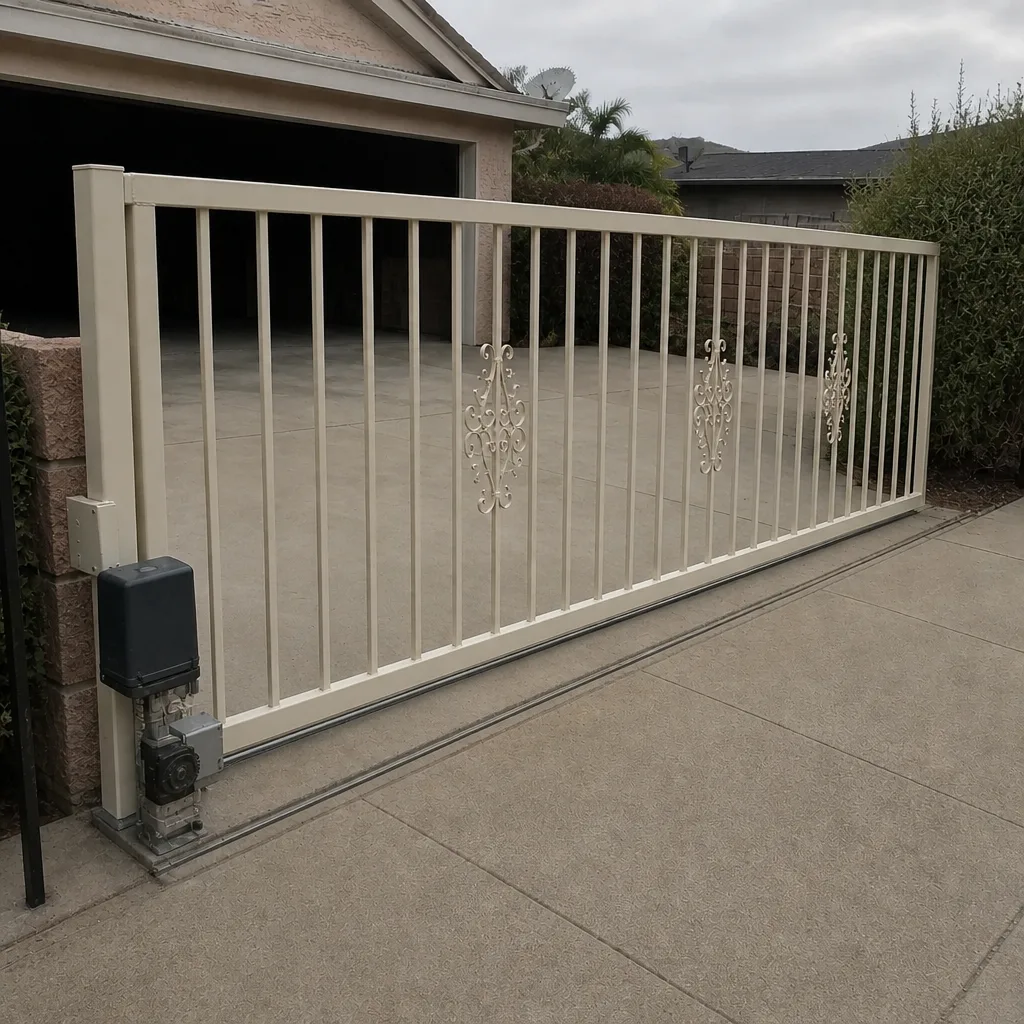
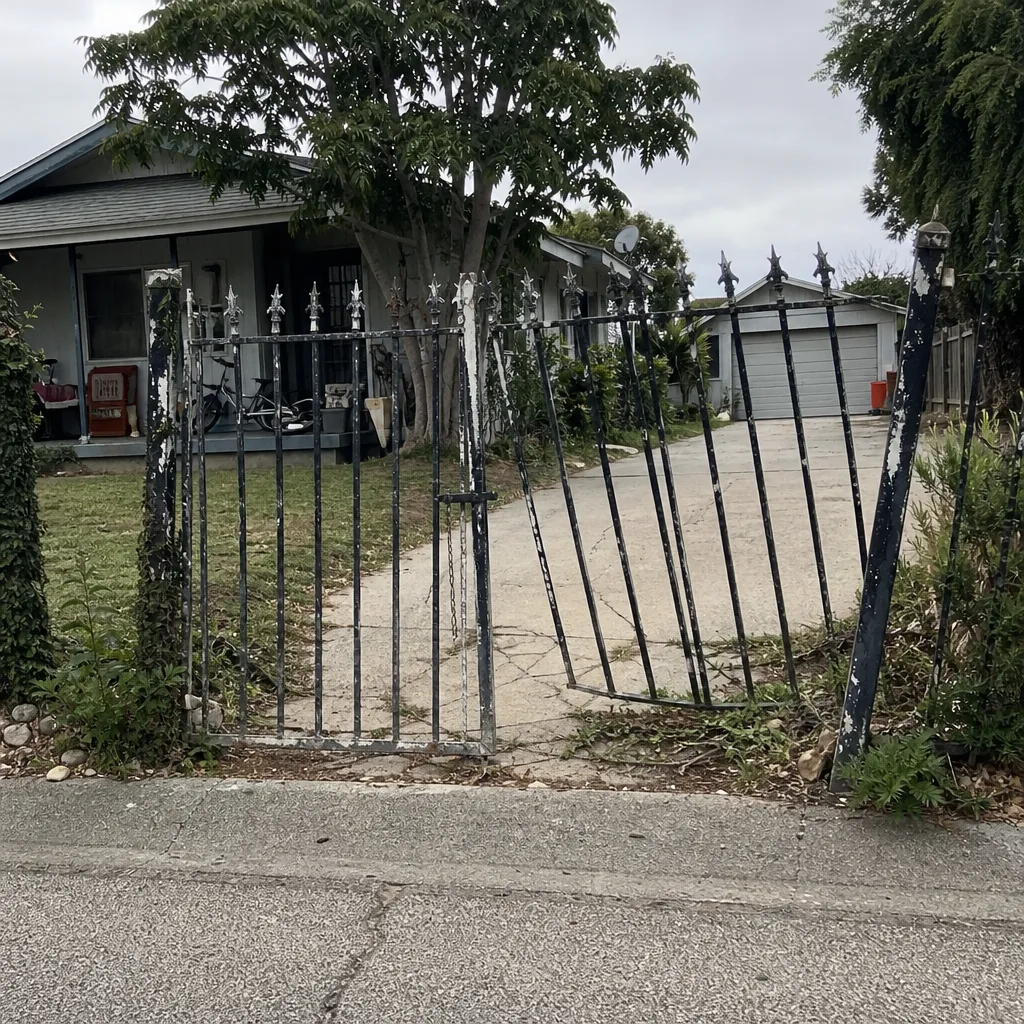
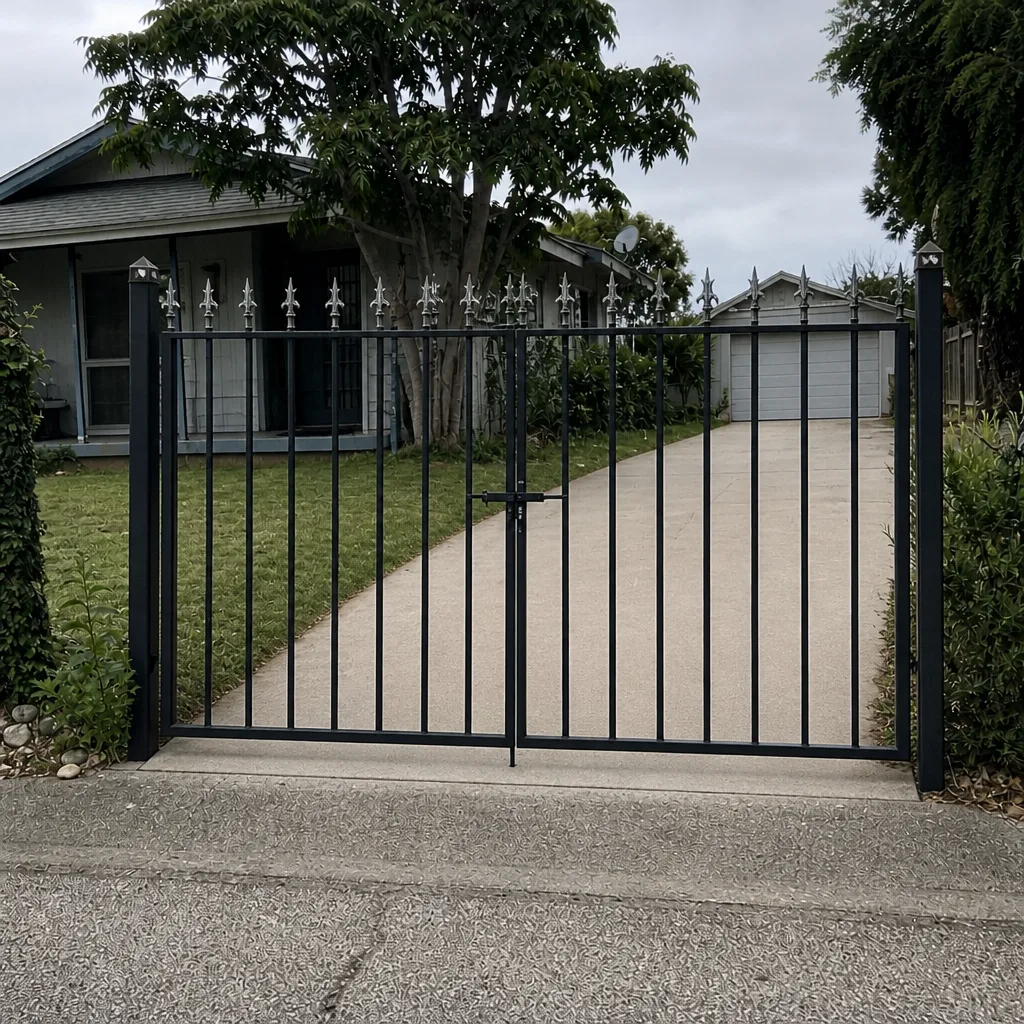
See the difference
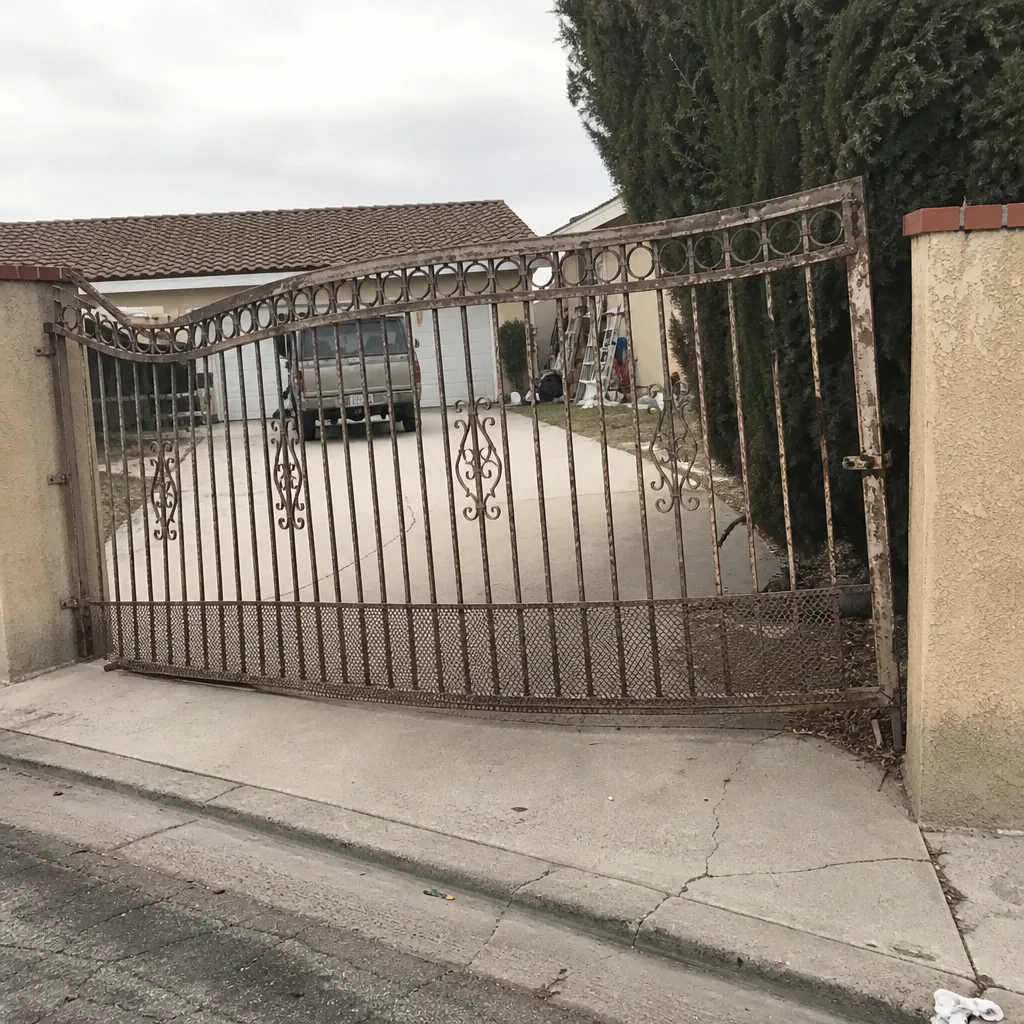 Before
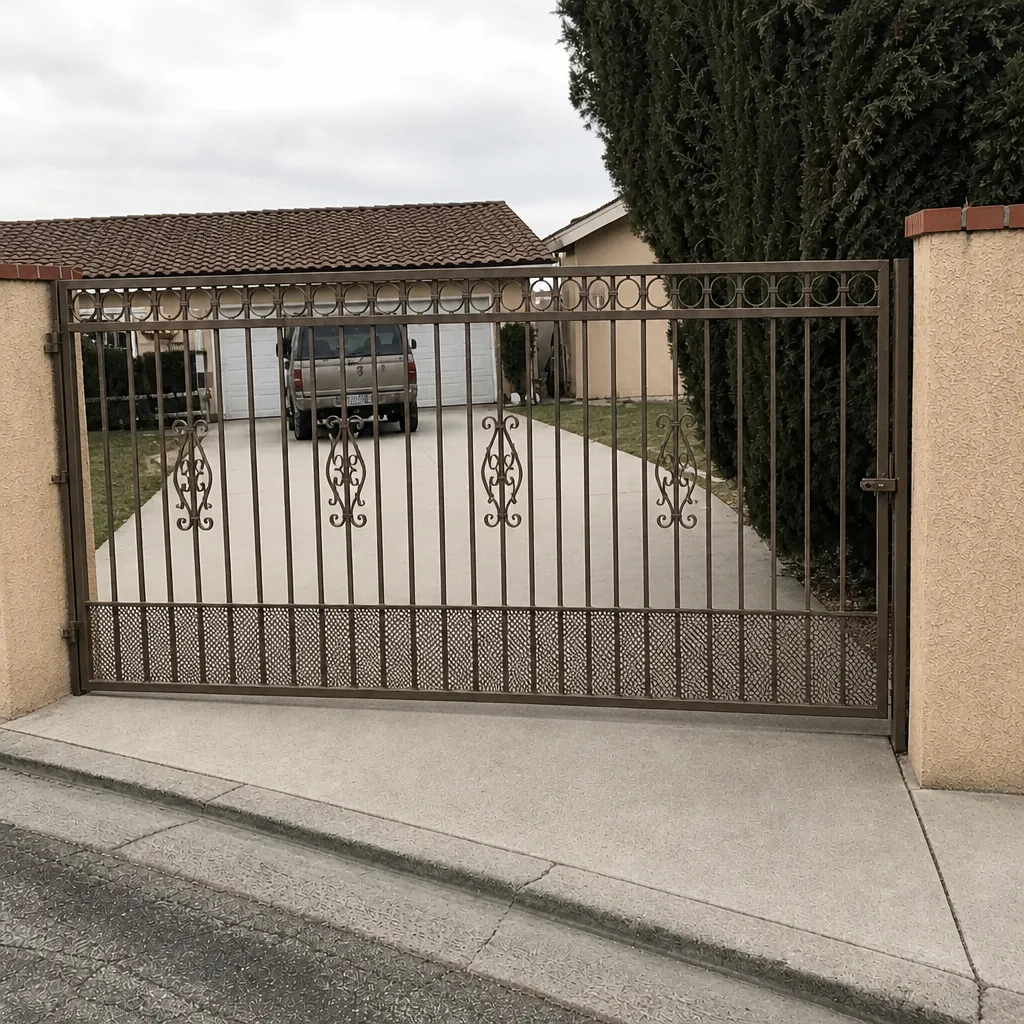 After
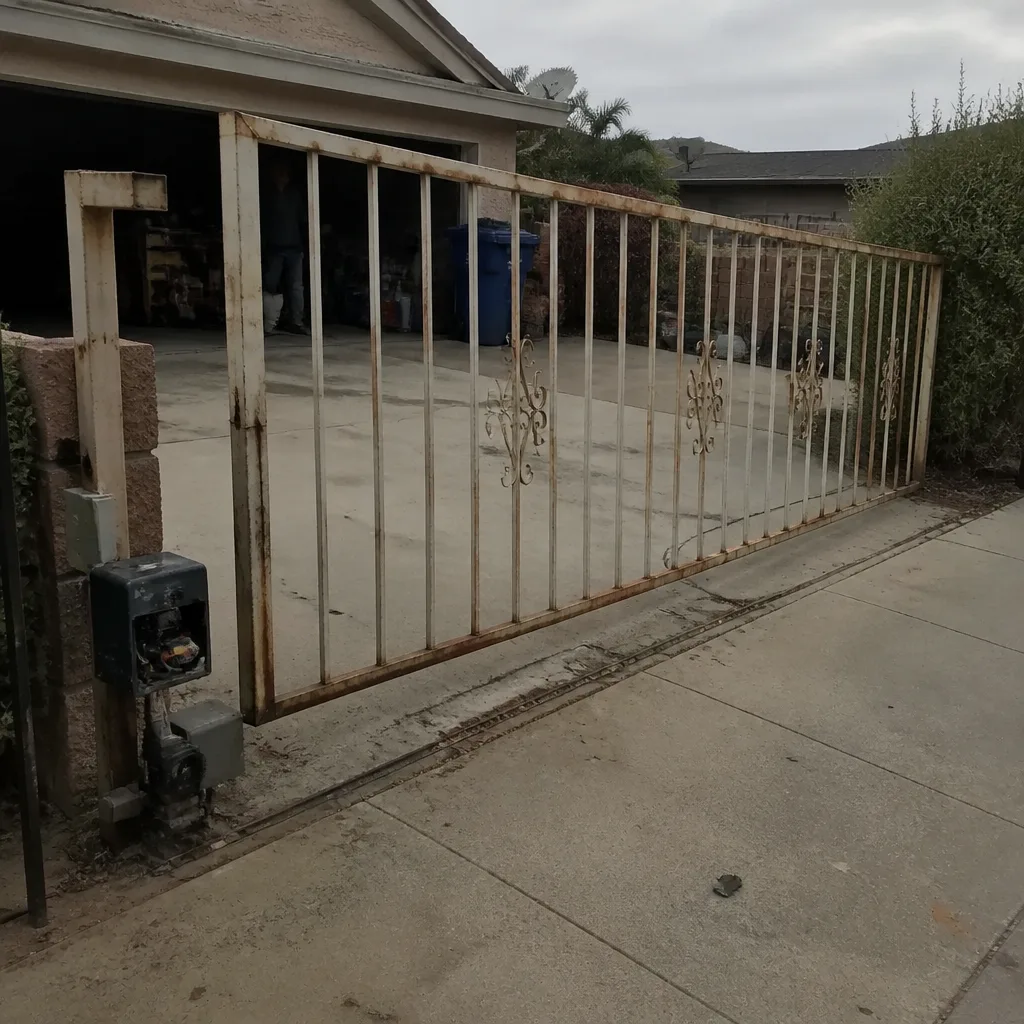 Before
 After
 Before
 After
When to Call a Professional
Some seasonal tasks are homeowner work – touching up paint, clearing a drain, wiping down a track. The moment your gate’s operator, control board, safety loop or access hardware is involved, call a professional. Those components carry real electrical risk, and a general handyman working on gate electronics is how small faults become expensive ones.
Call us when your gate stops mid-travel, runs erratically, produces intermittent faults, or triggers or fails to trigger its safety devices; when an operator needs a motor replacement; when your gate has come off its track or a footing has shifted; or when your seasonal check turns up a repair you’d rather not tackle. Also call when a repair reveals a gate that needs replacement, or you’re ready for an electric upgrade or a new installation – we handle the full scope, repair through installation, so you don’t need a second contractor.
Gate Repair Santa Maria offers free estimates in Santa Maria – call (844) 834-0978. We answer 24/7. Fast dispatch from 7am to 7pm, Sunday through Friday. Every price is quoted and agreed before any work starts, and the written estimate sets the final price.
For the broader range of gate work we do, start with Gate Repair Santa Maria, or go straight to electric gate repair if your automated gate is the concern. If you’re outside the city and want to know whether we cover you, see our page for Santa Maria. And for repairs in general, our gate repair page has more on the diagnostics.
Frequently Asked Questions
The most important task is the early-May paint touch-up and hinge lubrication pass, done before the marine layer settles in. Corrosion during the marine-layer months is the biggest driver of gate wear here, and touching up paint before the damp starts is what prevents it. If you do one seasonal task, make it that one. Call (844) 834-0978 for a free estimate if you’d like a technician to walk the gate and set the schedule.
Yes, it does. Santa Maria’s persistent marine layer, dry windy stretch and winter rain window stress different components at different times than an inland climate does. A generic four-season schedule services the wrong parts at the wrong time. Matching maintenance to Santa Maria’s actual climate phases is more effective than following a calendar. Call (844) 834-0978 for a free estimate if you want help building that schedule.
In Santa Maria, lubricate hinges and pivots at the start of the marine-layer season and again in mid-July. That’s more frequent than an inland schedule would call for, because the persistent damp works on those points harder. Always clean grit from a hinge before lubricating it. Call (844) 834-0978 and we’ll quote any lubrication or hardware work you need.
Wet-season failures are almost always water intrusion into a control enclosure, wiring connection or seal, or a battery backup that didn’t hold a charge. The October pre-rain checks – seal inspection, battery test, enclosure and connection inspection – are what prevent them. Electrical work on gate operators is not DIY; call (844) 834-0978 for a free estimate and we’ll handle it.
We work on nine major operator brands – LiftMaster, FAAC, BFT, Linear, Viking, Ghost Controls, DoorKing, Elite and Mighty Mule – covering residential and commercial systems. We diagnose brand-specific issues rather than applying generic fixes. Call (844) 834-0978 for a free estimate. We answer 24/7. Fast dispatch from 7am to 7pm, Sunday through Friday.
We dispatch same-day and offer fast dispatch from 7am to 7pm, Sunday through Friday, so a same-day visit is often possible. We answer 24/7, and a call outside dispatch hours is booked into the next opening. Call (844) 834-0978 for a free estimate – the price is quoted and agreed before any work starts.
The Bottom Line
Santa Maria doesn’t need a generic gate maintenance calendar – it needs a schedule matched to its climate phases. The marine-layer months from May through August are a sustained corrosion window for unpainted steel, zinc hardware and welds, and the early-May paint touch-up is the single highest-value task of the year. The dry wind window grinds grit into motor housings, tracks and drive systems, so cleaning matters more than it does anywhere inland. The October pre-rain window is for drainage, seals, battery backup and control enclosure checks, and it’s what keeps your automated gate working through the wet season. Align your tasks to those three windows and your gate lasts longer between repairs. Gate Repair Santa Maria is a gate-only specialist, we work on nine major operator brands, and we handle everything from repair to electric upgrade to full installation. Call (844) 834-0978 for a free estimate. We answer 24/7. Fast dispatch from 7am to 7pm, Sunday through Friday.
Written by the team at Gate Repair Santa Maria.