
Last updated November 15, 2026
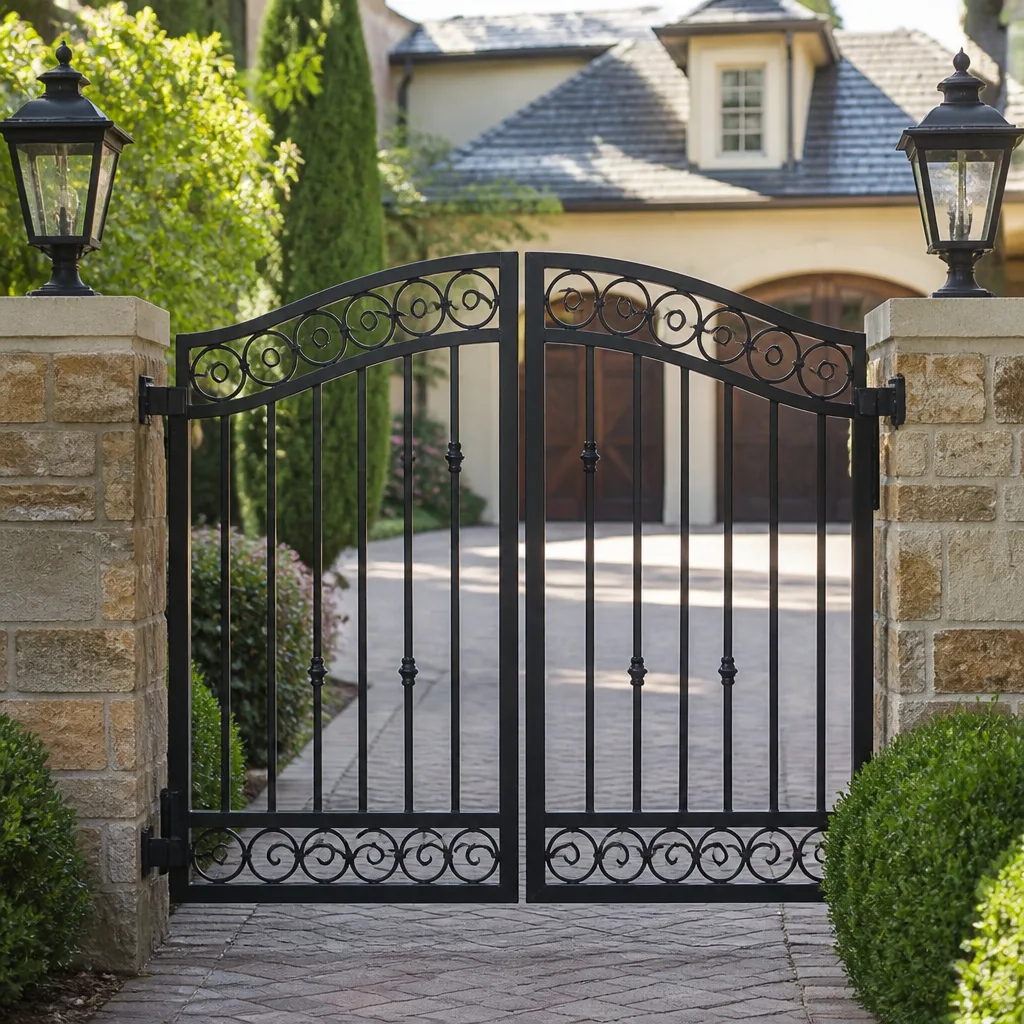 Wrought iron
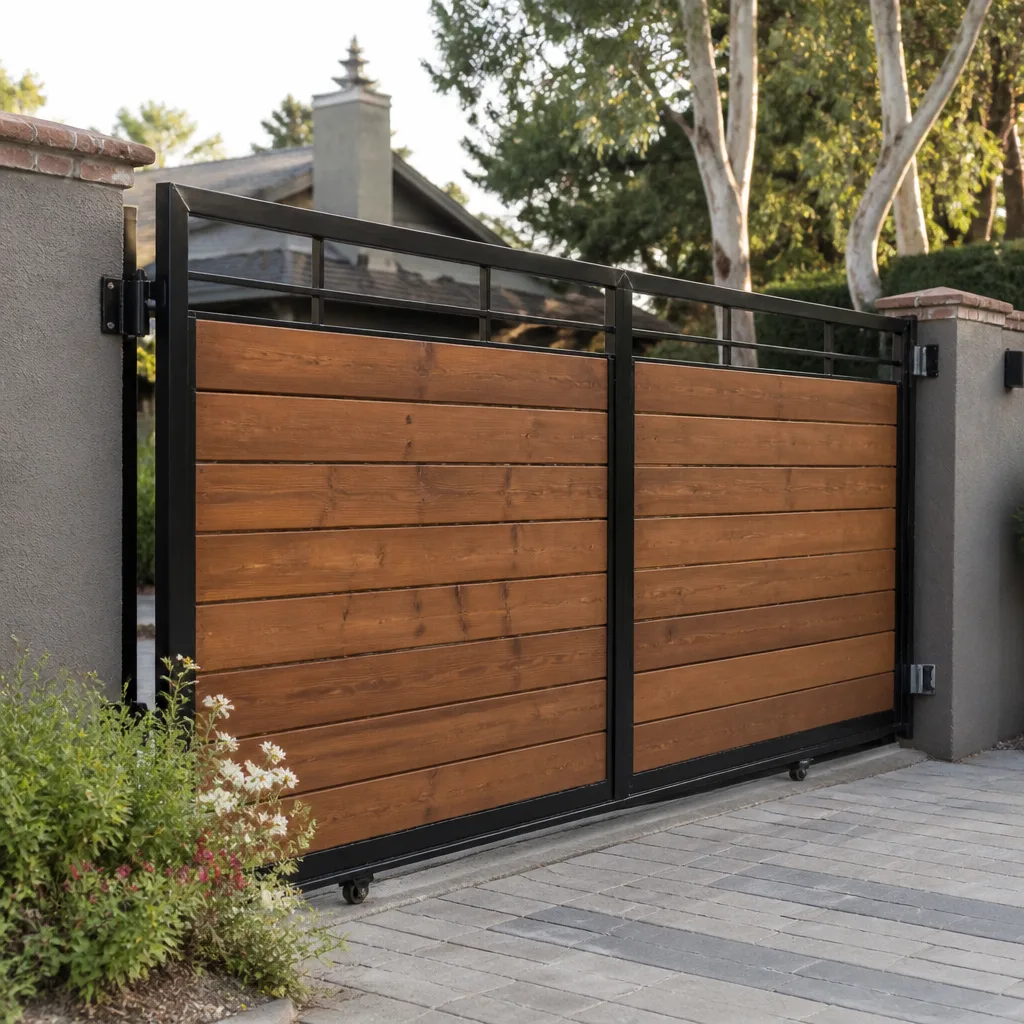 Wood & steel frame
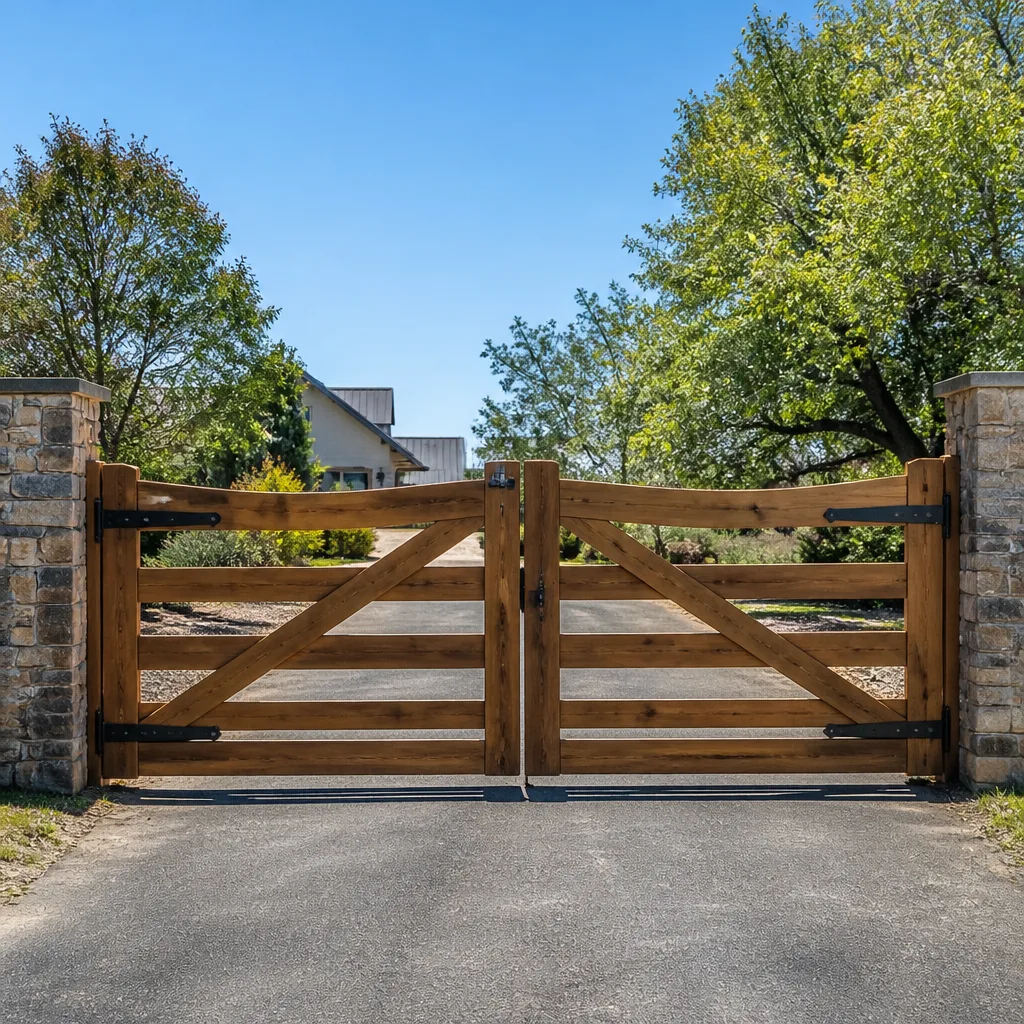 Farm & ranch
 Sliding driveway gates
 LiftMaster operators
Free on-site gate assessment - hinges, posts, and your LiftMaster or Nice gate operator checked before anything is quoted
The assessment is free and the quote is the invoice.
Get your free estimateHow to Hire a Gate Repair Contractor in Santa Maria: A Step-by-Step Guide
Asking a contractor if they’re licensed doesn’t tell you whether they’ve ever repaired the specific gate operator brand installed on your property. With more than a dozen major operator brands in common use around Santa Maria, that gap in experience tends to show up at the end, on the final invoice. Most companies advertising “gate repair” are primarily garage door or fence contractors who take gates on the side. This guide gives you the five technical questions that actually screen for gate-specific competence, the red flags buried in quotes, and how to compare three estimates that were never written to be compared.
Quick Answer
To hire a gate repair contractor in Santa Maria, verify three things before you book a visit: that the company works on your gate’s operator brand specifically, that they carry liability coverage for automated gate work, and that they put the scope and price in writing before touching the gate. A contractor who can answer brand-specific questions about your FAAC, BFT, Linear, or Viking system and hand you a written estimate is a specialist. One who says “we can take a look” is guessing.
Styles & brands we work with
- Wrought iron
- Wood & steel frame
- Farm & ranch
- Sliding driveway gates
- LiftMaster operators
Table of Contents
- Why “Are You Licensed?” Doesn’t Screen for Gate Competence
- The Five Questions to Ask Before You Schedule a Visit
- How to Verify Liability Coverage for Automated Gate Work
- Why Three Quotes Rarely Compare, and How to Standardize Them
- What a Written Scope of Work Should Include
- Red Flags in a Gate Repair Quote
- Repair or Replace? How to Judge the Recommendation
- Common Mistakes to Avoid
Why “Are You Licensed?” Doesn’t Screen for Gate Competence
A general contractor’s license tells you the company is legally allowed to work. It tells you nothing about whether the technician standing at your gate has opened the control board on a DoorKing before. That’s the gap. Gate operators are a narrow trade inside a narrow trade: the mechanics of a swing arm or slide track are one discipline, and the electronics behind them are another.
Santa Maria has a mix of housing stock and property types that makes this gap matter more than it would in a city with uniform gates. Older residential properties often run entry-level operators, while HOAs and commercial lots tend toward heavier systems. A contractor whose week is mostly garage doors will recognize the general shape of a problem and still need to read the manual on your specific unit. A gate specialist has already seen that failure mode.
This is why our positioning is single-trade. Every job on the schedule is a gate job, which means technicians build diagnostic speed on gate-specific faults instead of splitting their attention across openers, springs, and fence panels. When you’re hiring, that focus is the thing worth paying for. A technician who has to figure it out on the job is learning at your expense, on your time, with your gate stuck open.
The practical test is simple. Ask what brands they service and listen for specifics. If the answer is “all of them,” press for names.
The Five Questions to Ask Before You Schedule a Visit
These five questions separate a gate specialist from a generalist, and none of them are about licensing. Ask them on the phone before you book. A confident specialist answers them without hesitating.
- “Which operator brands do you service, and have you worked on mine?” Name your brand and watch the response. We’re certified to service nine major operator brands: LiftMaster, FAAC, BFT, Linear, Viking, Ghost Controls, DoorKing, Elite, and Mighty Mule. That spans entry-level residential units and commercial-grade access systems, so the answer should be specific rather than a blanket yes.
- “Do you handle the control board and the safety loops, or only the mechanical parts?” Electric gate repair is a distinct skill. Control boards, loop detectors, intercom wiring, and motor replacement are electronics work, and a contractor who only turns wrenches will hand those problems off or guess at them.
- “How do you diagnose an intermittent fault?” A gate that opens erratically some of the time is the hardest call in this trade. Listen for a method: checking the loop, the safety edges, the board’s fault codes, the operator’s travel limits. Vague answers here are a warning.
- “What’s your written estimate process?” The price should be quoted and agreed before any work starts. If a contractor can’t tell you how they’ll document the scope and the price up front, they can’t protect you from a surprise invoice.
- “Do you carry liability coverage for automated gate work?” See the section below for why this question is different from asking whether they’re insured at all.
If a contractor answers all five cleanly, you’re talking to someone who does this for a living. If two or three of the answers are versions of “we’ll see when we get there,” keep calling.
How to Verify Liability Coverage for Automated Gate Work
An automated gate is a moving machine with a motor, and a failure can injure a person or damage a vehicle. That makes the liability question more pointed than it is for, say, a fence repair. “Are you insured?” is the wrong question. “Does your liability policy cover automated gate installation and repair?” is the right one.
Here’s how to verify it without being awkward about it:
- Ask for a certificate of insurance and read the coverage description, not just the policy number. A general liability policy is standard; what you want to confirm is that the work you’re hiring for falls within what it covers.
- Ask whether the company is bonded as well as insured. Insured and bonded are separate protections, and both matter for a contractor working on your property.
- For commercial properties and HOAs, ask for the certificate to be issued to the property management entity directly, so the coverage is documented for the file.
- Confirm the coverage is current. A certificate from a lapsed policy does nothing for you.
This step is routine for a professional, which is the point. A contractor who gets defensive about a certificate request is telling you something. A specialist will send it over without friction because they field the request regularly from property managers around Santa Maria.
Why Three Quotes Rarely Compare, and How to Standardize Them
Getting three estimates on gate repair usually produces three documents you can’t line up side by side. One bid is a lump sum. One itemizes parts and labor but leaves out the diagnosis. One is a verbal number given at the gate. You end up comparing totals without knowing what’s inside them, and the cheapest number often reflects the smallest scope, not the best value.
The fix is to standardize the ask before anyone quotes. When you call, request the same four things from every contractor:
- A written diagnosis naming the failed component or components: operator, control board, safety loop, motor, track, or hinge.
- An itemized scope separating parts from labor, with brand names on replacement parts where relevant.
- A stated price for the repair as scoped, marked as an estimate, with the note that the written estimate sets the final price.
- A one-line description of what happens if the diagnosis changes once the gate is opened up. Every honest contractor knows the scope can shift; the question is whether they tell you before or after.
With four matching documents in hand, the comparison becomes real. You’re no longer asking which total is lowest, you’re asking which scope is complete. For a repair of any size, that’s the decision that actually protects your money.
What a Written Scope of Work Should Include
Most verbal quotes leave out the same handful of details, and those details are exactly where disputes start. A written scope of work should be specific enough that you could hand it to a different contractor and they’d know what the first one promised.
Look for these in the document:
- The specific components being repaired or replaced. “Fix gate” isn’t a scope. “Replace control board and re-set travel limits” is.
- Part brands and types, especially for operator components and safety devices. If the part is a brand-specific item, it should be named.
- Labor described by task, not just a total hours figure.
- Whether safety loops, safety edges, and other safety hardware are included, repaired, or left as-is. On automated gates this is the line most often omitted and most important to have.
- What’s explicitly excluded. A good scope says what it doesn’t cover. If the gate needs a new operator after the repair is done, the scope should say so rather than leave it as a surprise.
- The price, marked as an estimate, with the statement that the written estimate sets the final price and the work begins only after you agree.
If you’re weighing a repair against a replacement, the same document should give you enough to see both paths. We handle the full lifecycle, from gate repair through electric upgrades to new installation, so a scope that starts as a repair and reveals a gate that needs replacing doesn’t send you looking for a second contractor.
Red Flags in a Gate Repair Quote
The red flags in a gate quote are rarely dramatic. They’re line items that reveal a contractor who doesn’t work on gates often. Here’s what to watch for:
- No brand mentioned anywhere. A specialist names the operator, the board, or the motor. A generalist writes “operator assembly” and moves on.
- Parts priced as a single bundled figure with labor absorbed into it. When parts and labor aren’t separated, you can’t tell whether the part is the right one or the price is fair.
- A quote that skips the safety devices entirely. Safety loops and safety edges are part of automated gate work. If they’re not addressed, the scope is incomplete.
- A recommendation to replace the whole operator when the diagnosis names no failed component. Replacement is sometimes the right call, but it should follow a specific finding, not replace one.
- A verbal-only estimate. No document, no agreed price, no protection.
- A contractor who can’t tell you what happens if the diagnosis changes. The gate trade has known unknowns; an honest quote says so up front.
None of these make a contractor a bad person. They mark a contractor who does gates occasionally, and occasional work on a gate is where callback problems come from.
Repair or Replace? How to Judge the Recommendation
This is the decision where an unscrupulous or underqualified contractor has the most room to steer you wrong, and where a specialist’s brand coverage earns its keep. The right answer depends on the operator, the gate’s mechanical condition, and what parts are available for that brand.
Judging the recommendation comes down to whether it’s grounded in a diagnosis. Ask three things:
- What specifically failed? A control board, a motor, a limit switch, a safety loop, a hinge, a track, a slide-gate roller. If the answer is vague, the recommendation is a guess.
- Is the failed part available for this brand? Brand coverage matters here. A contractor who works on FAAC, BFT, Linear, Viking, and the other brands we service knows what’s obtainable and what isn’t. A generalist may recommend replacement because the right part is unfamiliar, not because it’s unavailable.
- What’s the gate’s mechanical condition beyond the operator? A sound gate with a failed motor is a repair. A gate with worn hinges, a bent track, or panels that no longer align is a different conversation.
If the recommendation is replacement, ask for it in writing with the diagnosis attached. If the recommendation is repair, ask the same. Either way, the document is your protection, and the final price is set by the written estimate.
For automated systems, remember that a gate has real danger built into it: the operator’s wiring and power, heavy panels that can crush, and slide gates that can come off the track. This is not a component to experiment with. When a recommendation involves the motor, the power feed, or the safety system, a trained professional should make the call, and you should understand the reasoning before work begins.
Common Mistakes to Avoid
- Hiring on the strength of a general license alone. Licensing is the floor, not the ceiling. Ask the five questions before you schedule anyone.
- Comparing three totals without comparing scope. A lower number on a narrower scope isn’t a better deal. Standardize the ask so the quotes are actually comparable.
- Accepting a verbal estimate. In Santa Maria, as anywhere, the written estimate is what protects you. Get the scope and the price in writing before work starts.
- Skipping the safety-device question. Safety loops and safety edges aren’t optional on an automated gate. Confirm they’re part of the scope.
- Assuming any contractor can work on your brand. There’s a wide gap between entry-level residential operators and commercial access systems. Confirm the contractor works on yours specifically.
- Not asking what happens if the diagnosis changes. Gate repairs sometimes reveal more once the unit is open. Ask how the contractor handles that before they start, not after.
- Treating a stuck gate as a fence problem. A gate is a machine. Handing it to a fence contractor is how small faults become larger bills.
See the difference
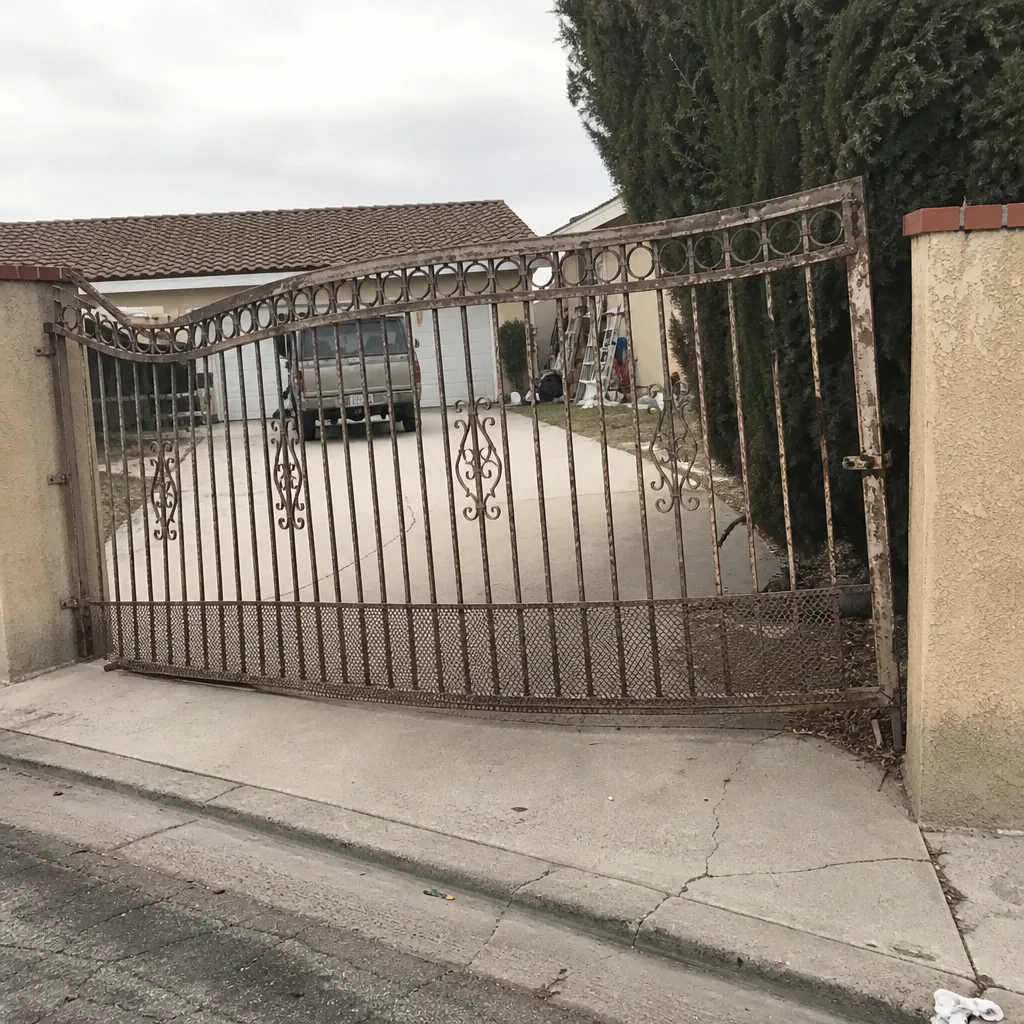 Before
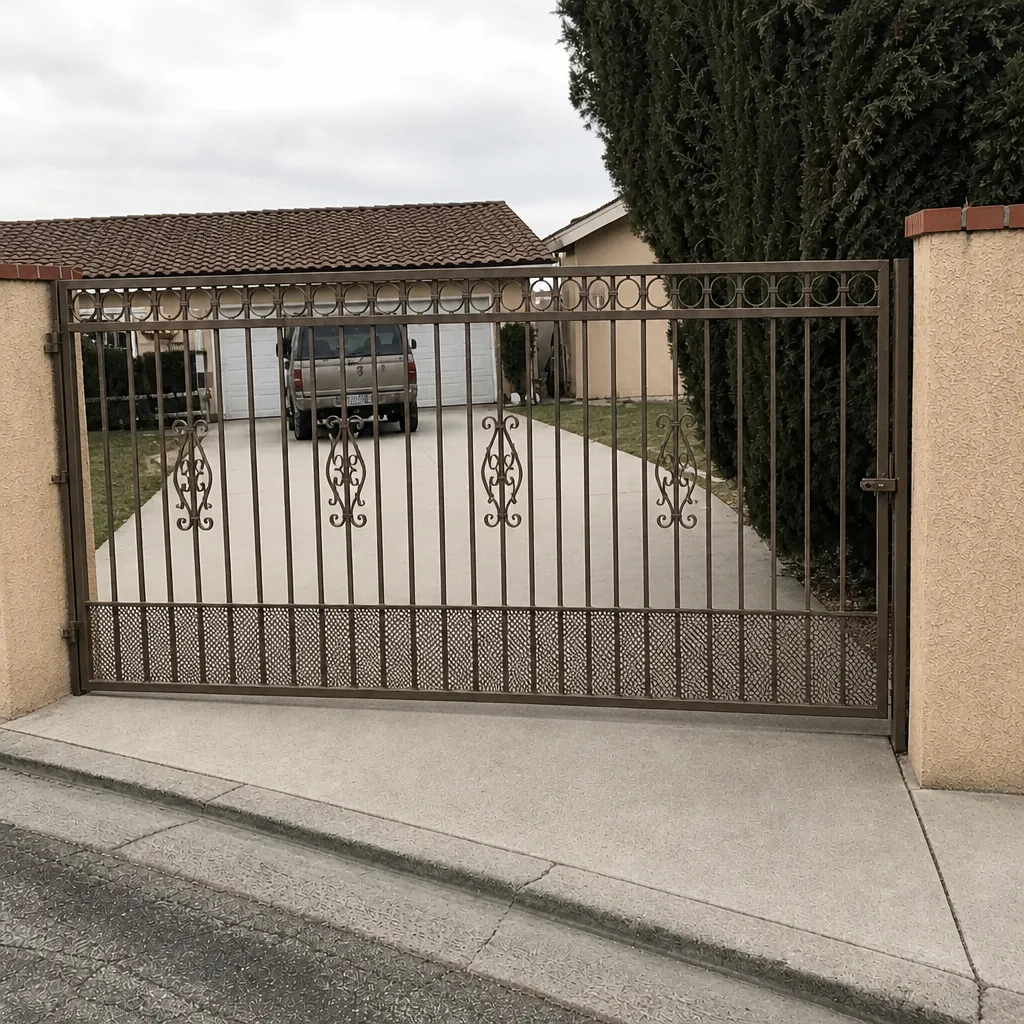 After
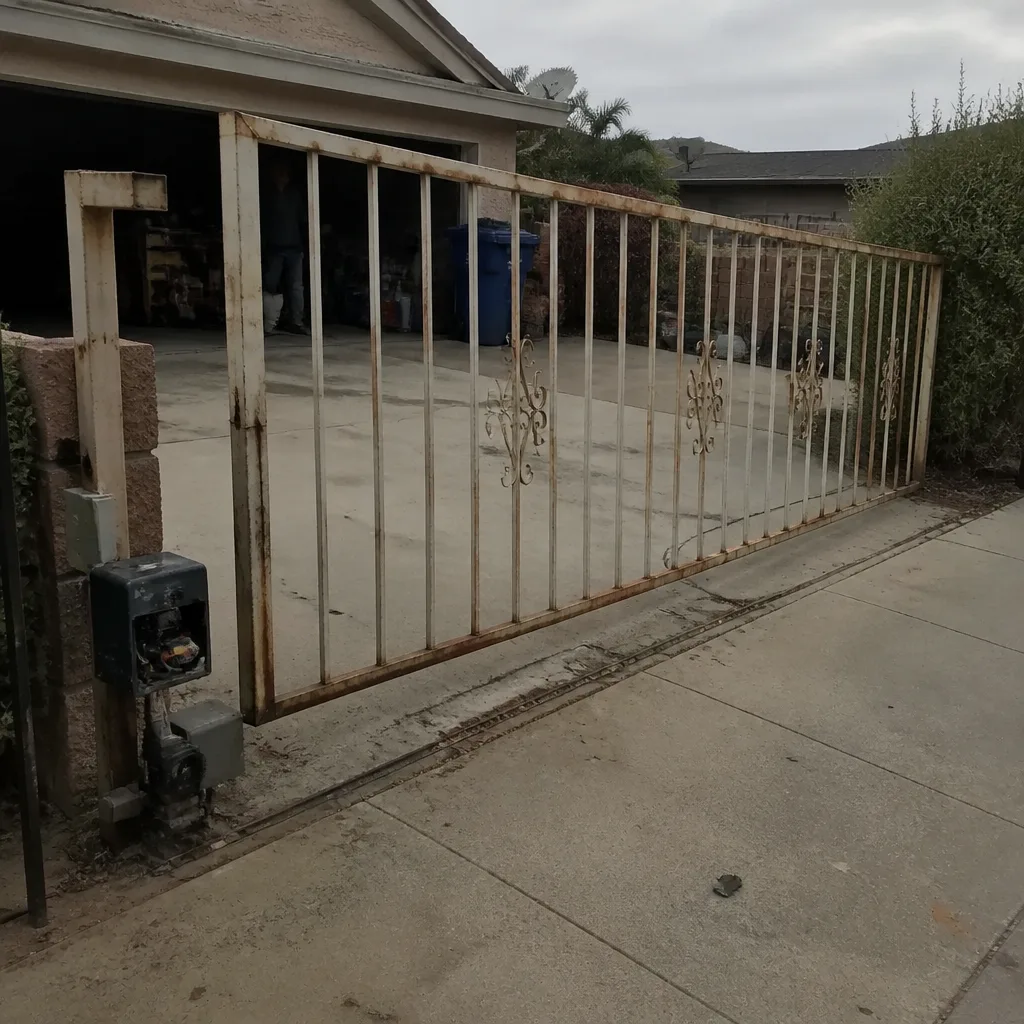 Before
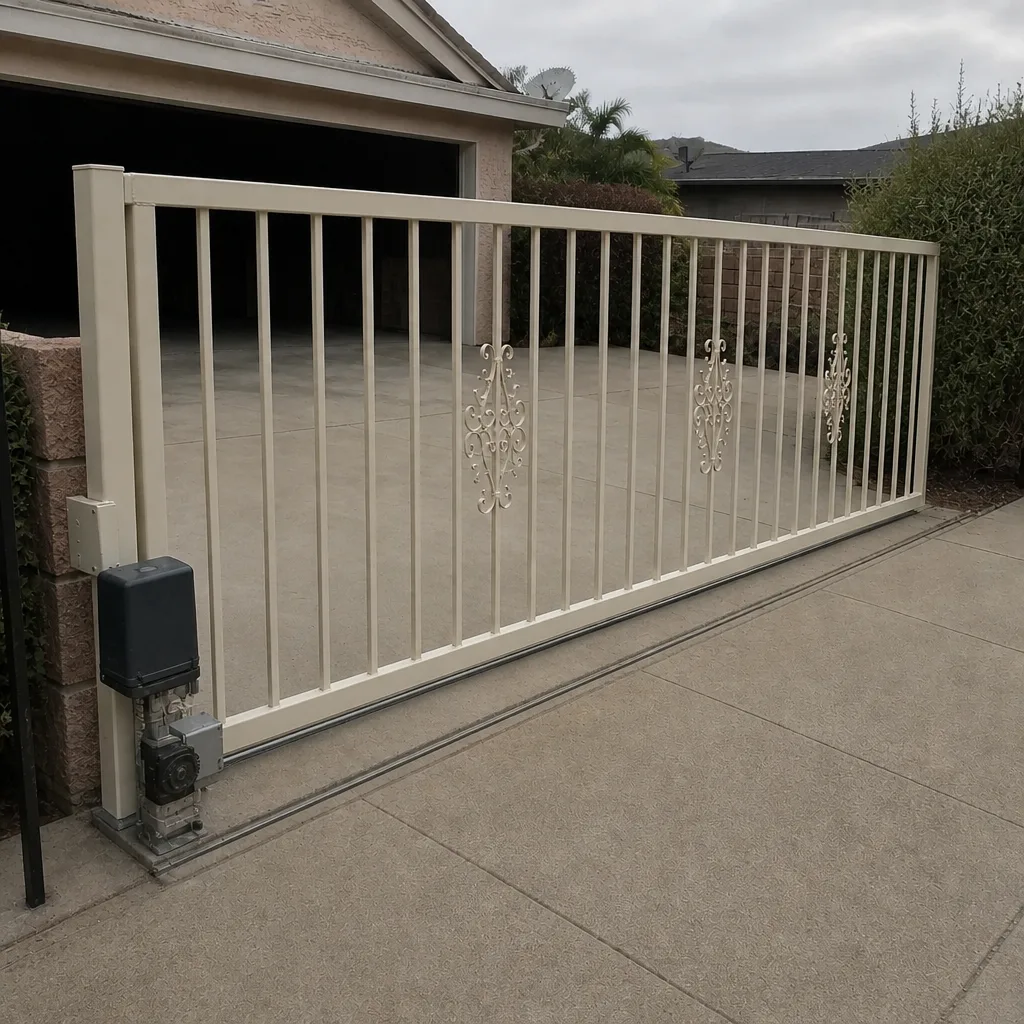 After
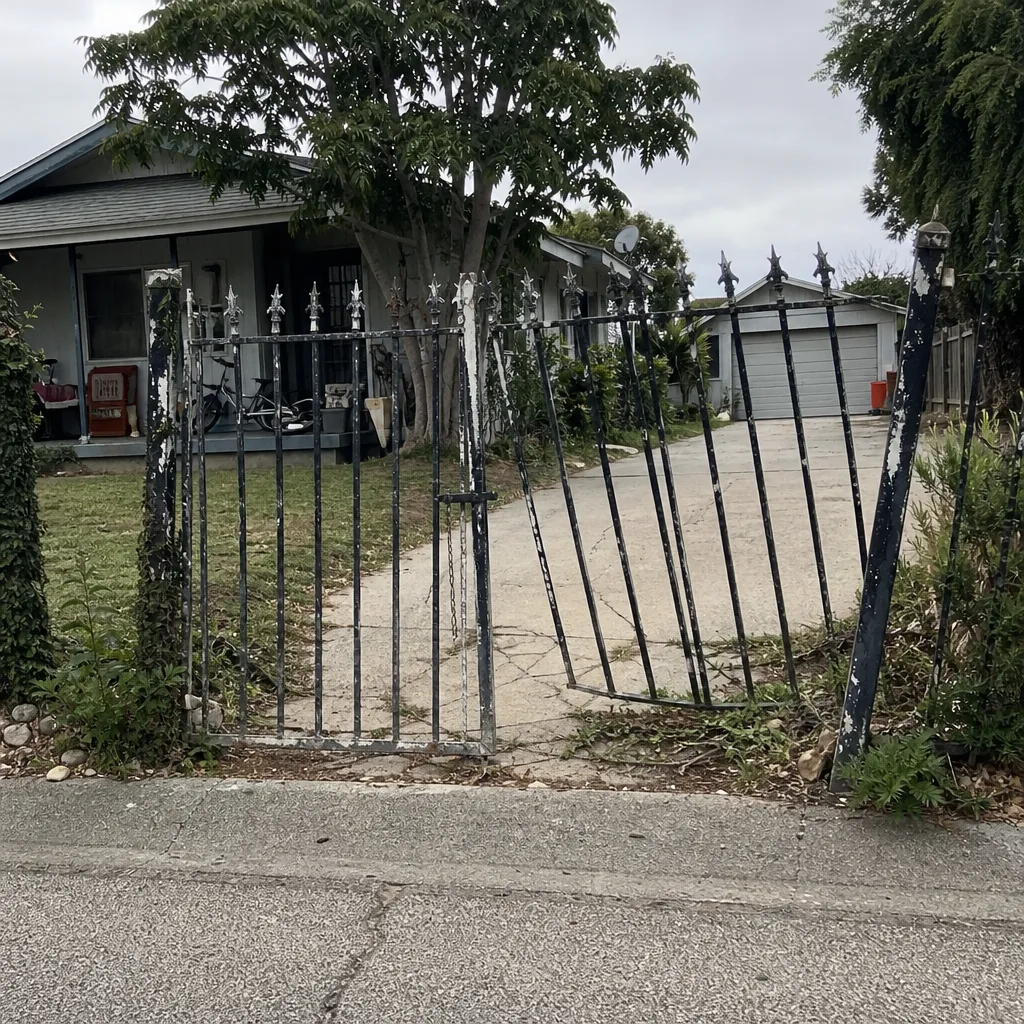 Before
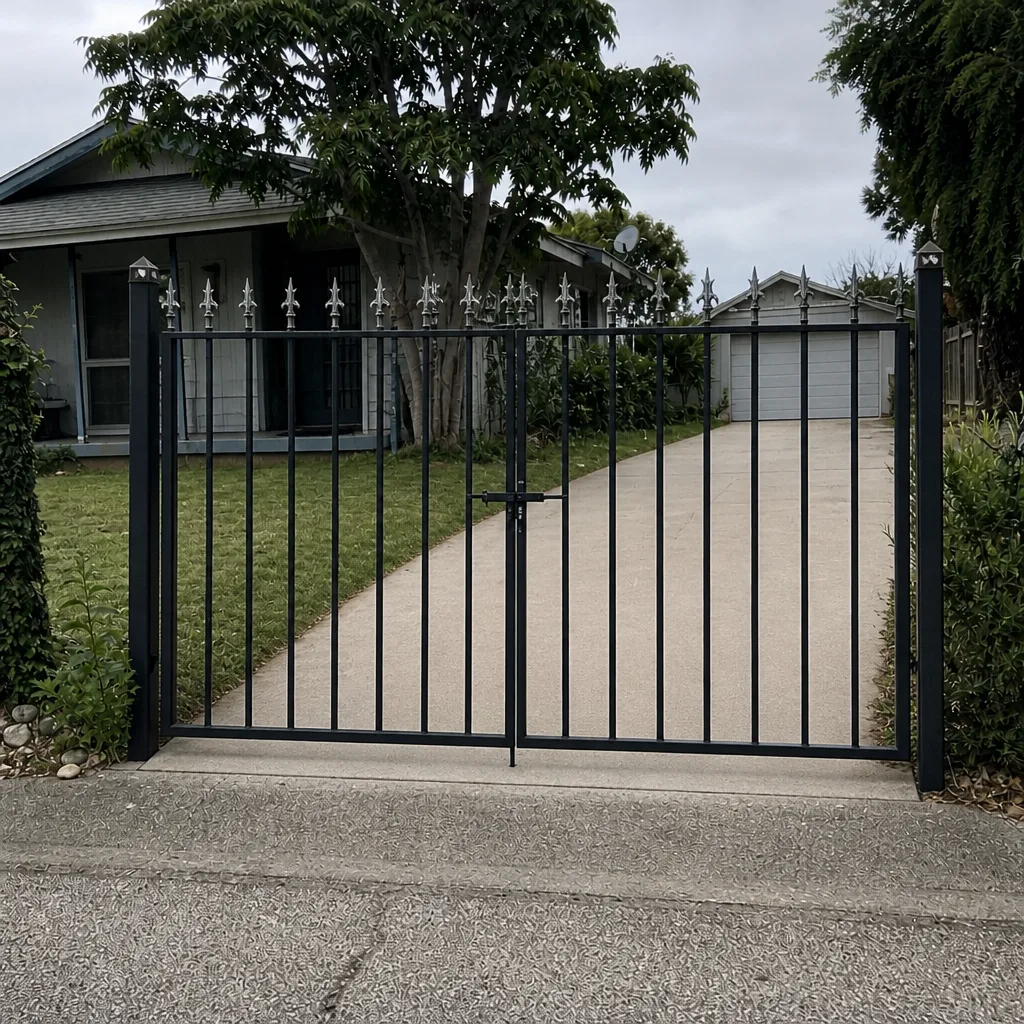 After
When to Call a Professional
Some gate problems are a screwdriver and a reset. Most aren’t. Call a professional when the gate opens erratically, when the operator runs but the gate doesn’t move, when a control board shows a fault, when the safety loop or safety edge stops responding, or when a slide gate comes off its track. Call immediately if the gate is stuck open on a property you manage, or if any part of the operator’s power or wiring looks damaged. For a new operator or a full installation, call for a free measure and a written price rather than trying to plan it yourself. Gate Repair Santa Maria offers free estimates in Santa Maria: call (844) 834-0978. We answer 24/7. Fast dispatch from 7am to 7pm, Sunday through Friday.
Frequently Asked Questions
Ask them to name the brands they service and to tell you something specific about yours. A specialist will name the operator and describe the common faults on that unit. We’re certified to service nine brands, including FAAC, BFT, Linear, Viking, LiftMaster, Ghost Controls, DoorKing, Elite, and Mighty Mule. If the answer is “we can take a look,” keep looking. Call (844) 834-0978 for an exact quote; estimates are free.
Yes, and we’re happy to provide documentation. Ask every contractor for a certificate of insurance and read the coverage description, not just the policy number, so you can confirm that automated gate work is covered. We’re licensed and insured and can send the certificate for your file. Call (844) 834-0978 to request it alongside your estimate.
Because they’re usually written to three different scopes. One quotes a lump sum, one itemizes parts without the diagnosis, one is verbal. The fix is to ask every contractor for the same four things: a written diagnosis, an itemized scope, a stated estimate, and a sentence on what happens if the diagnosis changes. Then the comparison is real. Call (844) 834-0978 for a written estimate you can compare like-for-like.
It should name the specific components being repaired or replaced, list the brands and types of parts, describe labor by task, state whether safety loops and safety edges are included, state what’s excluded, and give the price as an estimate. The written estimate sets the final price, and work starts only after you agree. Call (844) 834-0978 to get one in writing.
Often, yes. Gate repair and electric gate repair are same-day work when the diagnosis points to a component we can address in a single visit. We answer 24/7, and we offer fast dispatch from 7am to 7pm, Sunday through Friday. Same-day work is quoted the same way as any other job. Call (844) 834-0978. We answer 24/7. A call outside dispatch hours is booked into the next opening, Sunday through Friday, 7am to 7pm.
Yes. We service both residential and commercial gate systems, including commercial-grade operators like FAAC, BFT, and DoorKing. For property managers and HOAs, we can provide the certificate of insurance and the written scope you need for your records. Call (844) 834-0978 for a free estimate on your property’s gate.
The Bottom Line
Hiring a gate repair contractor in Santa Maria comes down to asking the right questions and demanding the right documents. Licensing and insurance are the floor. On top of that, ask which brands they service, whether they handle control boards and safety loops, how they diagnose an erratic fault, what their written estimate process looks like, and whether their coverage extends to automated gate work. Standardize your three quotes with the same four-part ask, so the comparison is real. Then compare scope, not just total. A specialist who answers cleanly and hands you a written estimate is the contractor you want. For a free estimate on your gate, call Gate Repair Santa Maria at (844) 834-0978. We answer 24/7. Fast dispatch from 7am to 7pm, Sunday through Friday.
Written by the team at Gate Repair Santa Maria.