
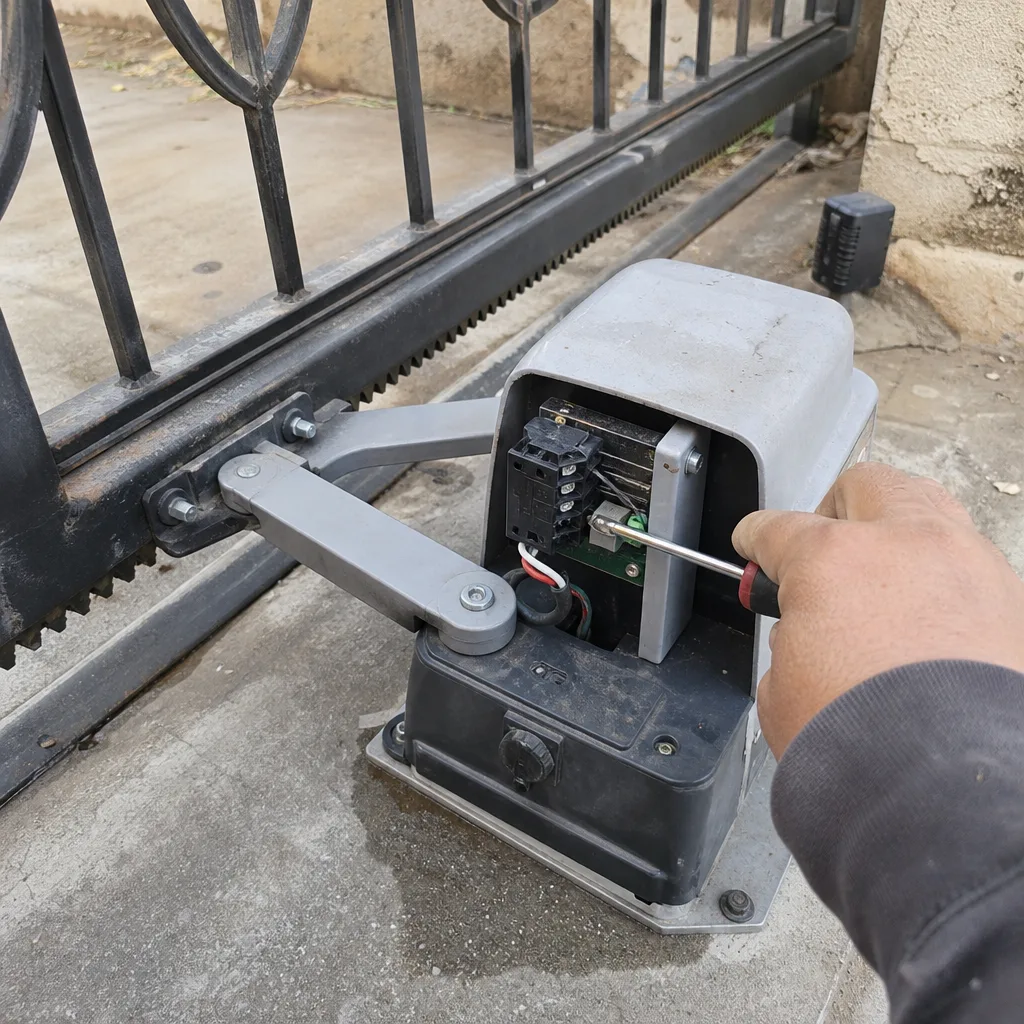
Last updated November 15, 2026
 Wrought iron
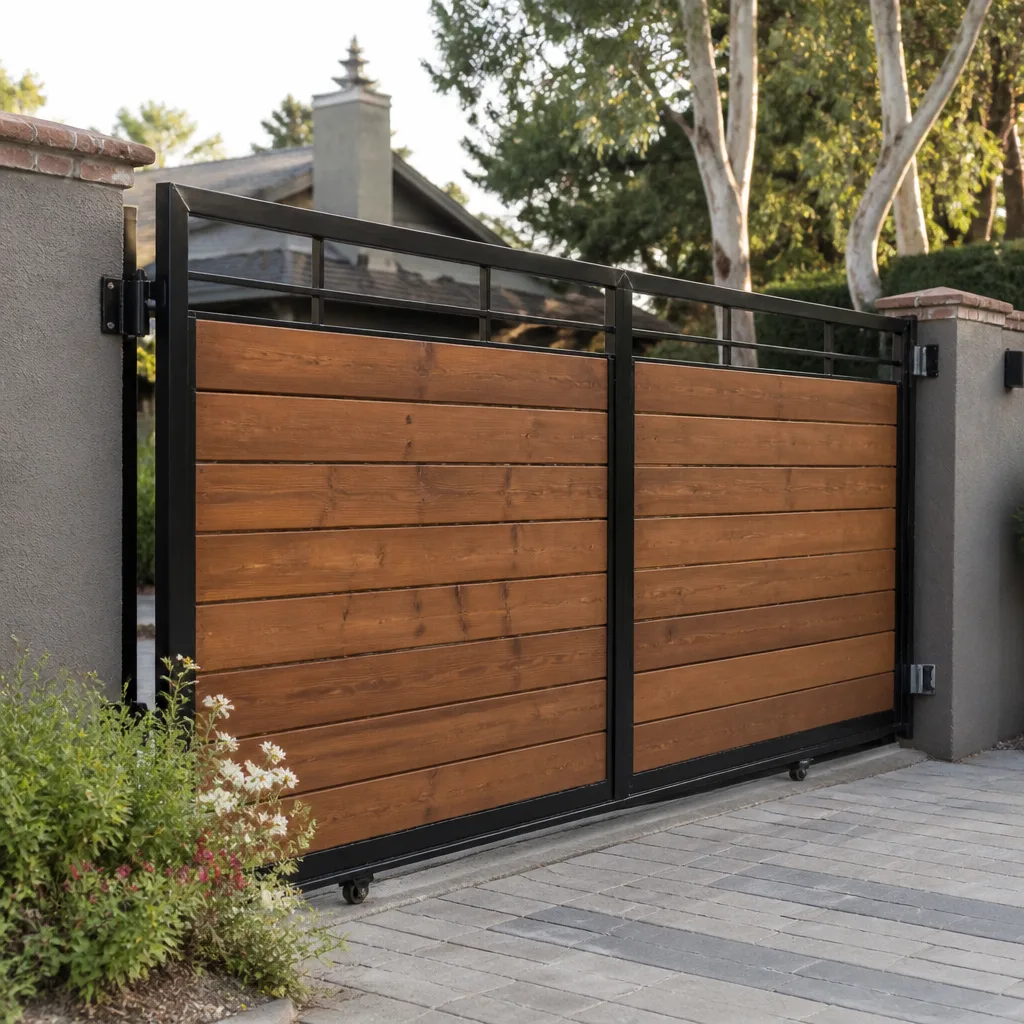 Wood & steel frame
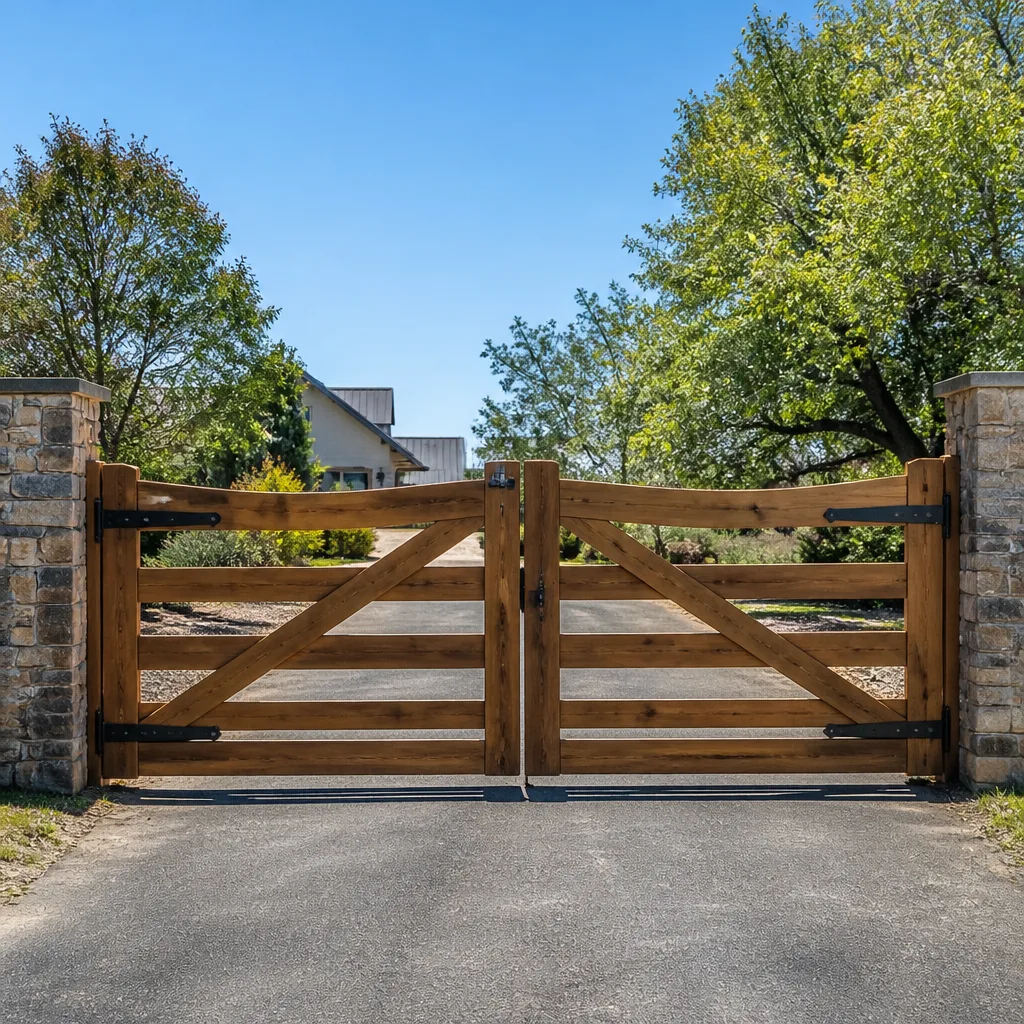 Farm & ranch
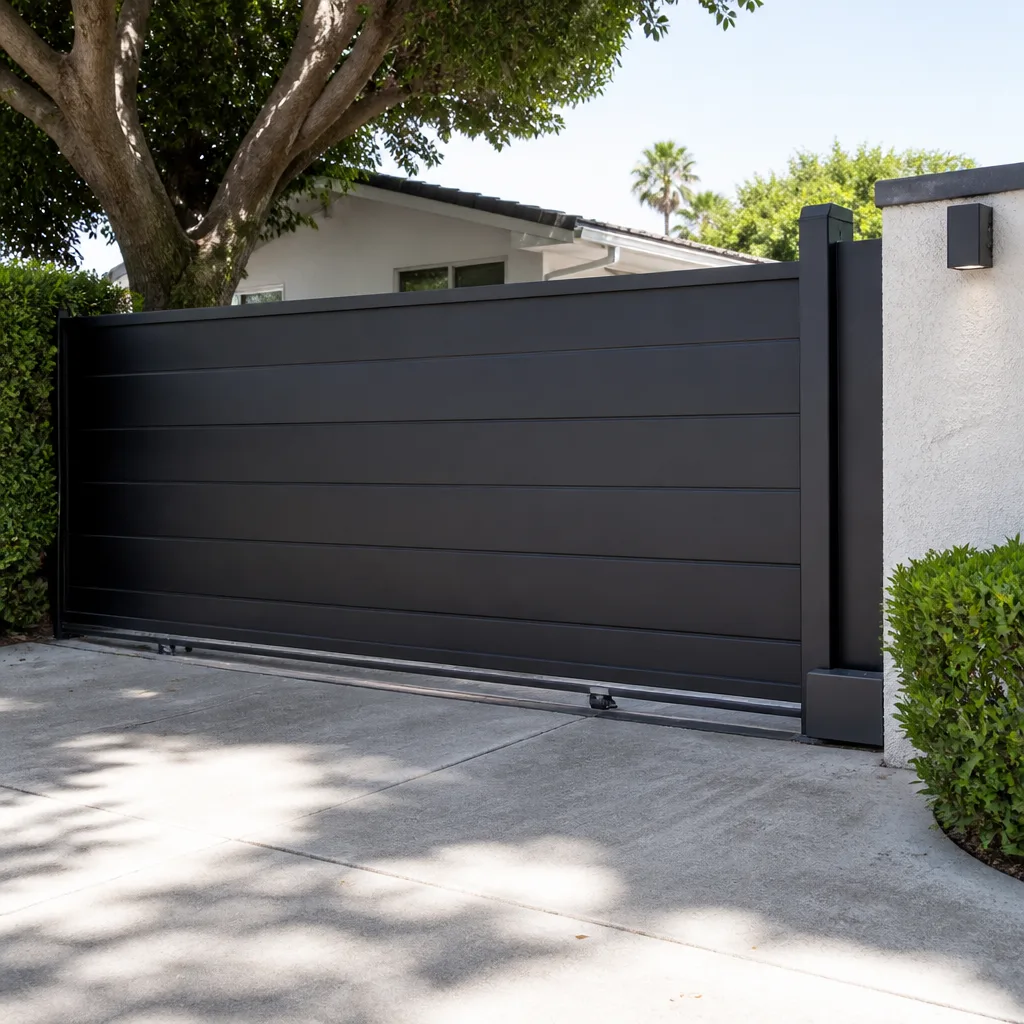 Sliding driveway gates
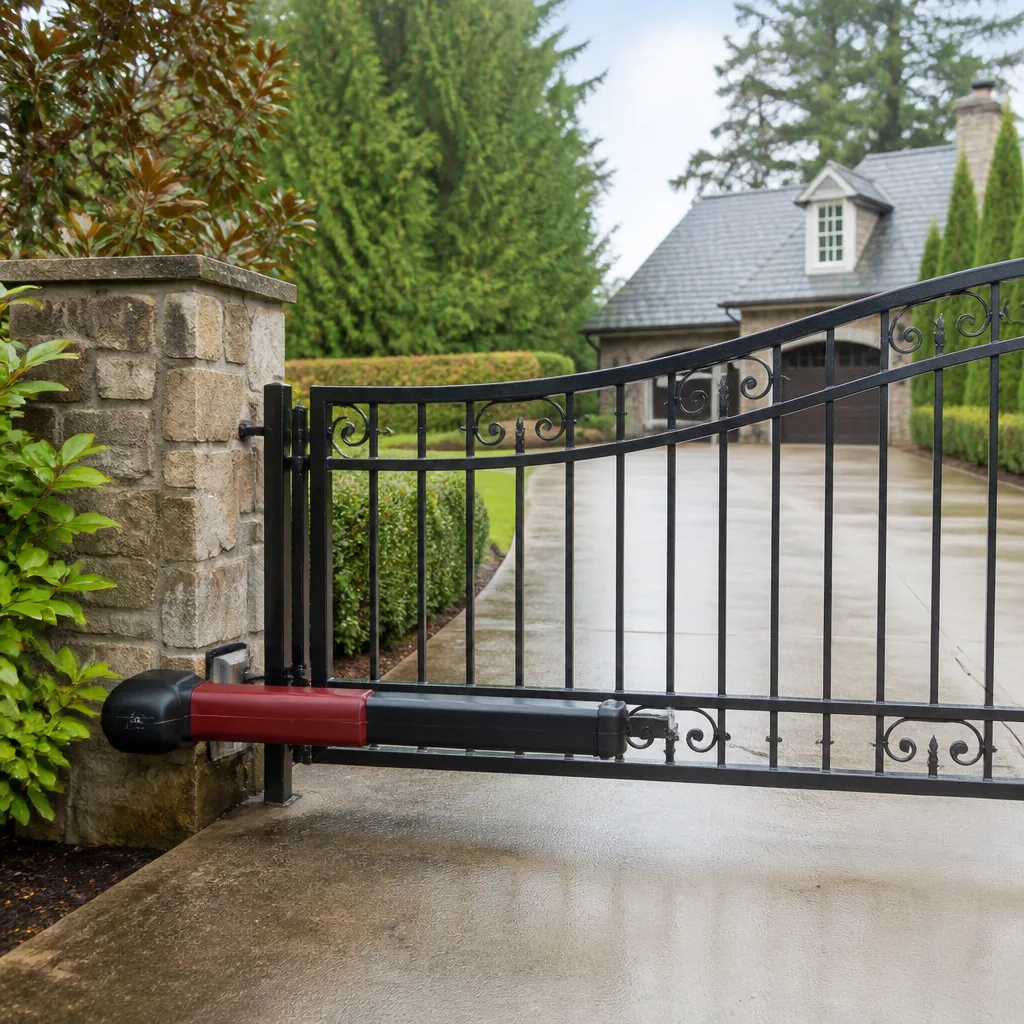 LiftMaster operators
Free on-site gate assessment - hinges, posts, and your LiftMaster or Nice gate operator checked before anything is quoted
The assessment is free and the quote is the invoice.
Get your free estimateThe Complete Guide to Gate Repair in Santa Maria
A gate that drifts open overnight isn’t a lock problem. It’s almost always a hinge alignment or post shift issue, and replacing the lock won’t fix it. That misdiagnosis is the single most common reason Santa Maria homeowners end up calling a second repair company within a few months of the first visit. The gate keeps misbehaving because nobody traced the symptom back to its cause. In this guide we map the full process, from the first sign of trouble to a documented repair, so you can tell a mechanical fault from an electrical one from a structural one and stop paying for the wrong fix.
Quick Answer
Gate repair in Santa Maria starts with diagnosing whether the failure is mechanical (hinges, rollers, tracks, latches), electrical (operator motor, control board, safety loops, wiring), or structural (a leaning post or shifting footing). The fix is only permanent when it addresses the root cause, not just the visible symptom. A gate-only specialist can usually tell you which category you’re dealing with in the first ten minutes on site.
Styles & brands we work with
- Wrought iron
- Wood & steel frame
- Farm & ranch
- Sliding driveway gates
- LiftMaster operators
Table of Contents
- The Three Root Causes Behind Most Gate Failures
- Mechanical vs. Electrical vs. Structural: How to Tell the Difference
- Why Santa Maria Soil Causes Post Lean That Mimics Motor Failure
- What a Gate Specialist Checks in the First Ten Minutes
- Repair That Restores Function vs. Repair That Fixes the Cause
- Electric Gate Repair: Motors, Control Boards, and Access Hardware
- A Step-by-Step Diagnostic Walkthrough
- How to Document a Repair for Future Reference
The Three Root Causes Behind Most Gate Failures
When a gate stops working properly in Santa Maria, the problem almost always falls into one of three buckets: foundation settling, corrosive air, or an undersized motor. Knowing which one you’re facing changes everything about the repair, including how long it takes and whether a simple adjustment will hold or the gate needs deeper work. Here’s how each one shows up.
Foundation settling and post lean. The ground moves. Posts that were set perfectly plumb can shift over time, especially where soil drains poorly or where heavy winter rain softens the ground around a footing. A leaning post throws the whole gate geometry off, and the operator then fights a gate that’s physically out of alignment.
Air-driven corrosion and wear. Metal parts, hinges, rollers, and wiring connections degrade faster in humid air and temperature swings. This is a wear issue, not a manufacturing defect, and it’s the reason a gate that ran smoothly for years suddenly sticks or grinds.
Undersized or worn motors. An operator that was barely adequate when new will struggle as hinges stiffen and the gate gets heavier with age. The motor isn’t broken so much as overworked, and it fails early because it was never matched to the real load.
These causes overlap. A Santa Maria gate with a leaning post AND a tired motor will show symptoms that look electrical when the real problem is partly structural. That’s why diagnosis has to come before tools.
Mechanical vs. Electrical vs. Structural: How to Tell the Difference
Before anyone touches a tool, you can narrow down which system is failing. The trick is to observe the gate’s behavior in a controlled way and watch for patterns that point to one category over another. This kind of systematic check is the difference between a specialist’s approach and the guesswork that leads to repeat visits.
Mechanical signs
- The gate moves but catches, scrapes, or grinds at a specific point in its travel.
- Hinges or rollers look worn, loose, or misaligned.
- The gate sags at the free end or drags on the ground.
- It operates smoothly by hand in one direction but binds in the other.
Electrical signs
- The gate doesn’t move at all, or moves in one direction only.
- The operator hums, clicks, or tries to start but stalls.
- Remotes or keypads stop responding, or the gate reverses for no visible reason.
- Safety loops or sensors trigger randomly, stopping the gate mid-travel.
Structural signs
- The gate sits crooked in its frame or won’t latch cleanly.
- Posts are visibly out of plumb, or the gate has shifted relative to the posts.
- Gaps open up where the gate used to meet the post evenly.
- The gate drifts open on its own (the opening hook scenario) because the geometry has changed.
If you see signs from more than one list, that’s normal. Many Santa Maria gate problems are layered: a structural shift stresses the operator, which then reads as an electrical fault. The specialist’s job is to find the layer that started it.
Why Santa Maria Soil Causes Post Lean That Mimics Motor Failure
This is the section most repair guides skip, and it’s the one that matters most locally. A gate post that leans even slightly can make a perfectly healthy motor behave as if it’s failing. The operator strains to push a gate that’s now fighting its own frame, overheats, or trips a safety sensor because the gate no longer swings true. Homeowners see a gate that stops halfway and assume the motor is dying. Often it’s the post.
In Santa Maria, soil conditions near the coast and in the surrounding neighborhoods create a real risk of post shift over time. Ground that holds moisture unevenly, combined with the natural settling that happens to any footing, means a post set years ago may no longer be plumb. When that happens, the repair isn’t a new motor. It’s resetting the post to proper footing depth and realigning the gate.
How to spot a structural problem before you spend money on an electrical fix:
- Open the gate by hand with the operator disengaged. If it swings freely and stays put, the mechanical and structural systems are probably fine and the issue is electrical.
- If the gate drifts, sags, or wants to fall open or closed on its own, the geometry has changed. That points to post lean or hinge wear.
- Look down the post line. A post that’s out of plumb by even a small margin will be visible when you sight along it.
- Check the latch gap. If the gate used to meet the post cleanly and now doesn’t, the frame has moved.
Getting this diagnosis right the first time is where a gate-only focus pays off. Our technicians have up to 9 years of experience reading exactly these patterns, and it’s why we treat structural checks as step one, not an afterthought. If your operator brand is Linear or Viking, brand-specific quirks add another layer, and we work on both.
What a Gate Specialist Checks in the First Ten Minutes
A qualified gate specialist runs a specific, ordered checklist before touching a single motor or control board. A general handyman typically skips these steps and jumps straight to the most visible symptom, which is how a lock gets replaced when the real problem is a hinge. Here’s what a specialist looks at first, and why the order matters.
- Manual operation. Disengage the operator and move the gate by hand. This single step separates mechanical and structural problems from electrical ones faster than any meter.
- Post plumb and hinge condition. Sight the posts, check hinge tightness, and confirm the gate sits true in its frame. This is where most misdiagnosed “motor failures” actually live.
- Power and control check. Confirm the operator is receiving power, then check the control board for fault indicators. We explain what the board is telling us rather than just swapping parts.
- Safety devices. Test the safety loops, photo eyes, and edge sensors. A gate that reverses or stops without warning is often a safety device issue, not a motor issue.
- Access hardware. Check remotes, keypads, intercom wiring, and receivers. Access problems are a distinct category from motion problems.
- Load and wear assessment. Look at how hard the operator is working. An overworked motor on a stiff gate is a motor waiting to fail.
This isn’t a sales walkthrough. It’s a diagnostic sequence, and the answers to steps one and two decide whether the rest of the visit is about adjustment, wiring, or replacement. If you manage an HOA or commercial property with a DoorKing access system, the same sequence applies, just with more hardware to check.
Repair That Restores Function vs. Repair That Fixes the Cause
A repair that restores function gets your gate moving again. A repair that fixes the cause keeps it moving. The difference is the whole reason this guide exists, because paying for the first kind twice costs more than paying for the second kind once. When the underlying cause is a leaning post, a stiff hinge, or an undersized motor, simply resetting the operator or replacing a fuse buys you time, not a solution.
Consider what happens when a gate is drifting or sticking because a post has shifted. A quick fix might mean adjusting the operator’s travel limits so it pushes the misaligned gate through. That works until the strain wears the motor down, then the gate fails again, and now you have two problems: the original structural fault and a damaged operator. We’ve seen this pattern repeatedly on gate repair calls where the previous fix addressed the symptom and left the cause in place.
A cause-first repair looks different. It might mean realigning or resetting the post before touching the operator, or matching a properly sized motor to the actual weight of the gate. It takes a bit more thought up front and delivers a gate that stays fixed. The right question to ask any technician is simple: what caused this, and does your repair address that or just the symptom? If the answer isn’t clear, the repair probably isn’t either.
Electric Gate Repair: Motors, Control Boards, and Access Hardware
Electric and automated gate repair is its own discipline, distinct from manual gate work. An automated gate has a motor, a control board, safety loops, sensors, and access hardware that all have to work together. When one part fails, the symptoms can look identical to a dozen other problems, which is why brand knowledge matters. We service nine operator brands, including residential systems like Ghost Controls and Linear and commercial-grade systems like DoorKing.
Here’s what electric gate repair actually covers:
- Motors and operators. Replacement of a failed or undersized motor, and diagnosis of why the original failed.
- Control boards. Fault tracing and board-level diagnosis, matched to the specific brand’s logic and error behavior.
- Safety loops and sensors. Repair or replacement of loop detectors, photo eyes, and edge sensors that stop the gate or cause false reversals.
- Access hardware and wiring. Remotes, keypads, receivers, and intercom wiring that no longer command the gate reliably.
One point on access and control wiring: the operator handles line power and can store energy even after the breaker is off. That’s a job for a trained professional, full stop. The same caution applies to heavy gate panels and slide gates that come off their track. A real expert flags these dangers rather than walking a homeowner through them. If your gate is commercial-grade or your access system spans multiple entry points, our electric gate repair page covers the deeper detail.
A Step-by-Step Diagnostic Walkthrough
If you want to understand what’s likely wrong before you call, this sequence mirrors how a specialist thinks. It’s a diagnostic order, not a repair guide. The dangerous parts, power wiring and heavy panels, stay in professional hands. Everything here is about observing and narrowing, so the conversation on the phone is more useful and the on-site visit is faster.
- Observe the symptom precisely. Does it fail every time or intermittently? One direction or both? At a specific point in travel? Write it down.
- Test by hand. Disengage the operator and move the gate manually. Free and smooth points away from electrical. Binding or drifting points toward mechanical or structural.
- Check for post lean and hinge wear. Sight the posts and check the latch gap. If the geometry has changed, the fix is structural regardless of what the motor is doing.
- Isolate the electrical layer. Does the operator power on? Does the control board show a fault? Do the safety devices test cleanly? This confirms or rules out the electrical category.
- Check access hardware separately. A remote that won’t open the gate is a different problem from a gate that won’t move. Test a second entry method if you have one.
- Size the load. Note how hard the operator works and whether the motor suits the gate’s weight. This tells you whether a motor replacement is a repair or a repeat failure waiting to happen.
Each step narrows the field. By the time you’ve worked through them, you should know which of the three root causes is most likely, and that’s the information a specialist needs to give you a straight answer on the fix.
How to Document a Repair for Future Reference
Documentation is the step almost nobody does, and it’s the one that pays off later. A repair with no record is a repair you’ll have to re-diagnose from scratch if the gate acts up again. A repair with a clear record gives you a baseline, protects you if there’s a warranty question, and makes routine maintenance decisions far easier. It’s also a reasonable thing to ask any technician to provide.
What a useful repair record includes:
- The diagnosed cause. Not just “fixed gate,” but what was actually wrong: post lean, worn hinges, failed control board, safety loop fault. The cause is the most important line in the record.
- The work performed and parts used. Which hinges, which motor, which control board. If a brand-specific part went in, note the brand.
- Any adjustment values. If travel limits, sensor alignment, or operator settings were changed, recording them creates a reference point.
- The date and the gate’s condition. A short note on how the gate operated at completion is your starting benchmark.
- Any recommendation made. If the technician flagged a hinge as borderline or a motor as near the end of its life, that’s a future to-do, not a throwaway line.
Keep this with your property records. On the next repair, hand it over. A specialist who can see the baseline can tell instantly whether the gate has drifted further or whether a part that was flagged is now failing. That saves diagnostic time and keeps the focus on the cause.
Common Mistakes to Avoid
These are the missteps we see most often on Santa Maria gate calls. Each one tends to turn a manageable repair into a bigger one, or a single visit into a repeat.
- Replacing the lock when the gate drifts. A gate that stays open on its own is usually a hinge alignment or post shift issue. A new lock won’t touch the cause, and you’ll be back on the phone.
- Swapping the motor without checking the structure. If a leaning post is straining the operator, a new motor fails too. Confirm the gate is true before blaming the motor.
- Treating all automated gate faults as electrical. Many are mechanical or structural. Observation and a hand test save money before any part is ordered.
- Ignoring small signs of post lean. A post that’s slightly out of plumb in Santa Maria’s settling soil gets worse, not better. Small shifts are cheaper to correct early.
- Applying a generic fix to a brand-specific system. Commercial-grade systems like DoorKing and residential brands like Ghost Controls have their own logic and error behavior. A generic fix may leave the real fault in place.
- Letting a handyman learn on your gate. Gate repair is a specific trade. A generalist who figures it out on the job costs you callbacks and time.
- Skipping the repair record. Without a baseline, every future repair starts from zero and repeat diagnosis gets expensive.
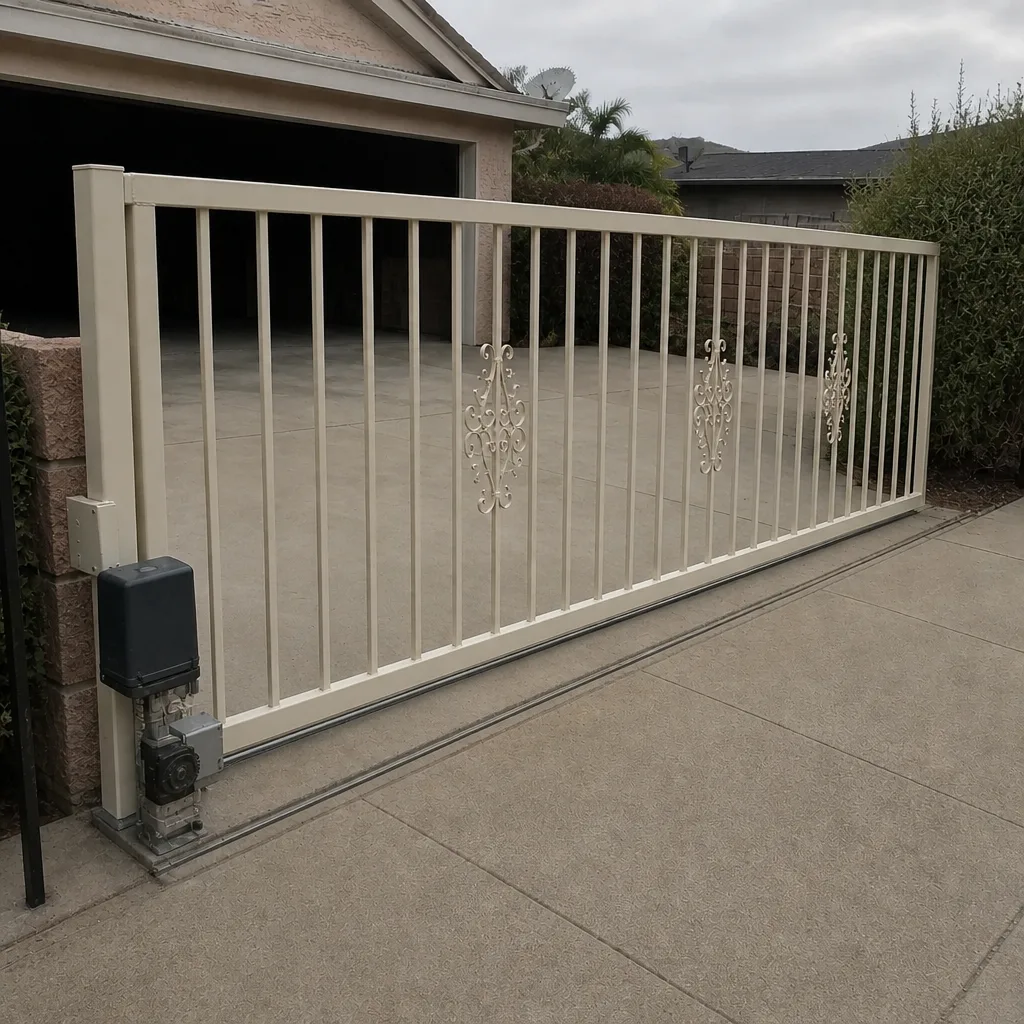
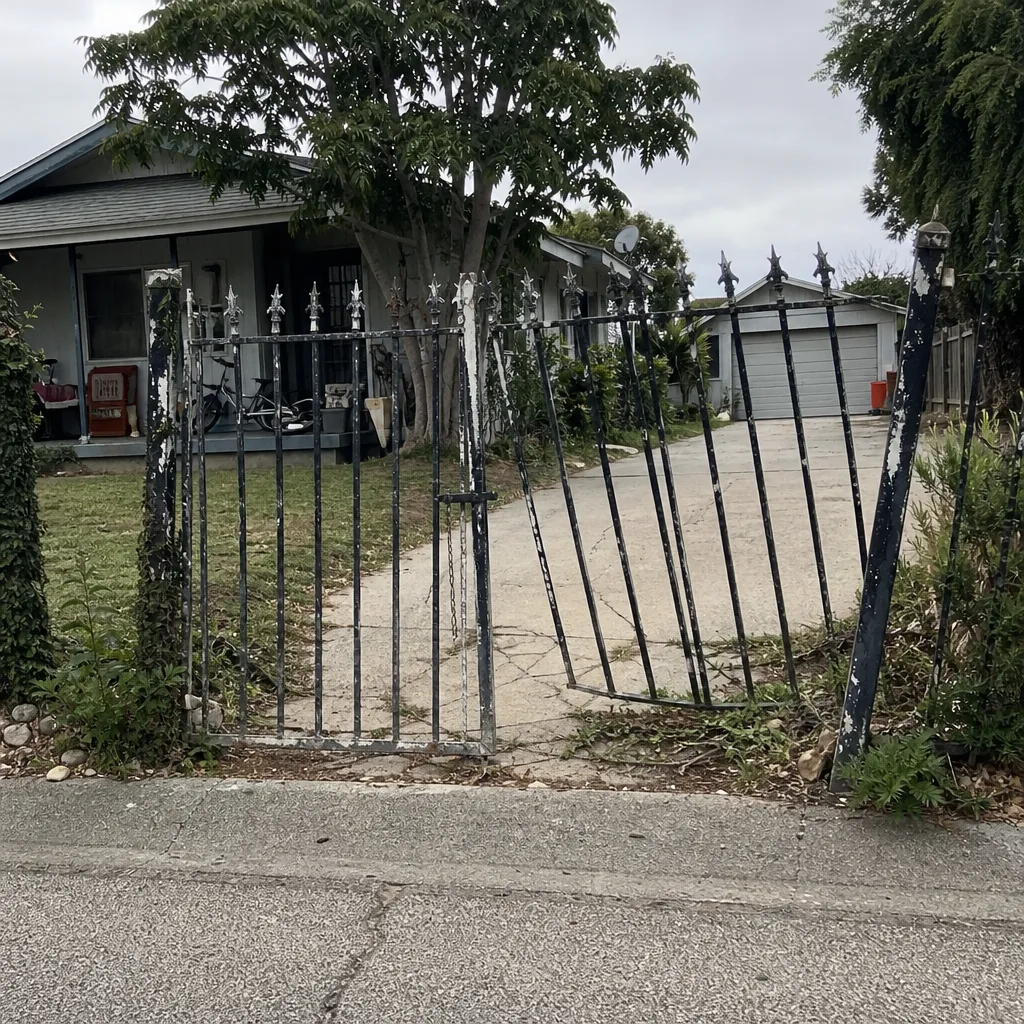
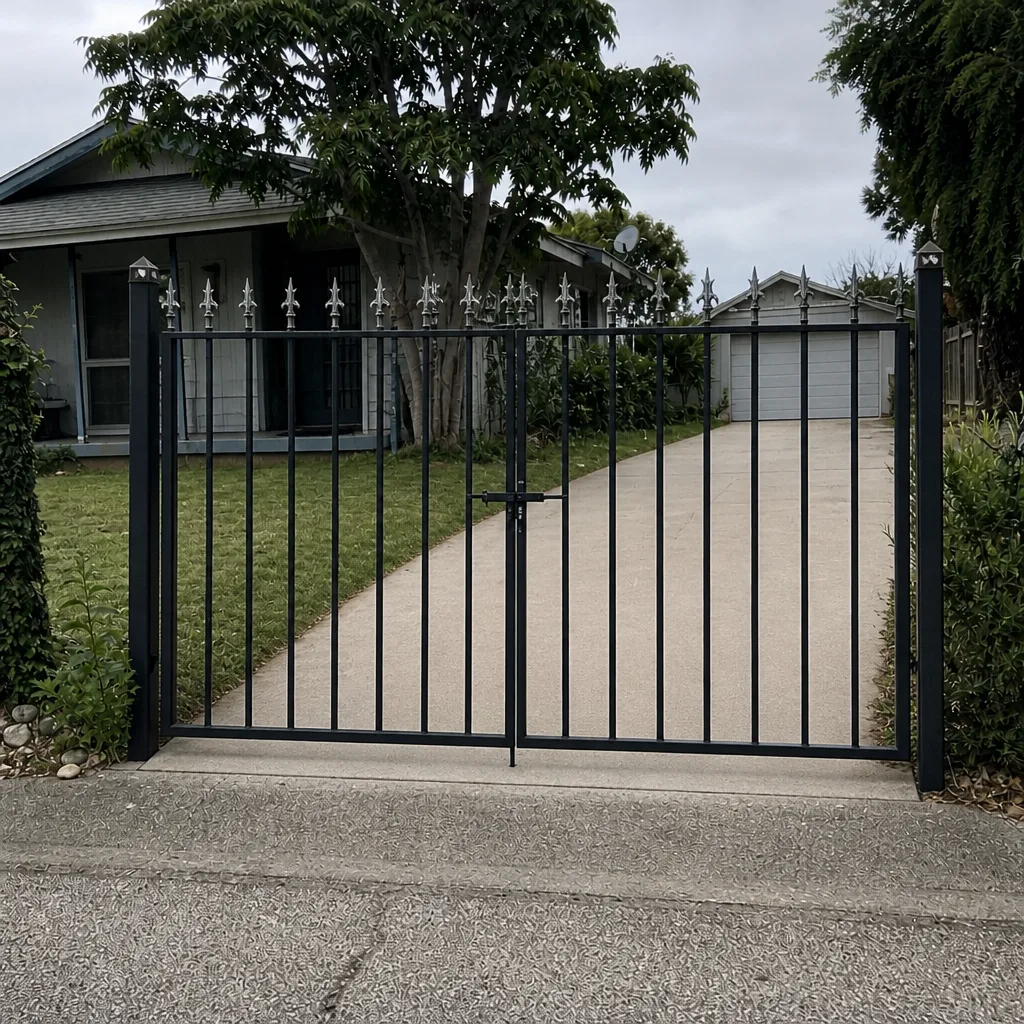
See the difference
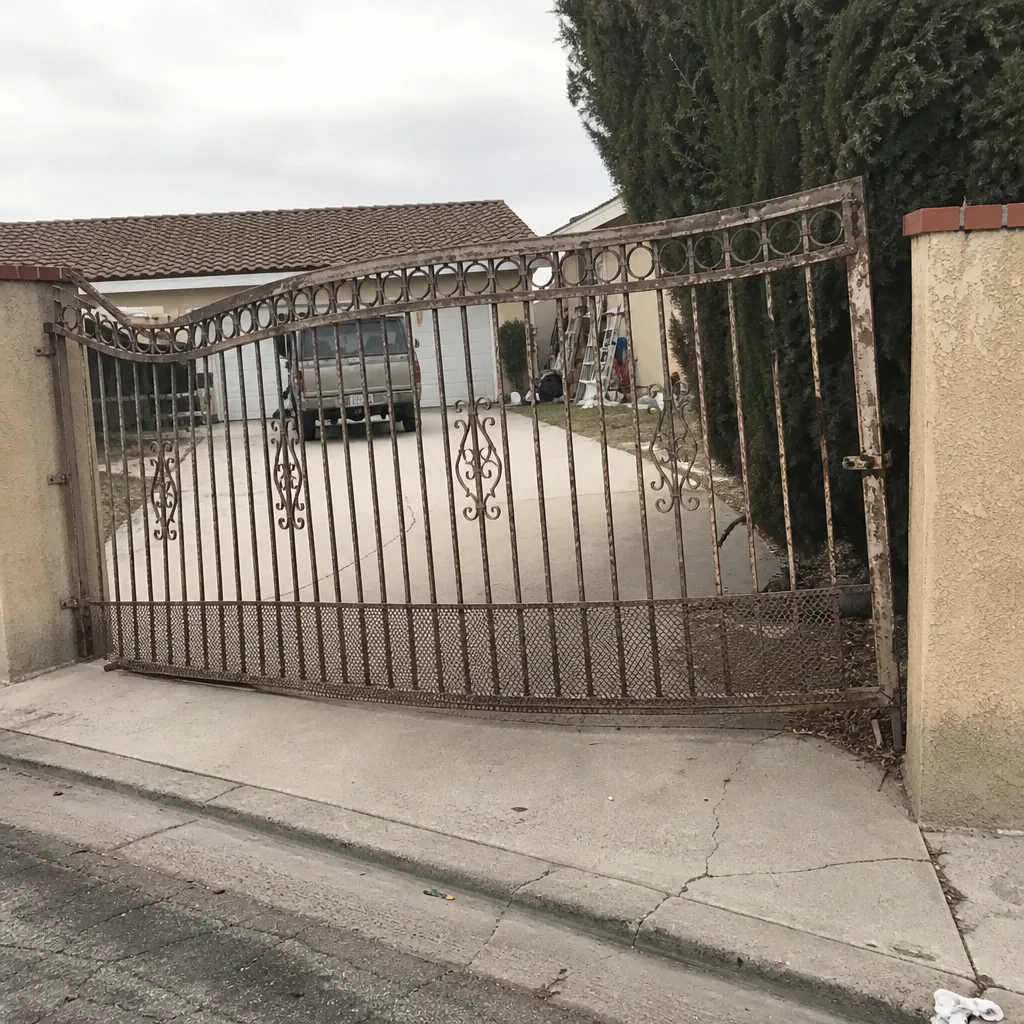 Before
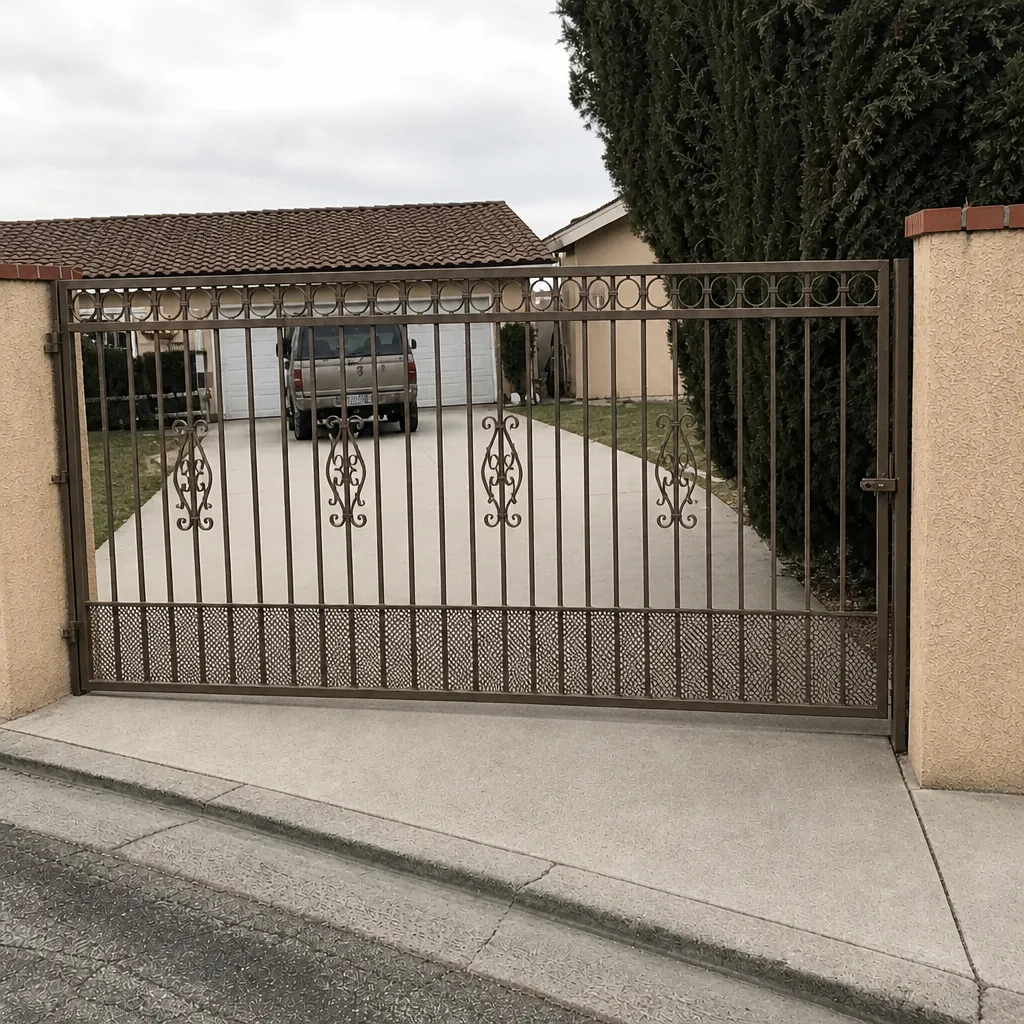 After
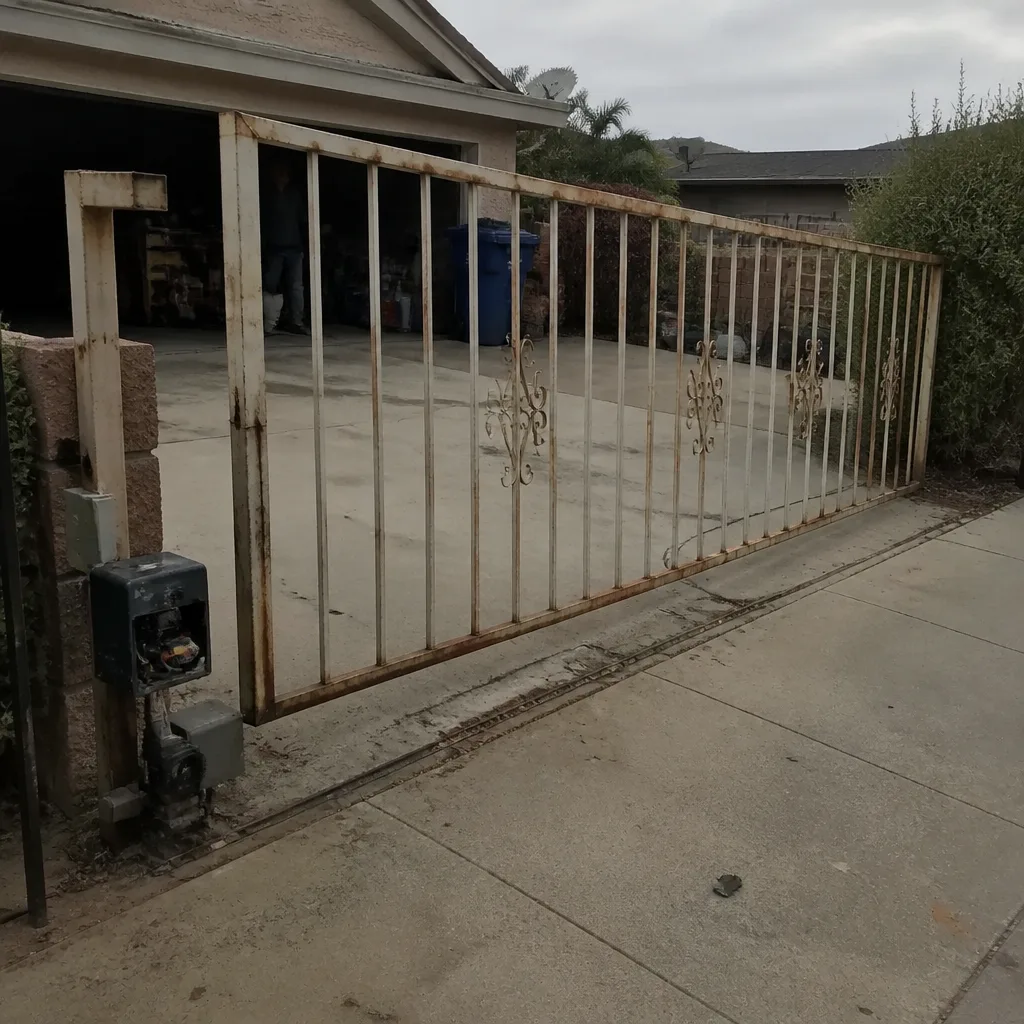 Before
 After
 Before
 After
When to Call a Professional
Some gate problems are cosmetic. Others are serious enough that waiting makes them worse. Call a professional when the gate drifts or sags on its own, when the operator strains or stalls, when remotes and keypads stop responding, when safety sensors cause the gate to reverse unpredictably, or when a structural shift is visible in the posts or latch. Any fault involving the operator’s power wiring or heavy gate panels should stay in trained hands. A gate-only specialist delivers faster diagnosis, brand-specific repairs, and work that addresses the cause. Gate Repair Santa Maria offers free estimates in Santa Maria – call (844) 834-0978. We answer 24/7, with fast dispatch from 7am to 7pm, Sunday through Friday.
Frequently Asked Questions
The price is set per job by a free written estimate, because a structural correction, a control board fault, and a safety loop repair are very different jobs with different parts and time. You’ll get the price quoted and agreed before any work starts, so there are no surprises on the invoice. Call (844) 834-0978 for an exact quote – estimates are free.
Same-day repair is often possible for common gate faults on the Gate Repair Santa Maria schedule. We answer 24/7 and dispatch from 7am to 7pm, Sunday through Friday. A call outside dispatch hours is booked into the next opening, Sunday through Friday, 7am to 7pm. Call (844) 834-0978 to find the nearest slot.
A gate that drifts on its own almost always has a hinge alignment or post shift issue, not a lock problem. The geometry of the gate has changed, so it moves under its own weight. A specialist checks post plumb and hinge condition first, then the operator. Call (844) 834-0978 and we’ll trace the cause.
We work on nine major brands, including LiftMaster, FAAC, BFT, Linear, Viking, Ghost Controls, DoorKing, Elite, and Mighty Mule, covering both residential and commercial systems. That brand familiarity means brand-specific diagnosis rather than a generic guess. Call (844) 834-0978 and tell us your model.
It’s structural, even when the gate makes it look like the motor is failing. A leaning post forces the operator to fight the gate, which strains the motor and can trip safety sensors. The correct repair resets the post to proper footing depth and realigns the gate. Call (844) 834-0978 for an on-site estimate.
A gate-only specialist narrows diagnosis faster because every job is a gate job. A handyman often fixes the visible symptom and leaves the cause, which is how repeat repair calls happen. Every job with our Santa Maria team is a gate job. Call (844) 834-0978 to talk through the problem.
The Bottom Line
Most gate failures in Santa Maria trace back to one of three root causes: foundation settling and post lean, corrosion and wear, or an undersized motor. The key is telling them apart before anyone picks up a tool, because a repair that only restores function leaves the cause in place and brings you right back to the phone. Test the gate by hand, check the posts, then look at the electrical layer. When a structural shift is behind the symptoms, address that first. This is why gate-only specialists, working from the Santa Maria area, focus on cause-first diagnosis and documented repairs. Our technicians have up to 9 years of experience reading exactly these patterns, and we work on your brand.
Contact
If your gate is drifting, sticking, or refusing to respond, call Gate Repair Santa Maria at (844) 834-0978 for a free estimate. We answer 24/7, with fast dispatch from 7am to 7pm, Sunday through Friday. We’ll diagnose the cause, quote the price before any work starts, and fix the problem so it stays fixed.
Written by the team at Gate Repair Santa Maria.