
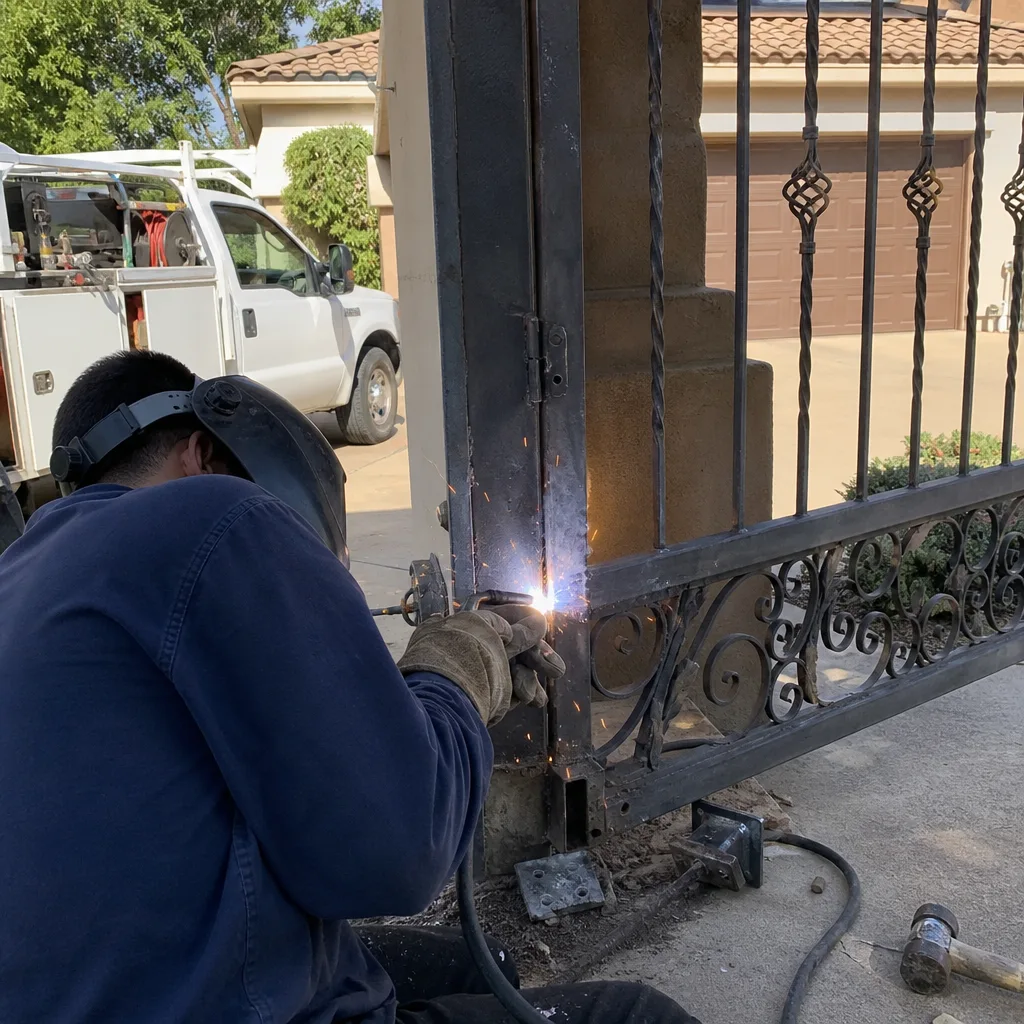
Last updated November 15, 2026
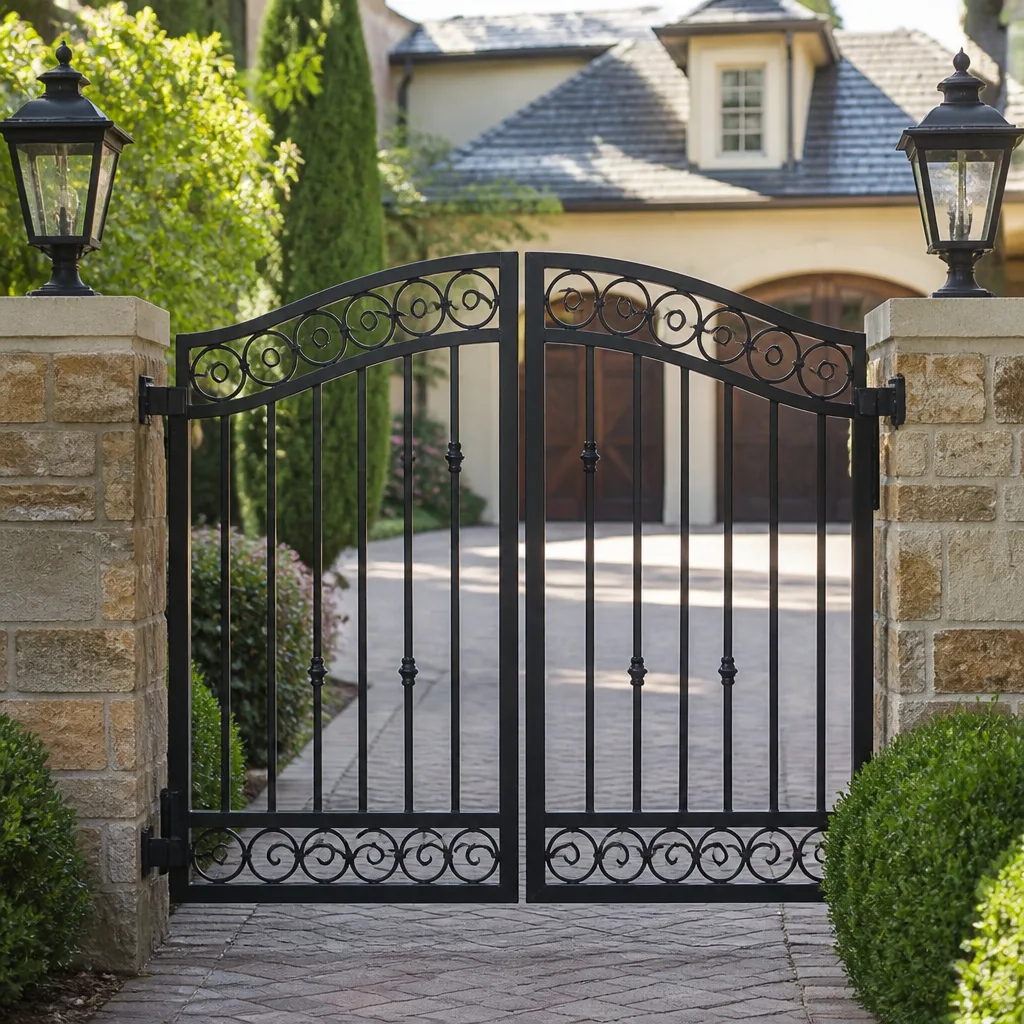 Wrought iron
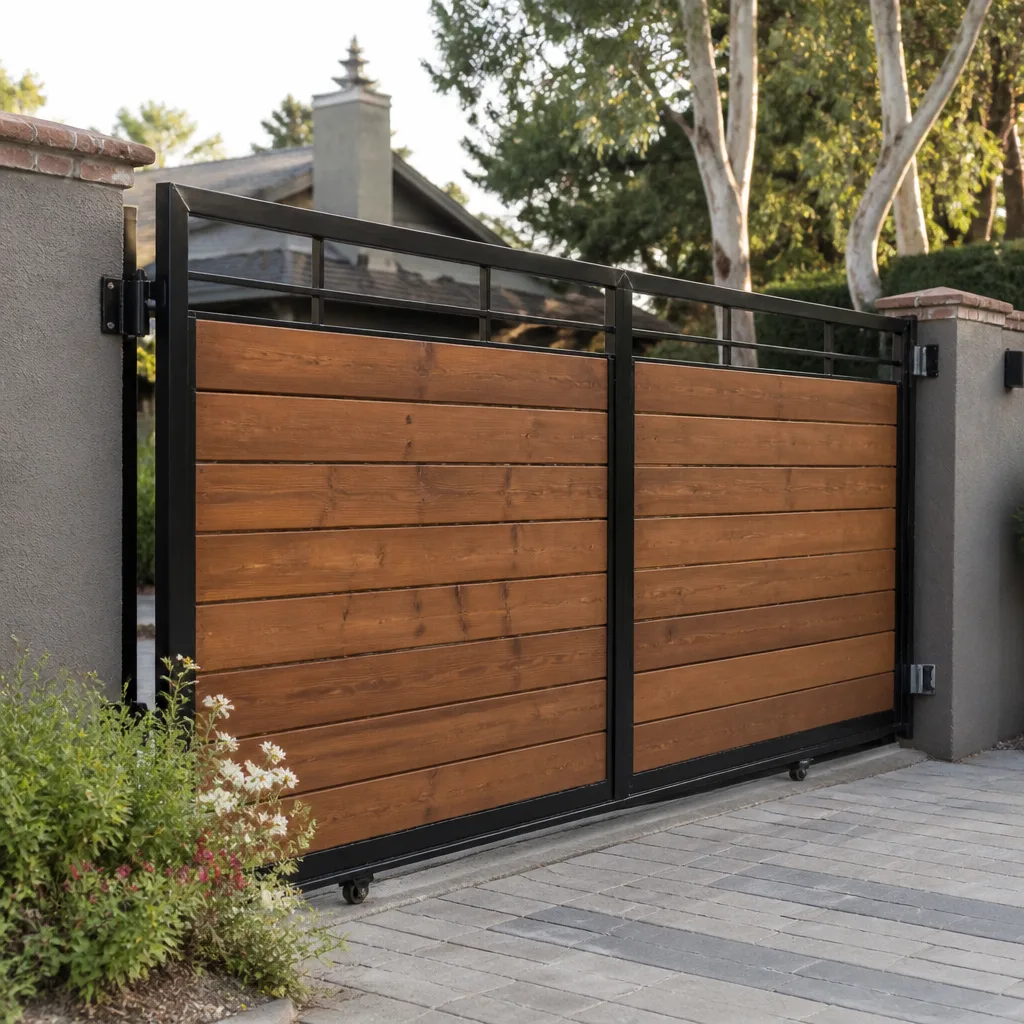 Wood & steel frame
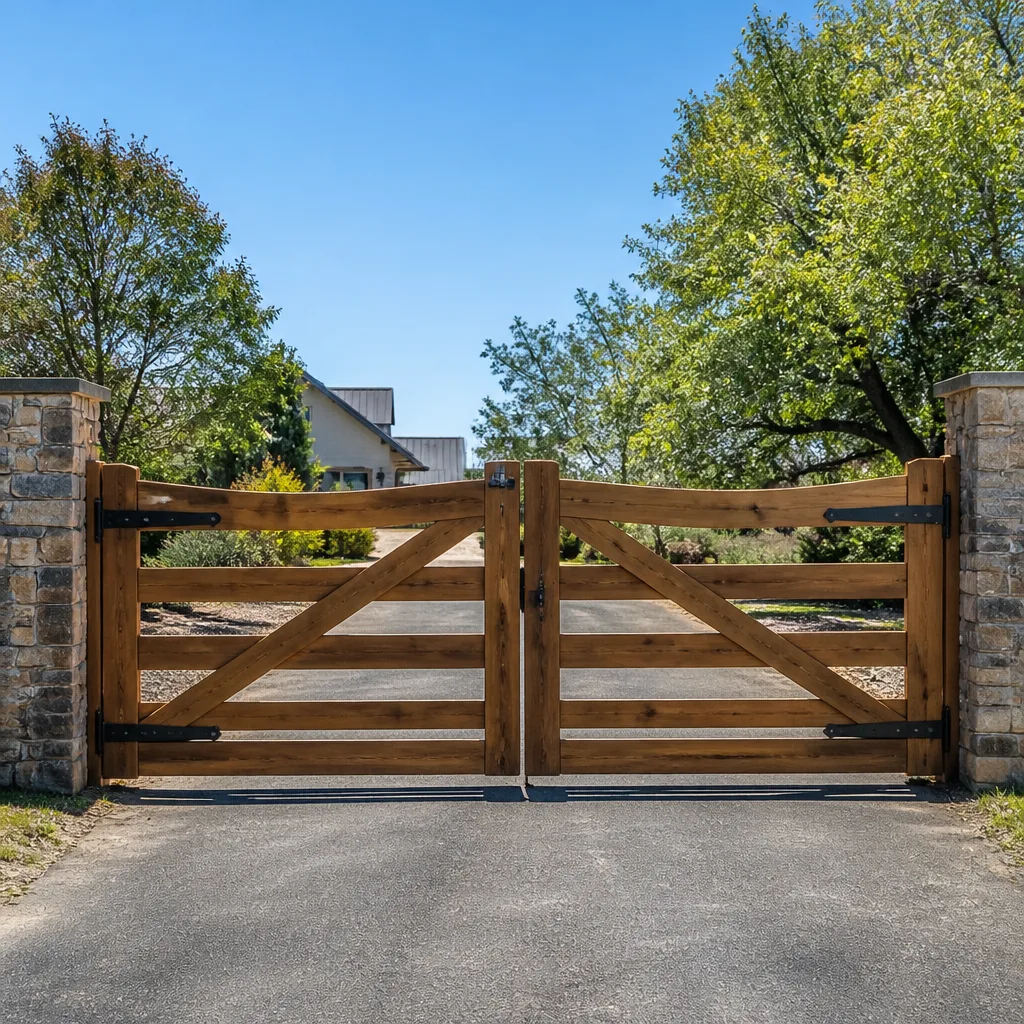 Farm & ranch
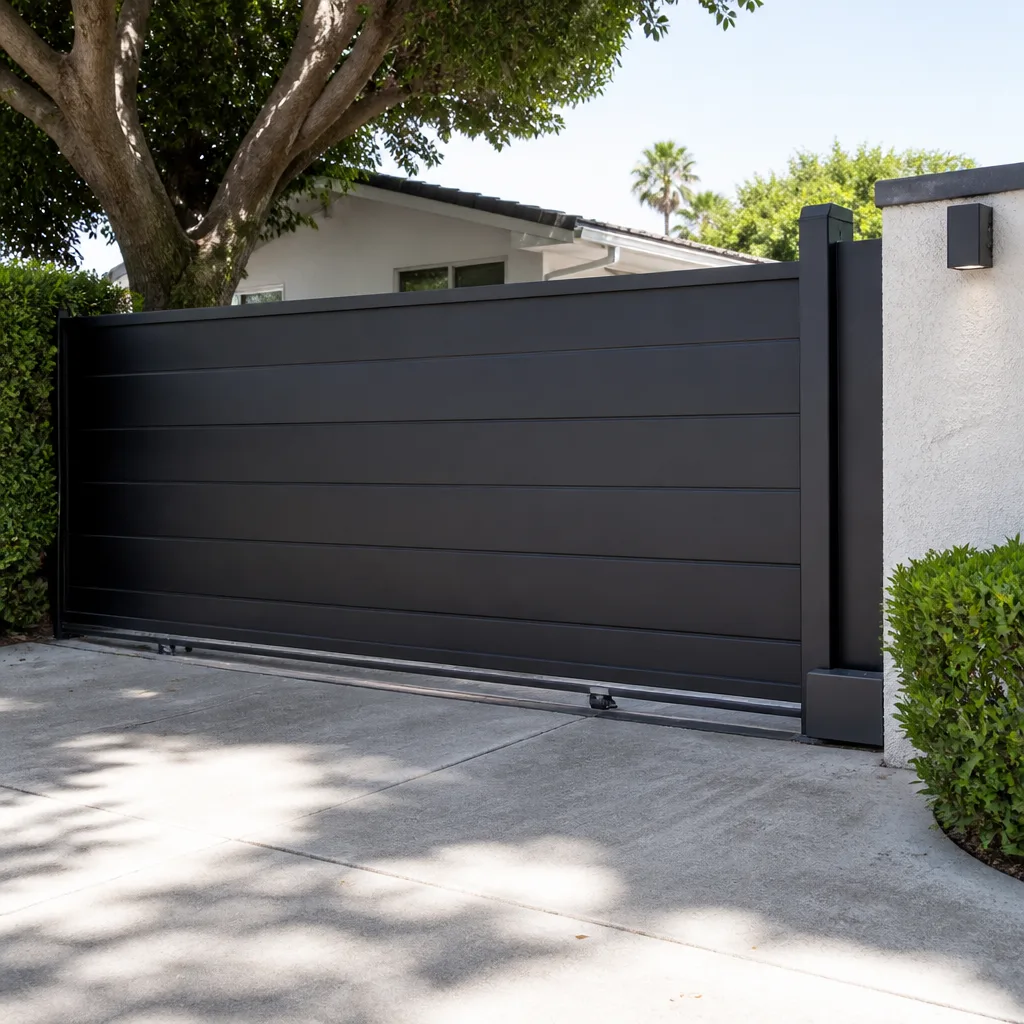 Sliding driveway gates
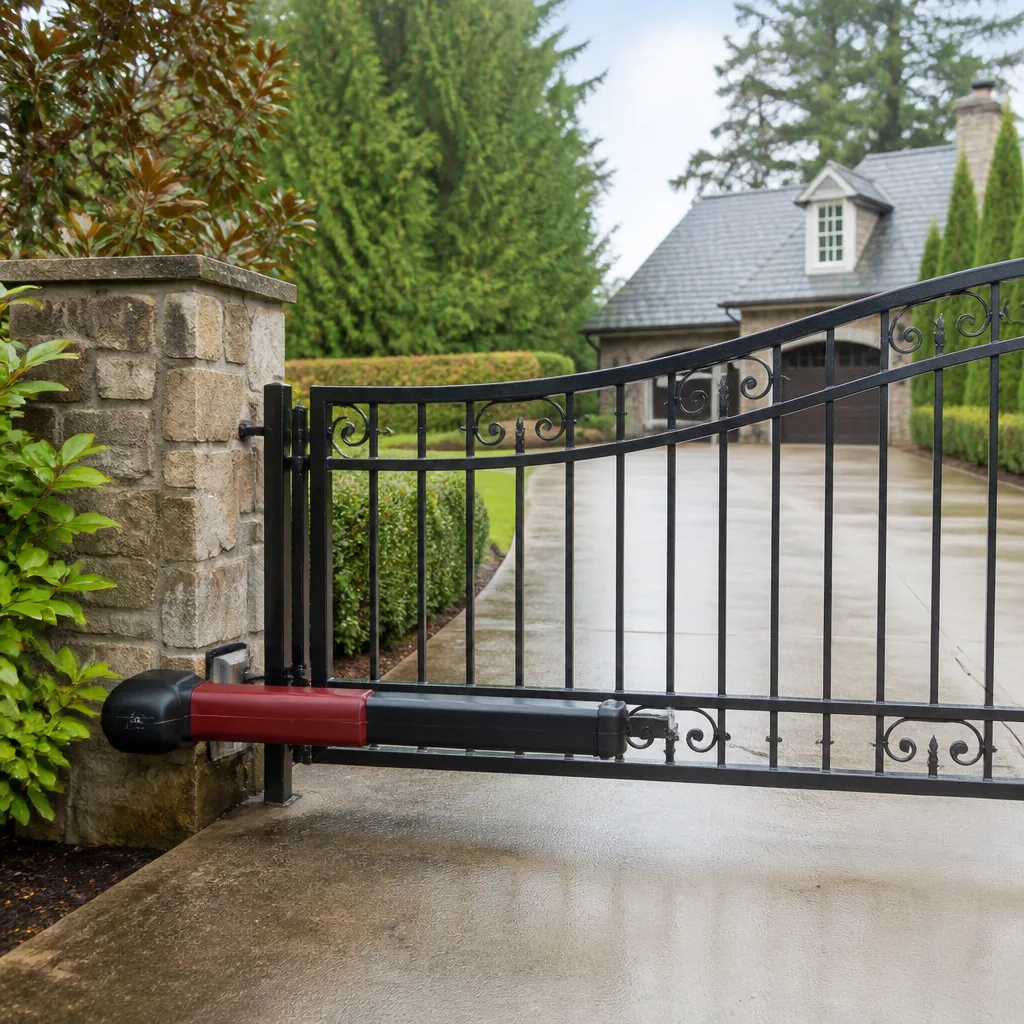 LiftMaster operators
Free on-site gate assessment - hinges, posts, and your LiftMaster or Nice gate operator checked before anything is quoted
The assessment is free and the quote is the invoice.
Get your free estimateChoosing the Right Gate Repair Brand: A Buyer’s Guide for Santa Maria
The operator brand a contractor recommends most often is the one that’s easiest for them to source and mark up, not necessarily the one that fits your gate. A heavy slide gate on a windy hill and a light residential swing gate at a home in Santa Maria have almost nothing in common when it comes to duty cycle, drive type, or how fast a replacement part arrives. This guide walks through how to match operator brands to the way your gate actually works, which brands stay in stock around Santa Maria, what duty cycle really means, and whether your current operator is worth repairing or replacing.
Quick Answer
Choose a gate operator brand by matching its drive type, duty cycle rating, and local parts availability to your specific gate’s weight, traffic, and power source, not by name recognition. In Santa Maria, brands like LiftMaster, FAAC, Viking, Linear, and BFT that have nearby distributor stock tend to be the smartest picks because a part that ships in from out of state means days of downtime. If a gate repair contractor is certified across several brands, they can recommend the right fit instead of pushing whatever’s on their shelf.
Styles & brands we work with
- Wrought iron
- Wood & steel frame
- Farm & ranch
- Sliding driveway gates
- LiftMaster operators
Table of Contents
- How Do You Match an Operator Brand to Your Gate?
- What Is Duty Cycle, and Why Does It Matter?
- Which Brands Have Parts Available Near Santa Maria?
- What Does Brand Support Actually Mean?
- Should You Repair Your Existing Operator or Switch Brands?
- How Do Residential and Commercial Brands Differ?
- How Do You Evaluate a Gate Repair Contractor?
- Common Mistakes to Avoid
How Do You Match an Operator Brand to Your Gate?
Match the operator to the gate first, then to the brand. The gate’s weight, its drive type (swing or slide), how often it opens, and the power available at the post all narrow the field before brand names even matter. A residential-rated swing operator on a 400-pound driveway gate is the wrong tool no matter whose logo is on the housing.
Here’s the order we work through on a typical assessment:
- Gate weight and leaf size. Swing gate operators are rated by leaf weight and length. A brand that makes a solid operator for a 300-pound leaf may not offer a model rated for 800 pounds. Slide gates are rated by total gate weight and travel length.
- Drive type. Swing gates use articulated arms or underground operators. Slide gates use rack-and-pinion or chain drives. The brand you choose needs a model that fits the drive type already on the gate, or the installation becomes a rebuild.
- Frequency of use. A homeowner opening the gate twice a day has very different needs from an HOA or commercial property where the gate cycles dozens or hundreds of times daily. That’s the duty cycle question covered below.
- Power source. Most Santa Maria residential gates run on standard 120V power at the post. Rural properties and gates set far from the house may need a solar-capable operator or a low-voltage run. Ghost Controls and Mighty Mule are common choices for solar and remote-power setups.
- Access and safety features. Loop detectors, keypads, intercoms, and safety edges all need to be compatible with the operator’s control board. Some brands are easier to integrate with third-party access hardware than others.
The brand only becomes the deciding factor once those five questions have answers. A contractor who leads with a brand name before asking about gate weight and traffic is selling, not diagnosing. When we look at a gate in Santa Maria, the first hour is spent measuring and observing, not pitching.
What Is Duty Cycle, and Why Does It Matter?
Duty cycle is how much of a given time period the operator’s motor can run before it needs to cool down. A residential-rated operator is built for light use, maybe a few cycles an hour with long rest periods. A commercial or high-traffic property running that same residential operator will burn through motors and control boards far faster than expected, regardless of brand quality.
Most manufacturers publish a duty cycle rating in the spec sheet. You’ll see it expressed a few ways:
- Cycles per hour. A residential operator might be rated for 6 – 12 cycles per hour; a commercial unit for 60 or more.
- Duty class (light residential, standard residential, heavy residential, commercial, industrial). Each class roughly corresponds to how often the gate opens in a day.
- Continuous duty or intermittent duty. Continuous-duty operators are built for near-constant cycling; intermittent-duty units require cooldowns.
Here’s the practical lesson: a high-traffic HOA gate in Santa Maria with a residential-rated operator will fail prematurely, even if the brand is well-regarded. The customer often assumes the brand is at fault when the real problem is the rating mismatch. Before you replace a failed operator with the same model, ask whether the duty cycle is right for how the gate is actually used.
Matching duty cycle to your property
A single-family home with a swing gate used a few times a day needs a standard residential operator. An HOA entry or a commercial property with frequent traffic needs a commercial-rated unit like a DoorKing or a heavy-duty FAAC or BFT model. A rental property with multiple tenants might sit somewhere in between. Getting the rating wrong is one of the most expensive mistakes a buyer makes, and it has nothing to do with brand reputation.
Which Brands Have Parts Available Near Santa Maria?
Parts availability is the single biggest factor in downtime, and it doesn’t track with brand popularity nationally. A brand that’s everywhere on East Coast contractor trucks might not have local stock here, while a mid-tier brand carried by regional distributors could have a control board in your hands the same week.
From what we see working across the Central Coast, the brands with the most reliable local or regional parts flow tend to be LiftMaster, Linear, Viking, and FAAC, with BFT and DoorKing also well-supported through commercial channels. Elite and Ghost Controls are solid choices too, though some parts may route through regional shipping rather than sitting on a local shelf. Mighty Mule, common on DIY and residential installs, is easy to source but often has less on-site diagnostic support for more nuanced electronic faults.
What to ask before choosing a brand
- Can the parts be sourced locally, or is this a 5 – 10 day ship-in situation?
- If the control board fails, does the distributor stock a replacement, or does it need to be ordered?
- Is the operator still in active production, or discontinued but still supported?
- Does the brand have a local tech support line that a technician can call during diagnosis?
Those four questions in a Santa Maria home or commercial property will tell you more about how a brand will perform in practice than any feature sheet. A discontinued operator that was excellent in its day becomes a liability when the control board fails and no replacement is in stock anywhere.
What Does Brand Support Actually Mean?
“Brand support” gets thrown around loosely. In practice it means three things: firmware and software updates, live tech support access for diagnosing faults, and a defined warranty service path if a motor or control board fails inside the coverage window.
Firmware matters more than most homeowners realize. Modern gate operators have control boards that handle safety loops, obstruction detection, soft-start/soft-stop, and access integration. When a manufacturer issues a firmware revision to fix a bug or improve response time, the operator can be updated rather than replaced. Older or discontinued brands may have no update path at all.
Tech support access is where brand support pays for itself during diagnosis. When a technician calls the manufacturer directly, they can walk through error codes, voltage readings, and board behavior with someone who knows that specific model. Brands with weak or no live support force the technician to guess, and guessing leads to callbacks.
Warranty service varies widely. Some operators carry multi-year electronics coverage; others are shorter. Read the warranty terms before installation, not after a failure. A brand with a solid warranty but no local service route still leaves you shipping parts back and waiting.
This is one reason we’re certified across nine operator brands: LiftMaster, FAAC, BFT, Linear, Viking, Ghost Controls, DoorKing, Elite, and Mighty Mule. When support for one brand is weak or a part is discontinued, we can steer you toward a comparable option that’s actively supported and locally stocked.
Should You Repair Your Existing Operator or Switch Brands?
Repair the existing operator when the failure is a single component with clear replacement parts available, and the rest of the system (motor, board, gearbox, safety devices) is in good condition. Switch brands when the operator itself is discontinued, uses a drive type no longer supported, has already had multiple major failures, or is the wrong duty class for how the gate is used.
We’ve seen too many cases where a homeowner replaces a failed control board on an operator rated for light residential use, only to have the motor fail a few months later because the gate gets 80 cycles a day. That’s the switch moment: not when the board fails, but when you realize the rating never matched the gate.
Repair vs. replace decision checklist
- Can the failed part be sourced within a week?
- Is the current operator’s duty cycle right for the property’s traffic?
- Is the operator still in production or supported by the manufacturer?
- Has it had more than one major failure (motor, board, gearbox) in the last few years?
- Are the safety devices (loops, safety edges, obstruction sensing) still compliant and functional?
- Does the existing brand integrate cleanly with your access hardware, or would replacing it simplify future maintenance?
Three or more “no” answers usually point toward replacement. Fewer than two, and repair is the more sensible path. A technician who’s certified across brands, rather than locked into one, can be honest about which way the math points. Too often a single-brand contractor will insist on repairing what they stock and replacing what they don’t.
How Do Residential and Commercial Brands Differ?
Residential and commercial operators differ in build quality, duty rating, and the electronics needed to integrate safety and access control. The gap between them is bigger than most buyers expect, and buying up to commercial is often smarter than buying down from it.
Residential operators (Mighty Mule, Ghost Controls, and the light-duty lines from Linear and Viking) are built for single-family use, usually on gates under 700 pounds with modest traffic. They run on 120V or solar, and the electronics focus on basic open/close, remote, and safety-reverse.
Commercial-grade operators (DoorKing, FAAC, BFT, and heavier-duty LiftMaster and Elite lines) handle continuous cycling, integrate with loop detectors and access control systems, and support heavier gates. These are the correct choice for HOAs, apartment complexes, and commercial entry gates in Santa Maria, where the gate might cycle 200 or more times a day.
The practical takeaway: on a high-traffic Santa Maria property, paying more for a commercial-rated operator now is almost always cheaper than replacing a residential unit two or three times over. It’s not brand loyalty driving that logic; it’s the fact that the duty cycle, service life, and parts support are all built for the load.
How Do You Evaluate a Gate Repair Contractor?
Evaluate a gate repair contractor by the breadth of brands they’re certified to service, their focus on gates as a specialty, and how they diagnose. A contractor who only installs one or two brands is incentivized to recommend those brands to you, whether or not they fit. A specialist who services many brands can match the operator to the job.
Here’s what a strong gate repair contractor should look like:
- Certified across multiple brands, both residential and commercial. Ask which brands they’re certified on. If the list is one or two, that’s a signal their recommendations are filtered by their inventory.
- Gate-focused, not a generalist or a garage door shop. Gate-specific diagnosis (control boards, loops, safety devices, access hardware) is a different skill set than garage door work, and the tooling is different too.
- Willing to diagnose before recommending. A contractor who quotes a full replacement in the first phone call, without seeing the gate, should raise an eyebrow.
- Familiar with electric gate repair specifically. Not just manual gates. Motors, boards, safety loops, intercoms, and access hardware need actual electric-gate experience.
- Transparent about parts availability. A good contractor will tell you the expected part lead time before you commit, not after.
For a more detailed look at what we offer, see our gate repair and electric gate repair in Santa Maria services. The right contractor is one who can service your brand, diagnose the specific fault, and tell you honestly whether a repair or a brand switch is the right move.
Common Mistakes to Avoid
- Choosing a brand by reputation alone. The brand that’s everywhere nationally isn’t necessarily the one with local parts support. Ask about lead times on control boards and motors before you commit, not after a failure. A well-known brand with no local stock will still leave your gate down for a week.
- Ignoring duty cycle. A residential-rated operator on a high-traffic Santa Maria HOA gate will fail early, and the failure has nothing to do with brand quality. Match the duty rating to the property’s actual traffic, or you’ll be replacing motors far more often than you expect.
- Sticking with a discontinued operator. An excellent operator from five or ten years ago becomes a liability when the board fails and no replacement parts exist. If the operator is out of production and a major part fails, replacement is usually the smarter call.
- Hiring a single-brand contractor. A contractor who only installs and services one brand is incentivized to recommend that brand regardless of whether it fits your gate. A multi-brand specialist will match the operator to the job.
- Skipping safety device checks. Loops, safety edges, and obstruction sensing need to be inspected and functional. A repaired gate with a failing safety edge is a liability, not a fix.
- Confusing a generalist or garage door shop with a gate specialist. Gate diagnosis on control boards, loop detectors, and access hardware is a specific skill set. A garage door shop that “also does gates” often doesn’t have the diagnostic depth for a complex electric failing.
- Not asking about parts lead time. A brand with a glowing spec sheet but a two-week part lead time leaves you waiting. Ask up front how fast the specific parts for your model can be sourced locally.
See the difference
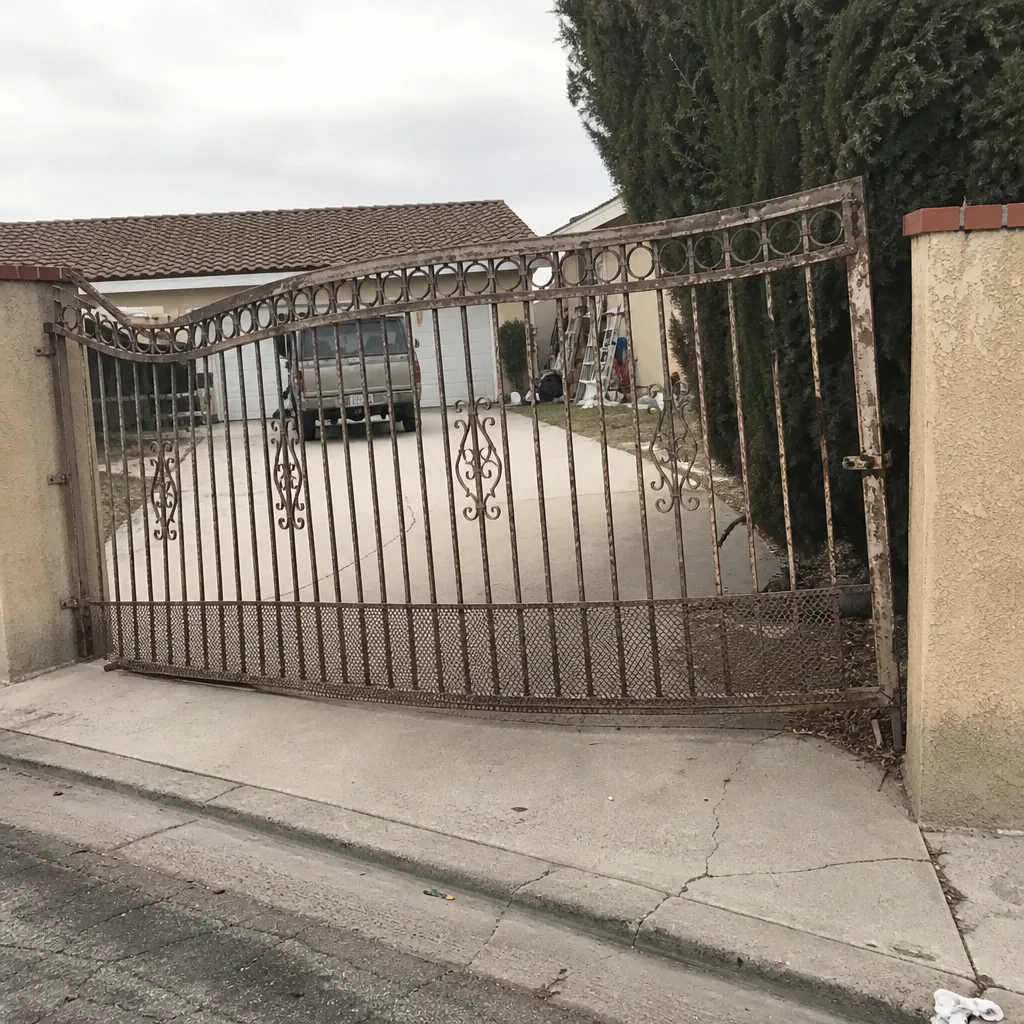 Before
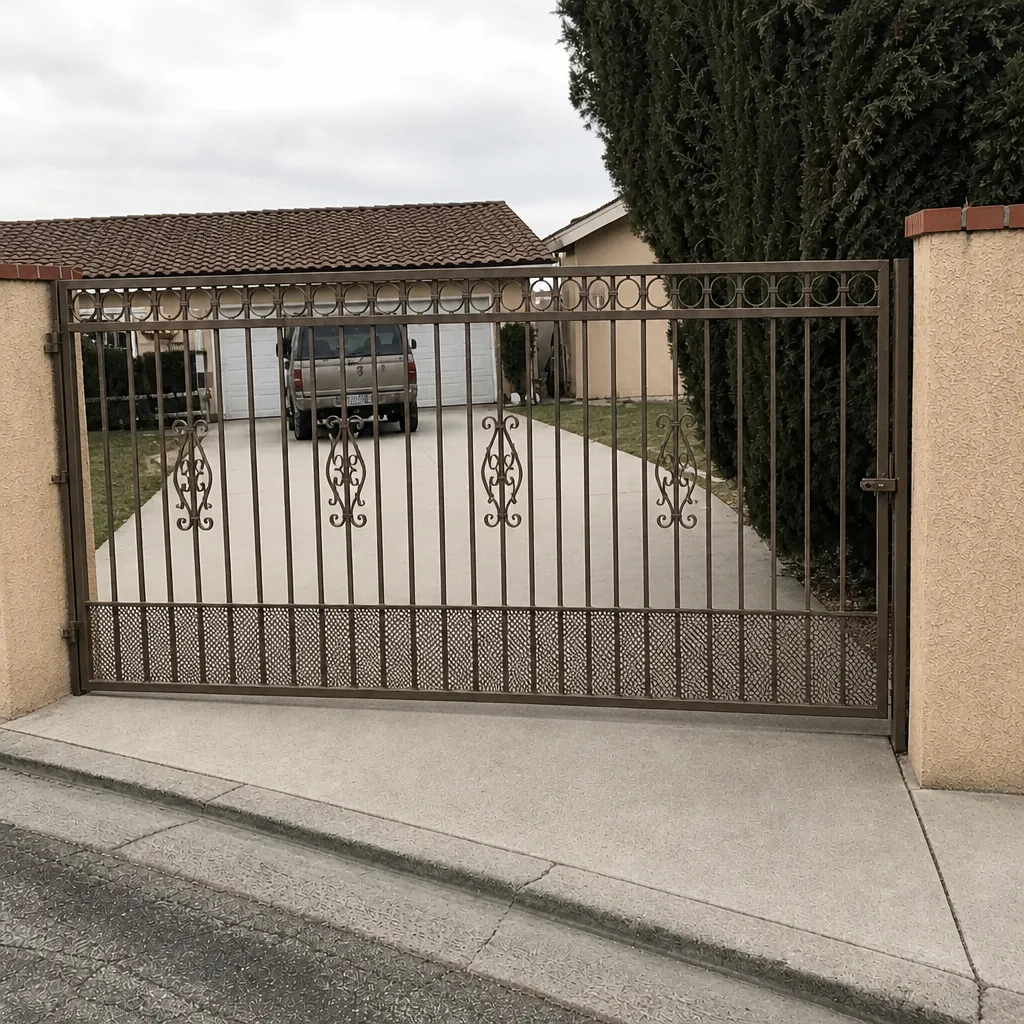 After
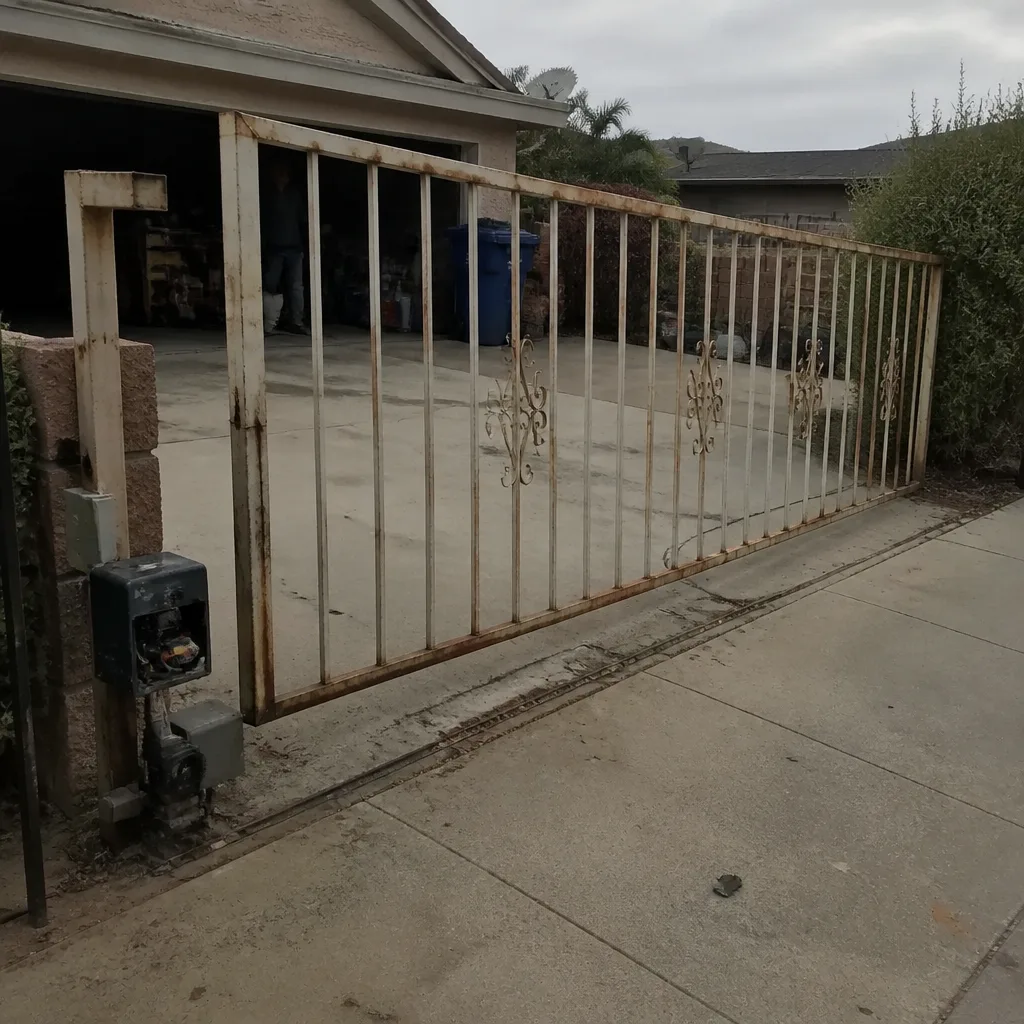 Before
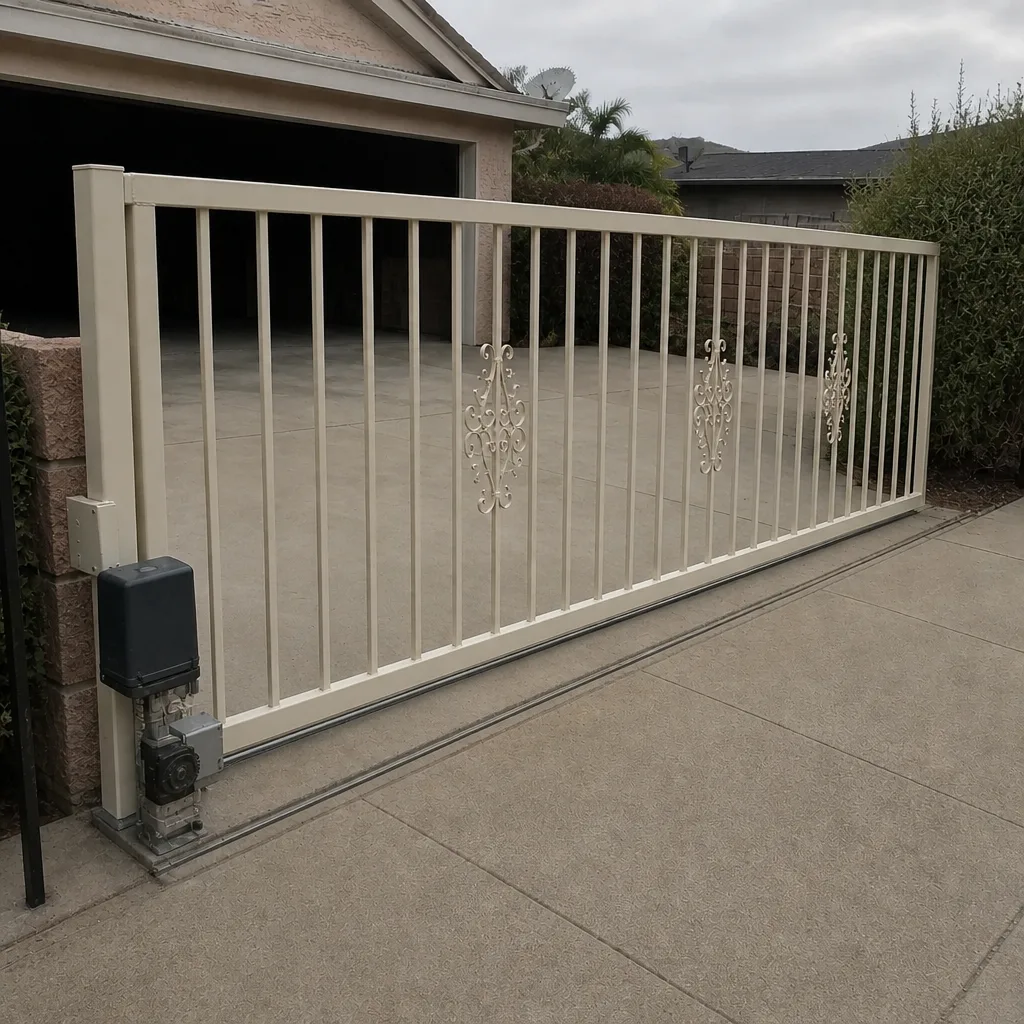 After
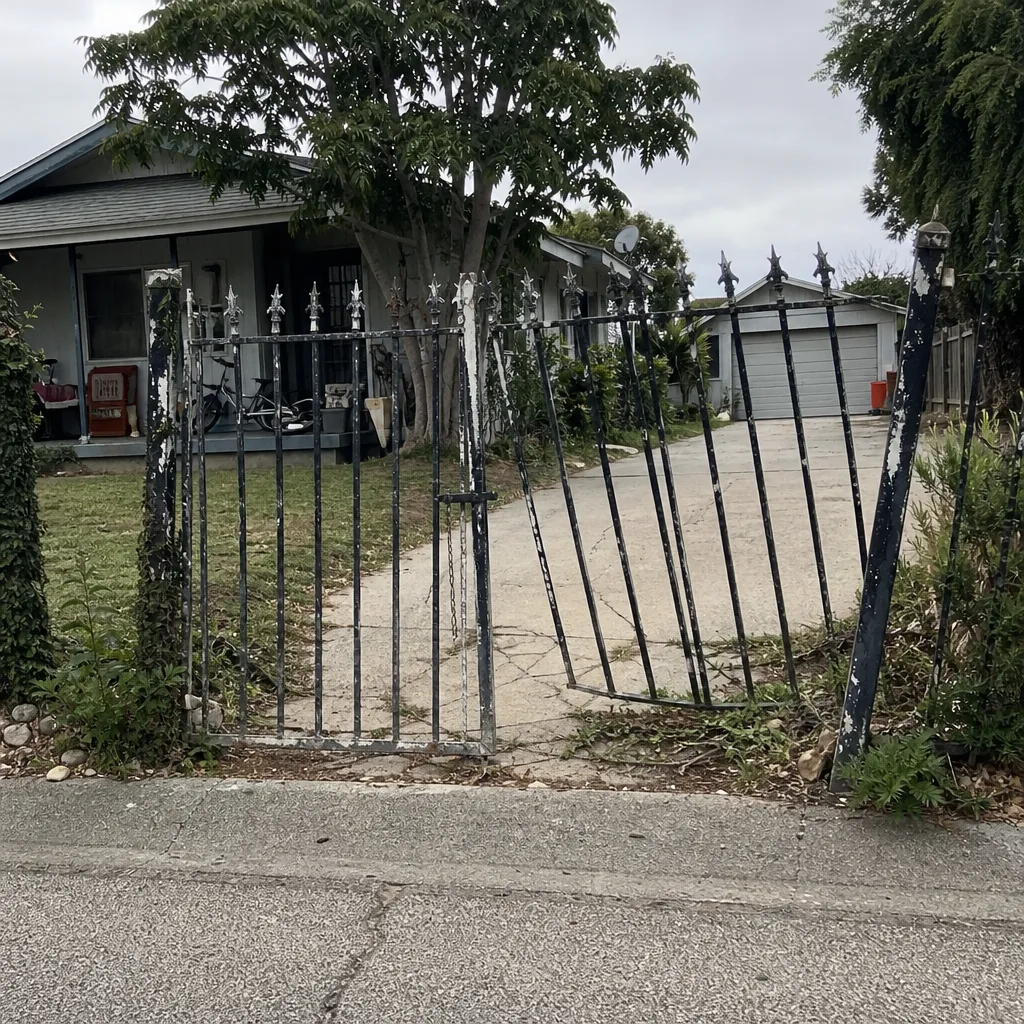 Before
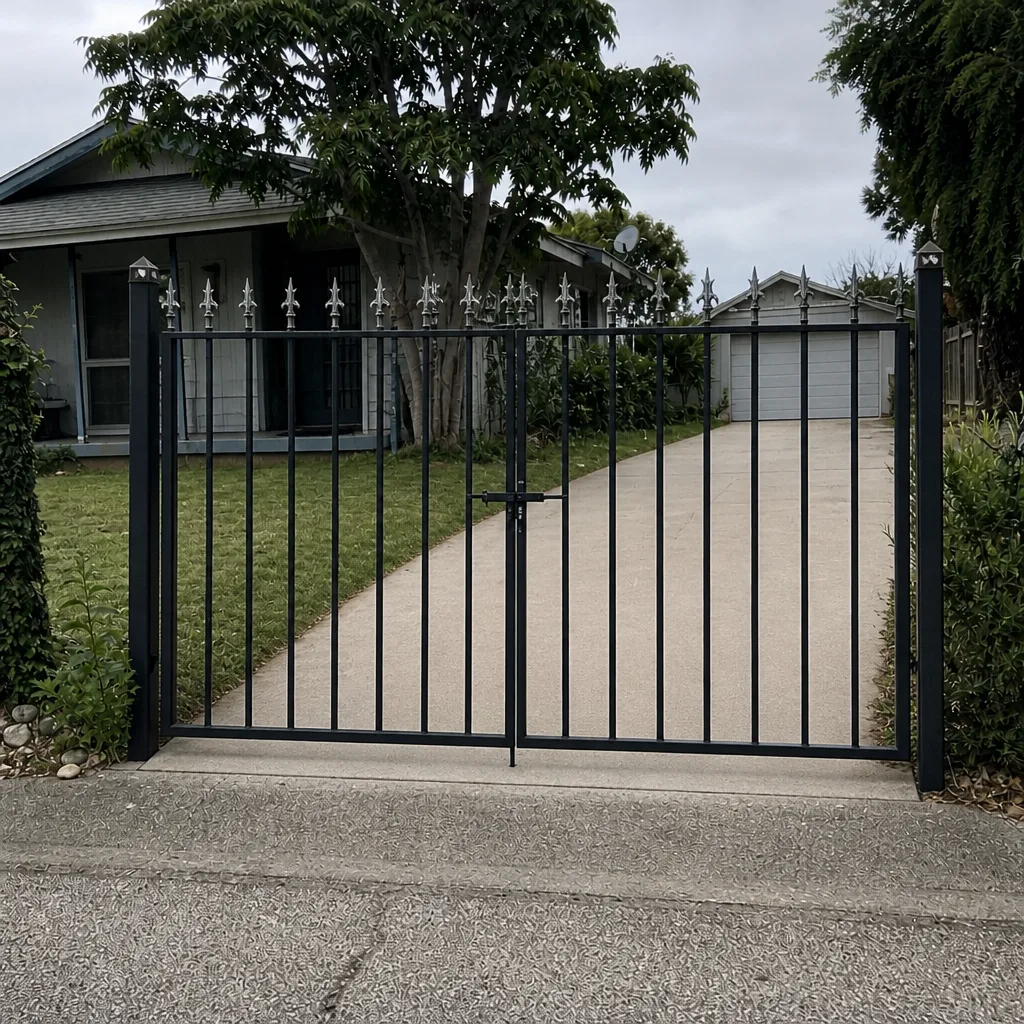 After
When to Call a Professional
Call a professional when the gate stops cycling reliably, opens or closes erratically, or throws error codes you can’t clear. Call when a safety edge or loop detector stops working, when the gate reverses unexpectedly, or when motors run but the gate doesn’t move. Any electrical work inside the operator housing is a professional job. The risk is real: high-voltage wiring, stored mechanical energy, and heavy gate panels that can crush or fall if the system is misdiagnosed. Do not open the operator housing or attempt adjustments to the control board or safety wiring yourself.
Our team at Gate Repair Santa Maria offers free estimates in Santa Maria. Call (844) 834-0978. We answer 24/7. Fast dispatch from 7am to 7pm, Sunday through Friday. A technician will confirm your current brand, check the duty cycle against your traffic, and tell you plainly whether a repair makes sense or a brand switch is the better long-term move.
Frequently Asked Questions
There’s no single best brand. For most single-family homes in Santa Maria, a residential swing or slide operator from LiftMaster, Linear, or Viking is a solid starting point because parts are easier to source locally. The specific pick comes down to your gate’s weight, whether it’s swing or slide, and how often it opens. A quick on-site estimate will narrow that down to one or two models.
Check the spec sheet for a duty cycle rating, usually listed as cycles per hour or duty class. Residential operators typically run around 6 – 12 cycles per hour, while commercial operators support 60 or more. If the operator’s manual is missing, a technician can identify the model and rating in a few minutes. That rating determines whether a repair is worth it.
LiftMaster, Linear, Viking, and FAAC tend to have the easiest parts access through regional distributors. BFT and DoorKing also have solid commercial-grade support channels. Elite and Ghost Controls work fine but may require a bit more shipping lead time for some parts. Ask about specific part availability before deciding on a repair.
Only when the operator is the wrong duty class, uses discontinued parts, or has already had multiple major failures. A single component failure on a well-rated operator that still has parts support usually justifies repair. If the board, motor, and gearbox have each failed once in a short period, a full replacement typically makes more financial sense than another round of repairs.
Yes. We service both, including residential swing and slide gates and commercial access systems. Our technicians are certified across nine operator brands: LiftMaster, FAAC, BFT, Linear, Viking, Ghost Controls, DoorKing, Elite, and Mighty Mule. That coverage lets us match the brand to the property rather than forcing a residential or commercial fit that doesn’t work.
Ask which brands they’re certified on, whether they specialize in gates or handle many trades, and how they plan to diagnose before quoting. A contractor who lists only one or two brands is filtering recommendations through their inventory. A specialist who lists several brands and wants to see the gate in person before quoting is usually the better fit.
Call (844) 834-0978 for a free estimate. We answer 24/7. Fast dispatch from 7am to 7pm, Sunday through Friday.
The Bottom Line
Match your gate operator brand to your gate’s weight, duty cycle, and parts availability rather than its reputation. In Santa Maria, brands with local parts access save you downtime, and duty cycle ratings matter far more than brand recognition. A gate-only specialist certified across several brands (like LiftMaster, FAAC, Viking, DoorKing, or whichever fits your gate) can diagnose the specific fault, honestly recommend repair or replacement, and steer you toward an operator built for your property’s actual traffic. If you’re unsure whether to repair or replace, get an on-site estimate before you spend anything.
Contact Gate Repair Santa Maria for a free estimate: Call (844) 834-0978. We answer 24/7. Fast dispatch from 7am to 7pm, Sunday through Friday. If you’d like to learn more about our service area, visit our Santa Maria page, and read more about Gate Repair Santa Maria services. Our technicians have up to 9 years of experience and are certified across nine gate operator brands, covering both residential and commercial systems.
Written by the team at Gate Repair Santa Maria.